




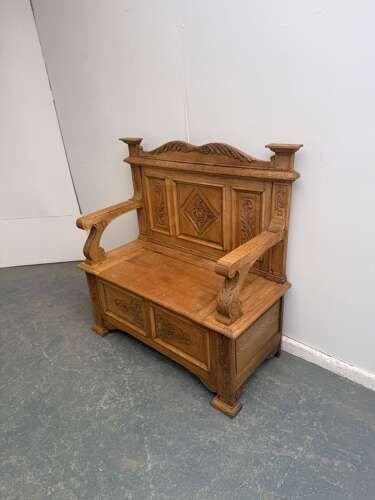
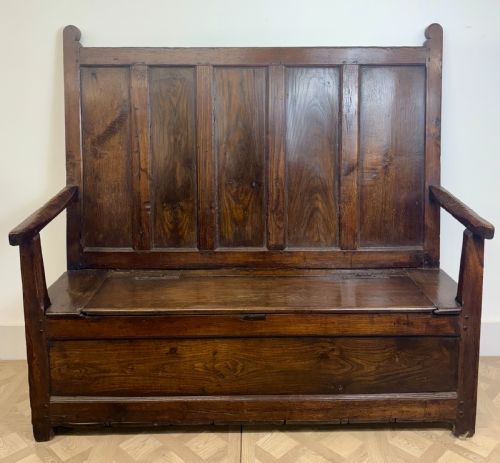
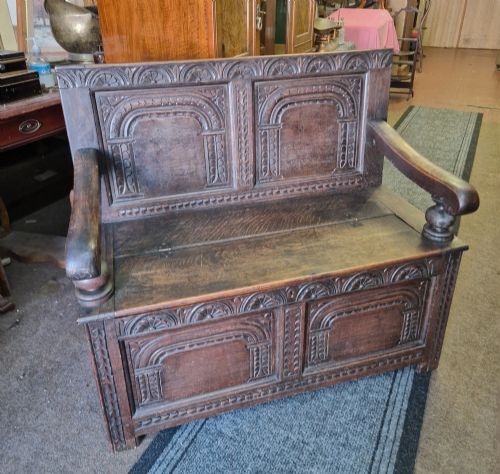
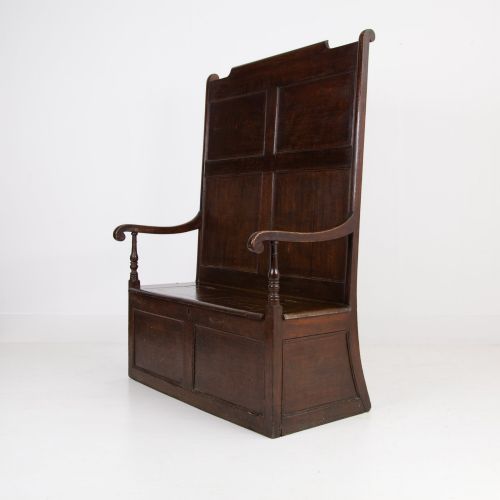
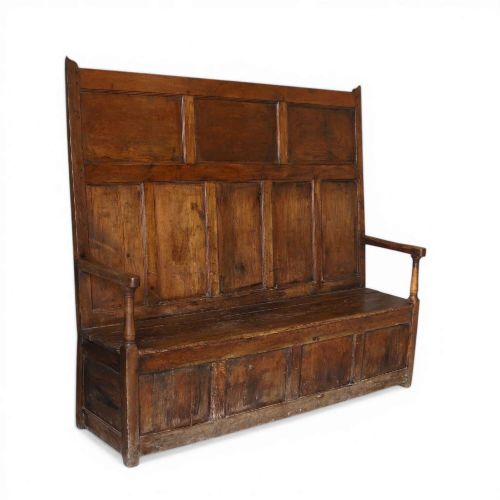
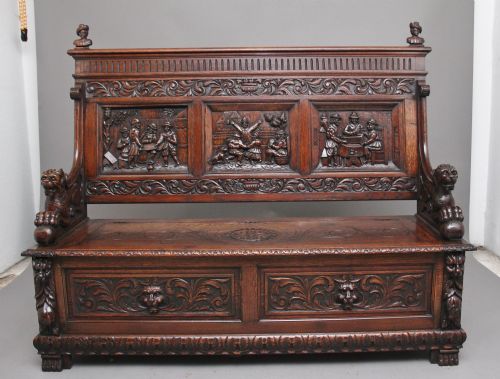
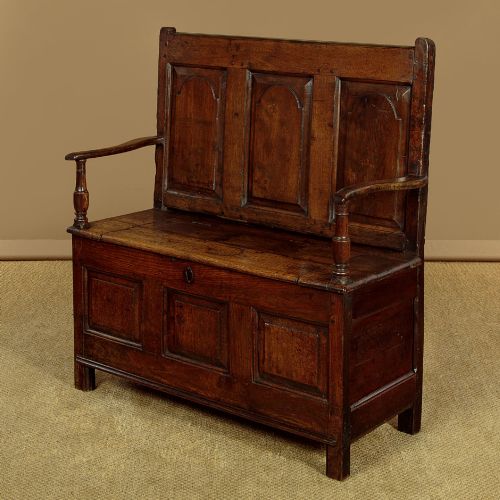
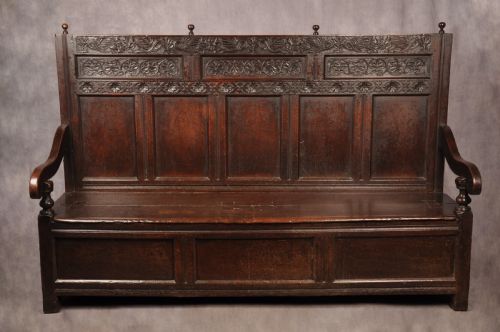
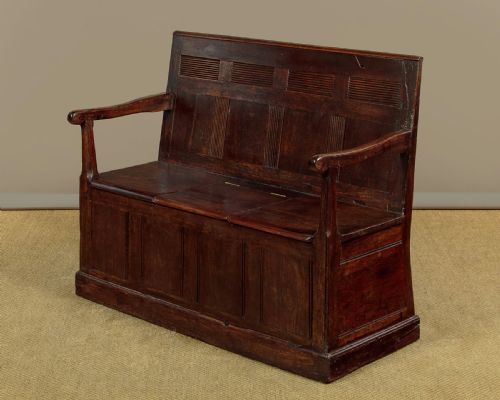
Panelled Box Bench
When you search for a panelled box bench, you are looking at sturdy seating that doubles as storage, forged by centuries of utility and craft.
Panelled Box Bench
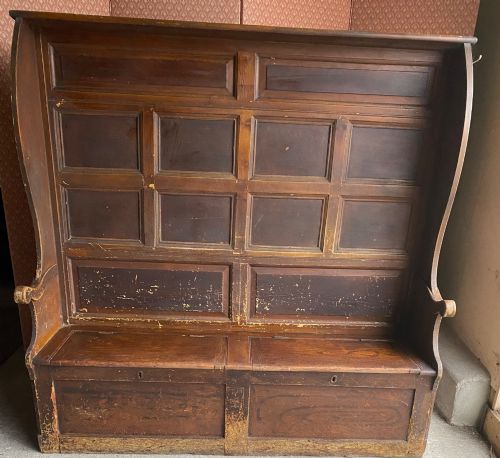
A panelled box bench combines a high-backed seat with a concealed storage compartment beneath the squab or solid wooden base. You will frequently find these pieces in oak, elm, and pine, originating from periods spanning the seventeenth century through to the early twentieth century.
The regional variations include vernacular Welsh designs, robust North Country pieces, and grander country house examples. These items served practical domestic purposes in hallways, kitchens, and taverns before becoming sought-after decorative furniture.
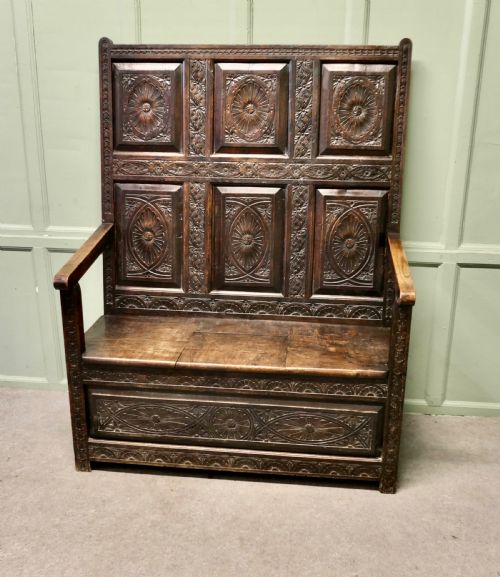
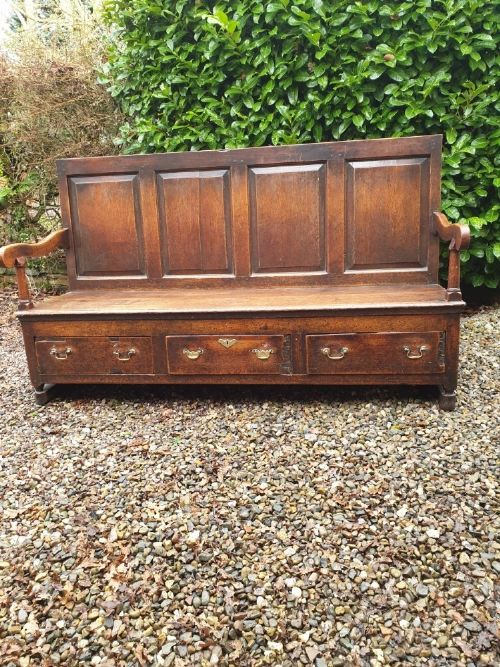
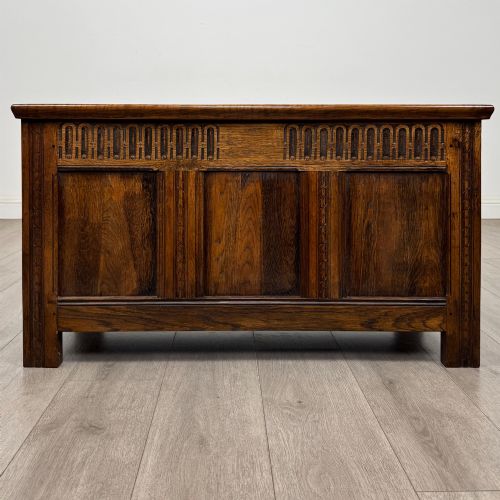
The primary forms on this page range from tall high-back settles to smaller hall benches and mule chests with integrated seating. Each piece demonstrates how utilitarian domestic storage evolved to accommodate seating in draughty historical interiors.
How they were made
Joiners constructed these benches primarily using solid timbers like oak, elm, and ash, employing traditional mortise and tenon joints to secure the heavy panels. Iron and brass fittings such as hinges and decorative studs frequently reinforce the robust wooden structures.
Many examples feature carved front panels, stile-and-rail construction, and waxed finishes that highlight the natural grain of the wood. Some regional pine and elm pieces retain original painted surfaces, showing how makers treated the timber for everyday domestic service.
Panelled Box Bench Retail Price Guide 2026
Typical asking prices for panelled box bench among the pieces listed under this phrase on Sellingantiques today, from the lower quarter to the upper quarter. They describe what is for sale here now, not the wider market.
Some nineteenth-century elm bacon settles feature high backs designed to cure meat safely away from household pests.
What varies in quality
The integrity of the timber and the depth of the regional carving distinguish finer examples from standard vernacular workshop production. Original patination, untouched surface finishes, and the survival of early iron or brass hardware elevate a piece significantly.
Structural proportions and the clever integration of the storage box beneath the seat indicate the skill of the original maker. Pieces retaining their authentic back panels and undisturbed framing represent the higher tier of surviving examples.
The Panelled Box Bench Glossary
- Settle
- A wooden bench with a high back and solid arms designed to shield the user from draughts. These pieces often incorporate a hinged seat lifting to reveal a storage chest below.
- Panel
- A flat piece of wood framed within stiles and rails to prevent warping. This construction method defines the architectural surface of early box benches.
- Mule chest
- A storage chest featuring one or more drawers beneath the main compartment. When fitted with a backrest and arms, it functions as a box bench.
- Vernacular
- Furniture made by local craftsmen using regional styles and readily available timbers rather than following strict metropolitan design rules.
- Patina
- The surface sheen and mellow colour acquired by wood over centuries of handling, polishing, and exposure to light.
Panelled Box Bench: Frequently Asked Questions
What is a panelled box bench?
A panelled box bench is a traditional wooden seat featuring a high back and a concealed storage chest integrated beneath the seat base. These items were designed to provide comfortable seating while keeping household textiles or belongings secure and dry.
Historically placed in kitchens, halls, and taverns, they offered protection from cold draughts while maximising floor space through dual-purpose design.
Where were box benches used?
These benches were primarily utilised in the principal rooms of historical homes, particularly draughty hallways, farmhouses, and communal tavern spaces. Their high panelled backs directed heat from open fires back toward the seated occupant.
Over time, smaller hall benches found a permanent home in entranceways for storing outdoor wear, while larger settles remained robust kitchen fixtures.
How do I date a box bench?
Dating relies on observing construction methods, timber choices, and stylistic decorative details such as carving and panel configurations. Seventeenth and eighteenth-century examples typically display heavy oak construction with pegged joinery, while later pieces incorporate pine, elm, or mahogany.
Examining the hinges, tool marks, and overall wear patterns helps distinguish genuine period pieces from later revivals.
How do I care for antique oak?
Maintaining antique oak involves keeping the timber away from direct heat sources and sudden humidity changes to prevent splitting. Regular application of a quality beeswax helps nourish the wood and preserve its deep surface lustre.
Avoid harsh chemical cleaners, relying instead on a soft, dry cloth to remove dust and maintain the natural finish.