
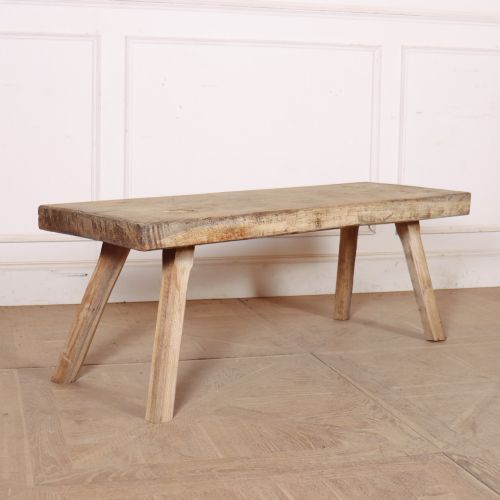


Pale Wooden Bench
A pale wooden bench brings warmth and honest grain to an interior, offering utility through robust seating shaped by country traditions.
Pale Wooden Bench
A pale wooden bench combines functional seating with the weathered character of domestic and provincial traditions. When you search for a pale wooden bench, you encounter forms ranging from low window seats to substantial hall settles and garden benches.
The pieces listed here draw upon 18th century, 19th century, and early 20th century origins. You are most likely to meet examples rooted in English, French, and Swedish country styles.
Makers shaped these utilitarian objects for everyday use in hallways, dining spaces, and gardens. Their appeal lies in unpretentious lines and surfaces softened by age.
How they were made
Carpenters constructed these benches from native hardwoods and softwoods including elm, sycamore, oak, pine, and timber. These robust materials provided the structural strength required for daily domestic and agricultural tasks.
Surfaces often show the evidence of historical scrubbing, bleaching, or original paintwork. These treatments highlight the natural grain patterns of the timber while reflecting regional aesthetic preferences.
The listings on this site span the 18th century, the 19th century, and the early 20th century, utilising woods such as elm, oak, sycamore, and pine.
What varies in quality
Quality in these pieces rests upon the integrity of the timber and the honesty of the surface patina. Natural weathering and prolonged use create varied depths of tone across the grain.
Proportion and structural survival differentiate simpler utility items from more refined provincial seating. The harmony between the original construction and subsequent patination determines the character of each bench.
The Pale Wooden Bench Glossary
- Bleached oak
- Oak timber treated to lighten its natural tone, often revealing greater clarity in the grain. This finish appears frequently in 19th century regional seating.
- Settle
- A wooden bench featuring a high back and solid arms designed to block draughts in domestic rooms. Historic examples often incorporate storage beneath the seat.
- Sycamore
- A dense pale hardwood utilised for table tops and furniture components. It accepts scrubbing well, leading to a smooth, pale surface over time.
- Trestle
- A structural support consisting of a horizontal beam fixed to two splayed legs. This construction method provides stability for long tables and benches.
Pale Wooden Bench: Frequently Asked Questions
Where should I place a wooden bench?
These benches suit hallways, garden rooms, and dining spaces where their linear forms provide practical seating without dominating the room.
Their restrained proportions allow them to sit comfortably beneath windows or against plain walls.
How do I care for a bleached timber surface?
Maintain pale wood surfaces by dusting gently with a dry cloth and avoiding excessive moisture. Gentle cleaning preserves the natural patina developed over centuries.
Protect the timber from direct heat sources to prevent splitting in older boards.
What defines Swedish country style?
Swedish country furniture prioritises pale finishes, functional forms, and restrained decoration. Pieces from this tradition often feature soft painted surfaces or scrubbed pine and oak.
This aesthetic developed to maximise natural light in northern European interiors.
How can I identify 19th century construction?
Examine the underside and joints for tool marks and timber shrinkage that indicate age. Hand-worked surfaces display subtle irregularities absent in mass-produced items.
Fasteners and fixings typically match the technological methods available during the period.