




Pale Timber Table
These pale timber table examples offer honest utility and weathered warmth, bringing tactile grain and history directly into modern dining and kitchen spaces.
Pale Timber Table
A pale timber table brings together practical utilitarian forms and light surfaces weathered by time and scrubbing. When buyers search for a pale timber table, they encounter hardworking kitchen prep surfaces, tavern tables, and refectory designs from the nineteenth and early twentieth centuries.
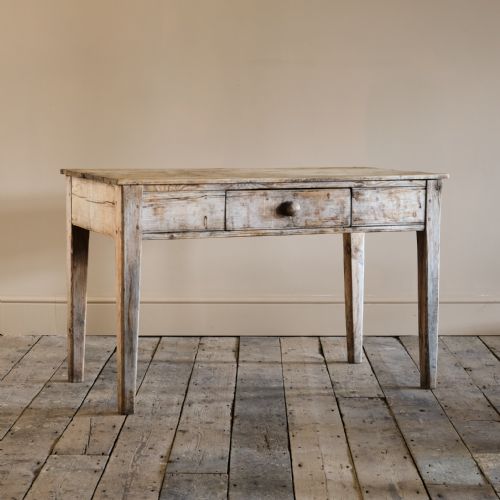
The pieces listed on this page span French provincial kitchen tables, English country house dining boards, and Welsh vernacular pieces. Sycamore, elm, pine, and bleached oak dominate these listings, reflecting domestic and trade origins across Britain and France.
What varies in quality
The distinction between standard domestic furniture and finer examples lies in the integrity of the timber selection and the retention of original structural framing. Tables constructed from dense sycamore, elm, or quarter-sawn oak exhibit superior durability compared to simpler pine variants.
Proportion and patination further define the hierarchy, with balanced trestle designs and untouched scrubbed surfaces commanding greater visual presence. Excessive timber replacement or altered bases diminish the integrity of an antique piece.
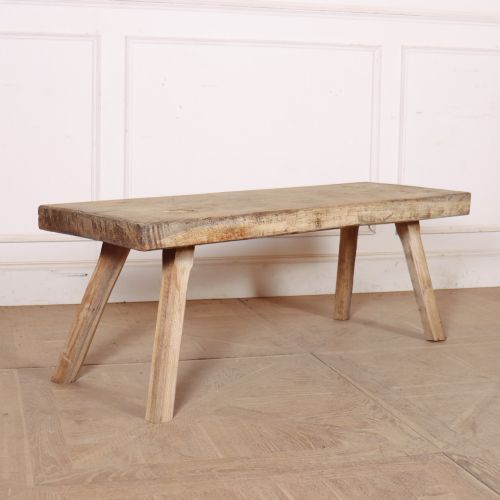
Many historic pig benches appear here disguised as low side tables, proving that seventeenth-century livestock management makes a surprisingly chic coffee table base.
The Pale Timber Table Glossary
- Scrubbed finish
- A surface repeatedly washed with water and scouring agents until the soft summer growth of the wood wears away, leaving a pale, raised grain. This process creates the characteristic light tone sought after in country furniture.
- Trestle table
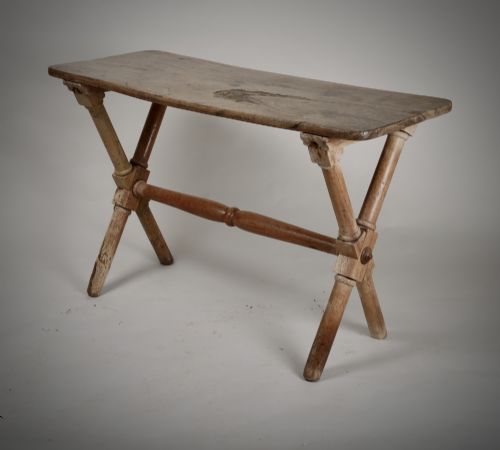
- A board resting on two or more upright supports connected by a horizontal stretcher. This form allows for maximum legroom and stable placement in busy kitchens or dining halls.
- Refectory table
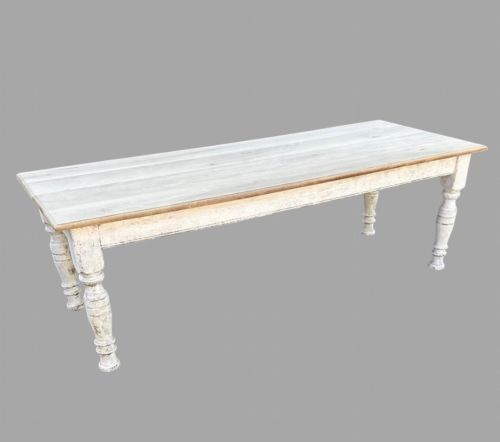
- A long, narrow dining table historically used in communal dining rooms. These pieces feature sturdy underframing and substantial timber tops suited for large gatherings.
- Cricket table
- A small, light three-legged table originating from vernacular traditions. The tripod base provides stability on uneven flagstone floors.
- Vernacular furniture
- Domestic pieces made by local craftspeople using regional materials for specific everyday tasks. These objects prioritise functional utility over academic architectural styles.
Pale Timber Table: Frequently Asked Questions
How do I clean a pale timber table?
Clean the surface using a damp cloth with mild soap, avoiding harsh chemical strippers that remove the historic patination.
Dry the wood thoroughly afterwards to prevent moisture rings and protect the natural grain from staining.
Are these tables suitable for daily dining?
These tables were built for heavy domestic tasks, making them robust enough for everyday family meals.
Use heat pads and coasters to protect the historic timber surface from hot dishes and liquid rings.
What woods were used for these tables?
Makers constructed these tables using native hardwoods and softwoods including sycamore, elm, pine, ash, oak, and poplar.
Each timber species weathers differently under scrubbing, producing varied pale tones across different regional traditions.
How do I date a kitchen table?
Examine the construction marks, tool traces on the underside, and the wear patterns around the edges of the top.
Nineteenth-century examples often display hand-planed surfaces and pegged joints rather than modern mechanical fixings.