
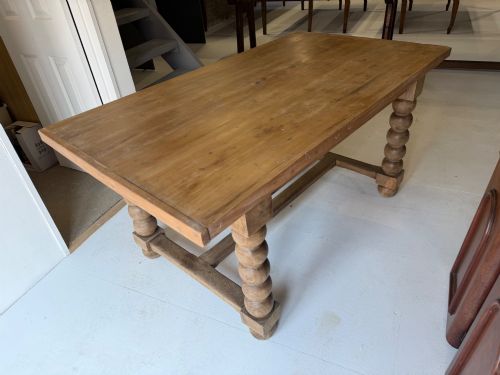
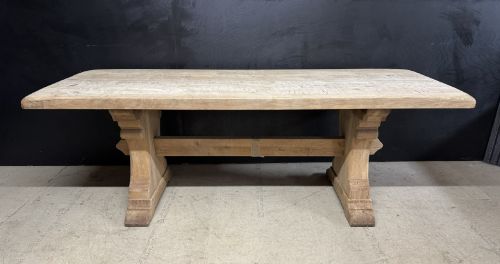


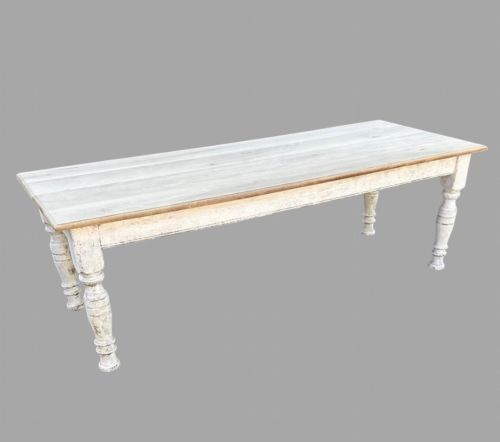


Pale Oak Dining Table
A pale oak dining table brings a calm, scrubbed warmth to a room, offering a generous surface that anchors the entire space.
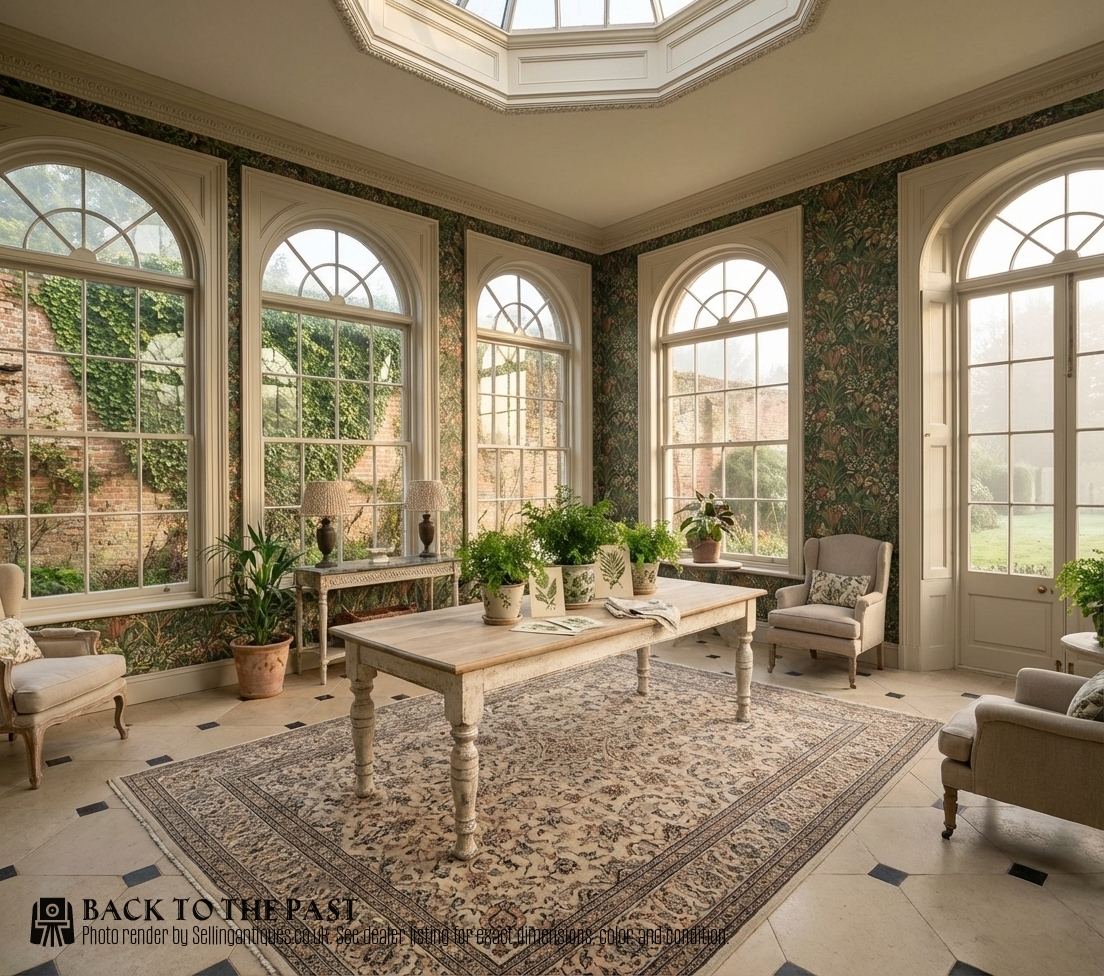
Pale Oak Dining Table
A pale oak dining table is defined by its light timber tone, often achieved through bleaching or scrubbing, which softens the grain and suits rustic or country interiors. When searching for a pale oak dining table, you will encounter pieces ranging from nineteenth-century farmhouse forms to early twentieth-century refectory and trestle designs. These tables originate from various European traditions, including French provincial, Swedish, English country house, and Italian country styles.
The most common formats on this page are refectory tables, trestle tables, and traditional farmhouse designs. Many pieces combine oak with secondary timbers such as pine, poplar, beech, or sycamore in their construction. They span periods from the nineteenth century through the Edwardian era and the 1920s, reflecting both utilitarian origins and revivalist aesthetics like Georgian revival.
Distinctions in quality
The quality of a pale oak dining table rests largely on the proportion and integrity of the timber used for the top, where solid oak boards provide a superior surface compared to mixed-wood alternatives. Finer examples display harmonious grain patterns and balanced bleaching that respects the historical patina of the wood rather than masking it entirely.
Structural stability and the subtlety of the leg joinery, whether simple trestles or turned supports, dictate the refinement of the piece. Tables that retain their original timber pairing without excessive replacement parts represent the higher tier of these country and refectory forms.
Several tables come paired with humble poplar and sycamore, proving that even farmhouse dining surfaces enjoy a bit of mixed company.
The Pale Oak Dining Table Glossary
- Refectory table
- A long, narrow dining table traditionally used in communal dining halls and adapted for domestic interiors. These pieces often feature stretcher bases for added stability.
- Trestle table
- A table supported by two or more upright frames connected by a horizontal beam. This design provides generous legroom along the length of the table.
- Bleached oak
- Oak timber treated to lighten its natural golden or brown hue. This process creates the pale, scrubbed finish characteristic of country furniture.
- Farmhouse table
- A sturdy, utilitarian dining table associated with rural domestic life. They frequently display honest construction methods and generous proportions.
- Bobbin leg
- A turned leg decorated with a series of rounded, spool-like shapes. This decorative joinery detail appears on select nineteenth-century furniture.
Pale Oak Dining Table: Frequently Asked Questions
How do I clean a pale oak table?
Wipe the surface gently with a damp cloth and mild soap, avoiding harsh chemical cleaners that can strip the pale finish. Dry the wood thoroughly immediately after cleaning.
For stubborn marks, a very light scrubbing along the grain with a soft brush helps maintain the scrubbed texture without damaging the timber.
Are these tables suitable for everyday use?
These tables were originally built for daily domestic life in kitchens and dining rooms, making them robust enough for regular gatherings. Solid oak and sturdy framing handle daily wear well.
Using placemats and coasters protects the light surface from heat and moisture while allowing the natural character of the wood to develop over time.
How can I tell the period of a table?
Dating relies on observing construction marks, timber selection, and the specific style of the legs and stretcher base. Nineteenth-century examples often show hand-planed surfaces and traditional joinery.
Later pieces from the 1920s or Edwardian period may exhibit machine assistance alongside traditional assembly, aligning with revivalist movements of the early twentieth century.
What is a refectory table?
A refectory table is characterised by its long and narrow proportions, designed originally for communal dining in large halls. Their sturdy construction makes them practical for modern family dining.
They typically feature strong underframe stretchers that keep the long top rigid and stable during use.