


Paisley Wall Hanging
A paisley wall hanging brings rich global textiles and intricate historic needlework into modern rooms.
Paisley Wall Hanging
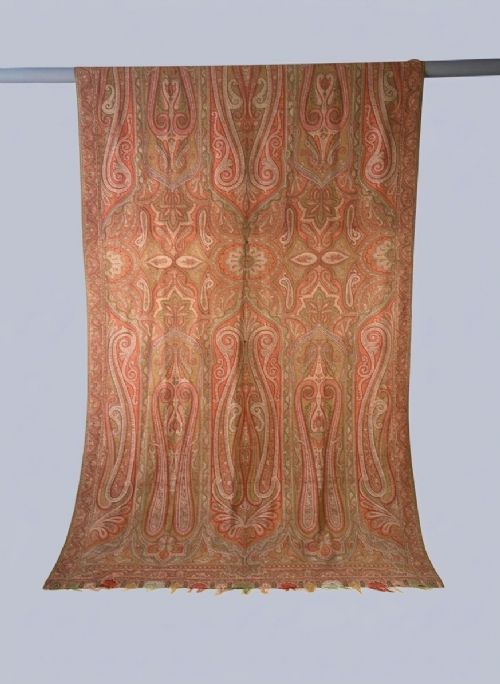
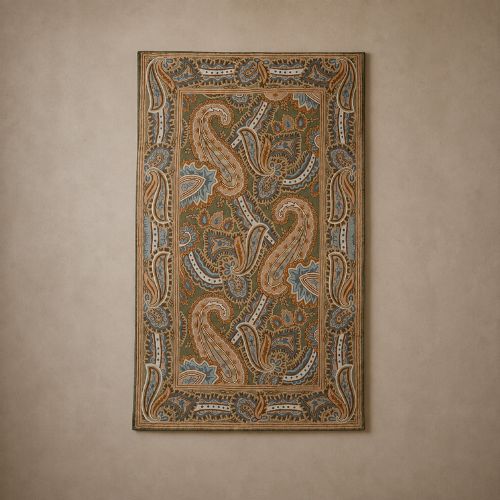
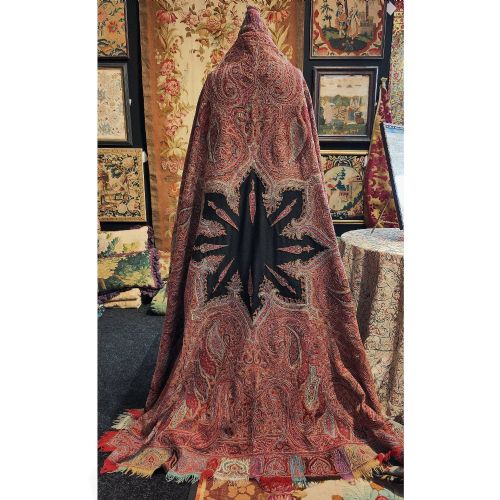
A paisley wall hanging encompasses a diverse group of historic textiles, including large wool shawls, embroidered panels, and blockprinted cloths adapted for display. These pieces trace roots across Kashmir, Persia, India, and Scotland, reflecting centuries of distinct regional textile traditions. Buyers searching for a paisley wall hanging will encounter diverse formats, from woven wool garments repurposed for interiors to dedicated silk and velvet embroidered panels.
The selection ranges from nineteenth-century Scottish wool shawls to Persian Rasht embroidery and Indian Delhi silk work on velvet. Victorian tastes and Jacobean revival influences also shape the aesthetic of these decorative textiles. Most examples date from the nineteenth century up to nineteen twenty, offering rich colour palettes and complex patterns for interior display.
Materials and construction
These textiles rely on natural fibres such as silk, wool, cotton, linen, and pashmina, frequently mounted on heavy wool felt or velvet grounds. Artisans employed complex techniques including fine needlework embroidery, applique work, and traditional Indian blockprinting to achieve dense patterns. Structural integrity often depends on the quality of the backing fabric, whether woven linen, cotton, or dense felt.
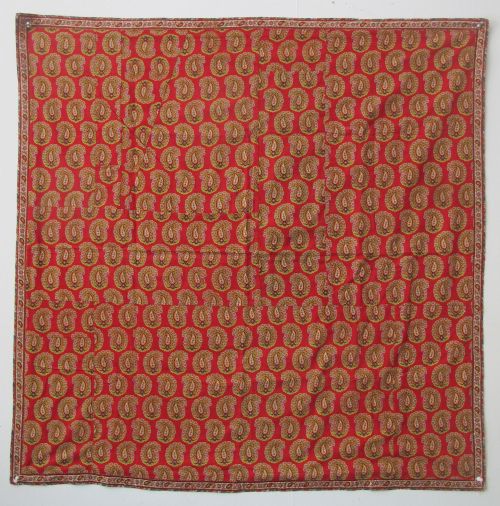
Silk threads provide glossy detail in Persian Rasht and Indian Delhi embroideries, contrasting with the matte texture of wool and felt. Kashmiri square shawls utilise intricate hand-weaving and embroidery methods known as amli work. Blockprinted panels demonstrate precise hand-stamping on cotton grounds from the end of the nineteenth century.
Listings feature nineteenth-century textiles spanning wool, silk, cotton, velvet, and felt across Scottish, Indian, and Persian origins.
Assessing quality and execution
Quality rests upon the density of the stitchwork, the complexity of the design, and the preservation of the original fibres. Fine examples display precise needle control in silk and wool embroidery, whereas simpler pieces show broader execution. The integrity of the ground fabric, whether velvet, felt, or woven wool, directly influences the durability and visual impact of the textile.
The origin and cultural authenticity of the weaving or embroidery technique distinguish exceptional panels from standard decorative items. Pieces retaining vibrant natural dyes and stable ground materials hold greater artistic merit. Masterful execution in applique and embroidery elevates a functional textile or shawl into a striking wall display.
The Paisley Wall Hanging Glossary
- Applique
- A decorative needlework technique where pieces of fabric are sewn onto a larger ground material to form a pattern. In these pieces, silk and felt are frequently combined using this method.
- Crewelwork
- A type of surface embroidery using wool yarn to create flowing, intricate designs on a sturdy linen or cotton backing. This technique appears in historic revival textile panels.
- Amli rumal
- An embroidered Kashmiri square shawl where the design is needle-worked onto a plain woven ground rather than woven directly into the fabric. These form part of the historic shawl tradition.
- Blockprint
- A method of printing patterns onto cloth using carved wooden blocks dipped in dye. Indian examples demonstrate this traditional hand-stamping technique.
- Rasht embroidery
- A distinctive style of Persian textile art characterised by dense chain stitch embroidery and intricate felt applique work. These works often feature elaborate floral and figurative motifs.
Paisley Wall Hanging: Frequently Asked Questions
How do I hang a textile safely?
Mounting heavy wool shawls or embroidered velvet panels requires weight-distribution methods that avoid piercing the historic fabric. Professional conservators recommend velcro mounting strips stitched to a cotton backing sleeve.
Direct exposure to bright sunlight should be avoided to protect natural silk and wool threads from fading over time.
How do I date a textile panel?
Dating relies on identifying material types, dye characteristics, and regional embroidery styles recorded across the nineteenth century. Examining the backing fabrics, such as early cottons, heavy felts, or woven silks, provides further chronological clues.
Stylistic influences like Victorian taste or Qajar motifs also help narrow the period of creation.
Are these pieces original garments?
Several listed items, particularly large nineteenth-century Scottish and Kashmiri pieces, began as woven shawls before later adaptation for interior display. Other examples, such as Delhi silk embroideries and Persian panels, were created specifically as decorative hangings.
Both categories reflect the historical appreciation of intricate global textiles within Western interiors.
How do I care for antique wool?
Maintenance requires gentle vacuuming through a protective mesh screen to remove surface dust without disturbing fragile fibres. Professional textile conservators should handle any deep cleaning or structural repairs.
Keeping the hanging in a stable environment away from high humidity preserves the integrity of the wool and silk materials.