



Decorative Textile Wall Hanging
A decorative textile wall hanging brings texture, history, and warmth to a room, offering everything from tribal embroideries to classical European tapestries.
Decorative Textile Wall Hanging
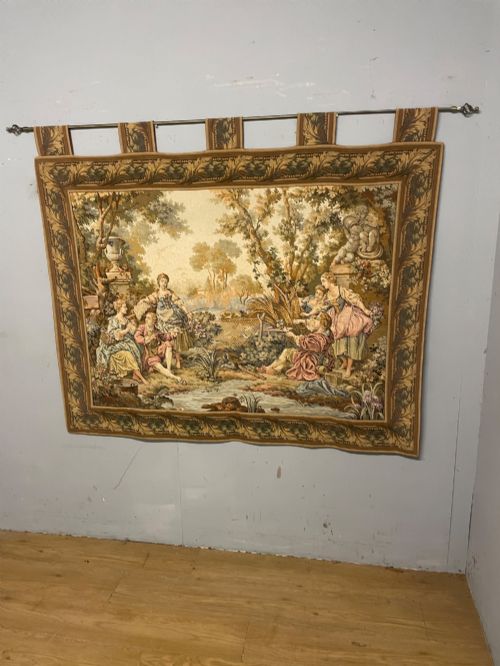
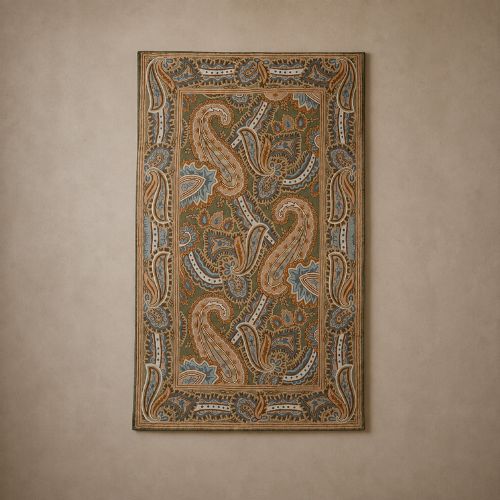
When you search for a decorative textile wall hanging, you encounter a diverse selection ranging from tribal weavings to European tapestries. The pieces span multiple centuries, including seventeenth-century panels, nineteenth-century embroideries, and early twentieth-century works.
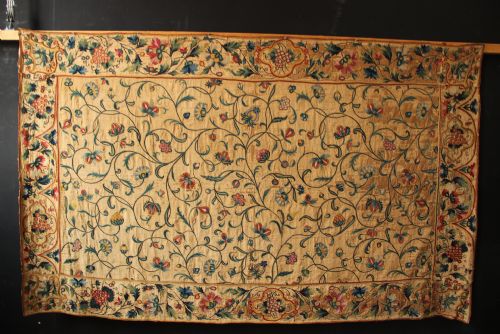
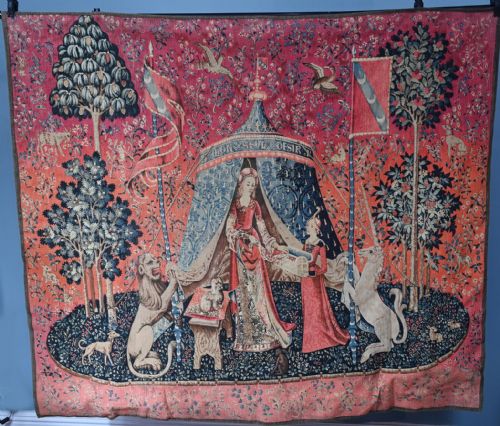
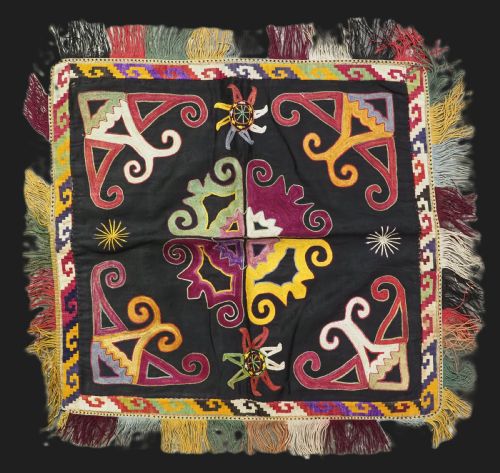
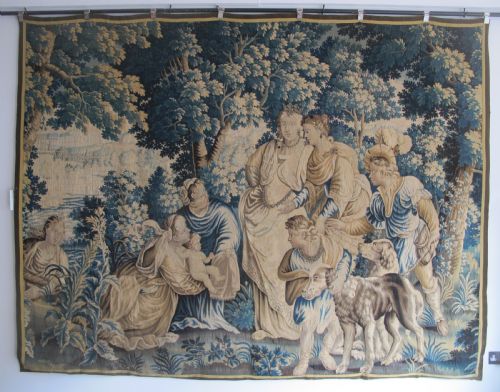
Tribal examples include Uzbek suzanis, Turkmen torbas, and Afghan tent bands, while European pieces cover Flemish verdure tapestries, French Aubusson weaves, and English crewelwork. These items served various original functions, from dowry embroideries and storage bags to formal wall coverings.
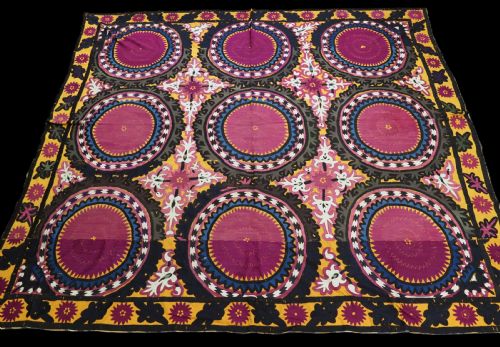
On this page, you are most likely to meet nineteenth-century Central Asian suzanis alongside European tapestries and tribal bag faces. Each object carries the distinct textile traditions of its region of origin.
How they were made
The construction of these pieces relies primarily on wool, cotton, silk, and linen, often worked with natural dyes to create rich colour palettes. Metal thread and wood also appear in specific European and panel examples.
Maker techniques span intricate embroidery, such as crewelwork and suzani needlework, alongside traditional loom weaving found in tapestries and tent bands. The integration of these diverse textile methods results in durable wall art designed to hang for generations.
Listings feature textiles spanning from the seventeenth century through the early twentieth century, utilising wool, cotton, silk, and linen.
What varies in quality
Quality rests upon the fineness of the weave or embroidery and the precision of the design execution. Early examples with dense needlework and well-preserved natural dyes command attention for their visual depth.
Condition and completeness also dictate distinction, as intact panels and textiles retaining their original backing or structural integrity stand apart from heavily restored fragments.
The Decorative Textile Wall Hanging Glossary
- Suzani
- An embroidered textile originating from Central Asia, traditionally made as part of a dowry. These pieces display bold floral and geometric motifs stitched on a cotton or linen ground.
- Crewelwork
- A type of embroidery using wool thread on a stout fabric base. It is frequently seen in English panels depicting flowing botanical and classical scenes.
- Tapestry
- A form of textile art woven by hand on a loom, combining different coloured threads to form pictorial designs. Historical examples often depict verdure landscapes or classical narratives.
- Torba
- A small Turkmen storage bag face produced by nomadic tribes. These items display precise geometric guls and tribal iconography.
- Kalamkari
- A type of hand-painted or block-printed cotton textile originating from India. These narrative pieces frequently illustrate traditional temple stories.
Decorative Textile Wall Hanging: Frequently Asked Questions
How do I hang a textile safely?
Mounting a textile requires distributing the weight evenly to prevent stress on the fibres. Methods include stitching a fabric sleeve to the reverse and sliding a padded wooden batten through it.
Avoid hanging pieces in direct sunlight to protect natural dyes from fading over time.
What is the difference between a suzani and a tapestry?
A suzani is an embroidered textile typically worked with needle and thread on a woven foundation fabric, originating largely from Central Asian regions. They are known for vibrant floral patterns created by nomadic or village makers.
A tapestry is woven directly on a loom as the pattern is created, integrating the design into the structure of the fabric itself. These European works often feature complex pictorial scenes or verdure landscapes.
How do I identify tribal weavings?
Tribal weavings display specific geometric motifs, repeating guls, and structural characteristics unique to groups such as the Tekke, Yomut, or Uzbek tribes. The materials often include hand-spun wool and traditional natural dyes that yield rich, earthy tones.
Examining the weave density and back construction helps confirm the nomadic origin of the piece.