

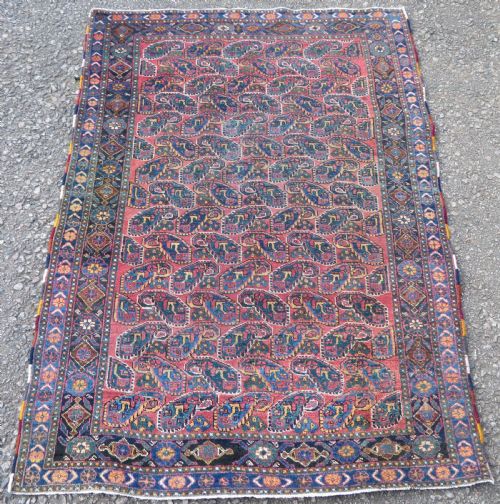
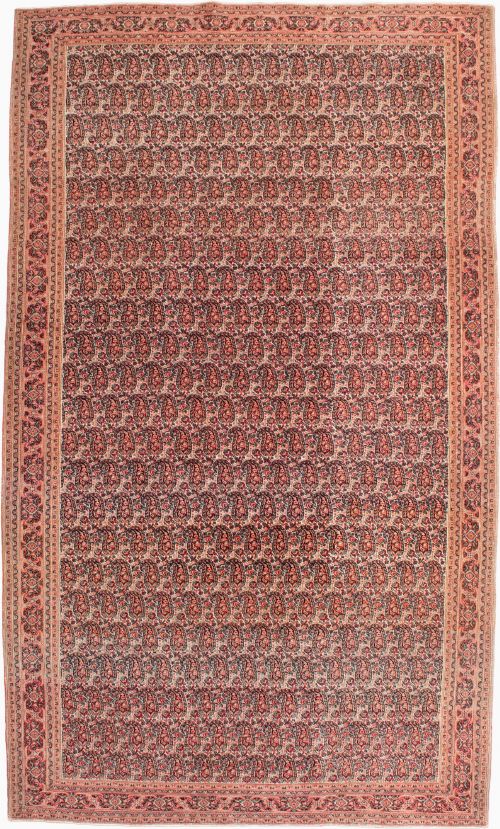
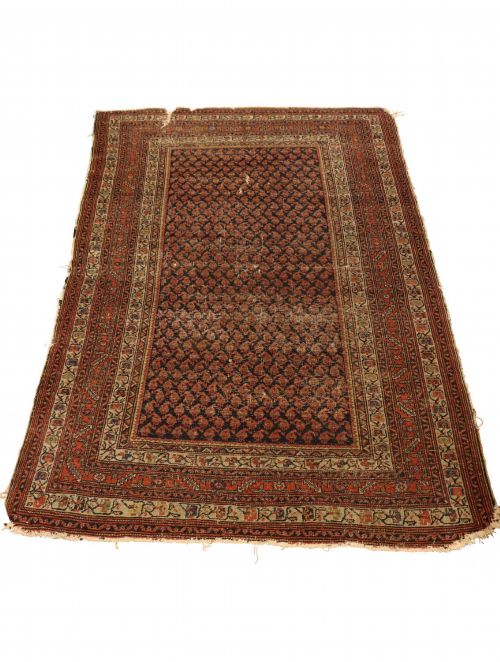

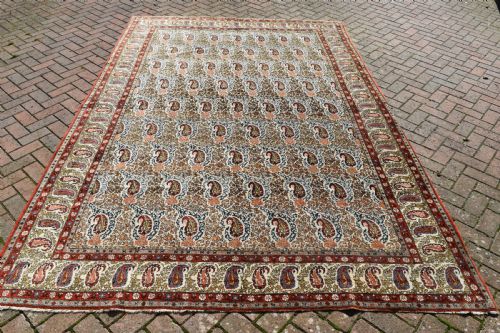


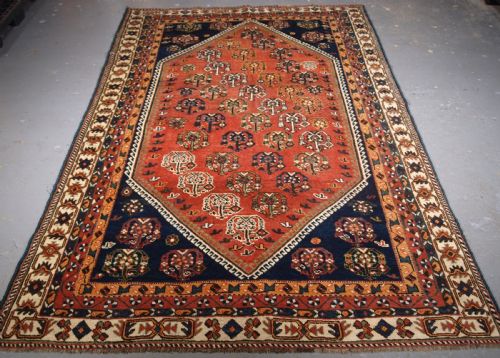

Paisley Pattern Persian Rug
A paisley pattern persian rug brings centuries of knotting heritage and intricate boteh motifs directly to your floor.
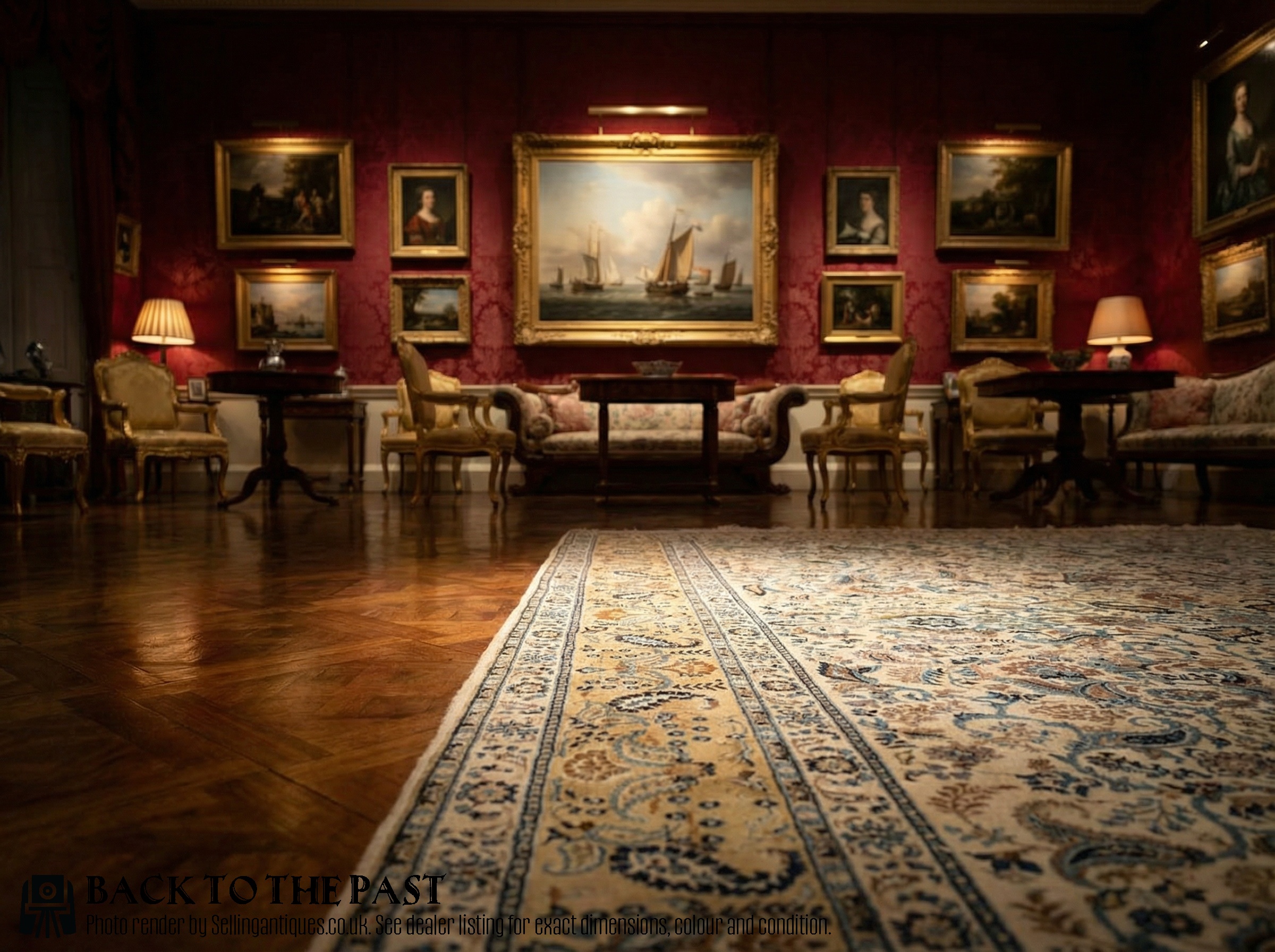
Paisley Pattern Persian Rug
The selections available here range from compact area rugs to long gallery runners and substantial carpets. Buyers encounter traditional Persian styles alongside specific tribal iterations like Afshar, Qashqai, and Kurdish pieces.
Makers utilised classic formats, presenting either all-over boteh arrangements or central medallions framed by elaborate borders. Each piece reflects the specific weaving grammar of its origin, whether a town workshop like Tabriz or a regional tribal loom.
How these rugs were made
Weavers constructed these carpets using natural fibres, predominantly employing hand-spun wool for the pile, supplemented by cotton or wool foundations. Silk also appears in specific finer town productions, lending a distinct texture and sheen to the surface.
The traditional hand-knotting technique required artisan weavers to tie thousands of individual knots around warp threads before securing them with horizontal weft rows. Natural dyeing methods provided the rich colour palettes seen across the nineteenth and early twentieth century examples.
Paisley Pattern Persian Rug Retail Price Guide 2026
Typical asking prices for paisley pattern persian rug among the pieces listed under this phrase on Sellingantiques today, from the lower quarter to the upper quarter. They describe what is for sale here now, not the wider market.
Every single knotted boteh holds a whispered conversation between the weaver and the loom, unchanged across centuries.
What varies in quality
The density and precision of the hand-knotting dictate the crispness of the boteh design and the overall durability of the textile. Tighter knot counts allow for finer detail in the geometric or floral borders and the central field.
The depth and permanence of the dyes separate standard weaving from exceptional examples, as natural colour sources yield richer patinas over time. The choice of materials, such as fine silk versus standard wool, alters the tactile weight and visual presence of the carpet.
Afshar·Qum·Tabriz·Khorassan
The Paisley Pattern Persian Rug Glossary
- Boteh
- The stylised almond or pear-shaped motif commonly associated with paisley designs. It appears repeatedly across the field of many traditional Persian carpets.
- Kelleh
- A large format runner or narrow rectangular carpet traditionally utilised in Persian interiors. These pieces often display extended vertical layouts.
- Warp
- The stationary vertical strings stretched on a loom that form the structural skeleton of the rug. The knots are tied directly around these parallel threads.
- Weft
- The horizontal threads passed back and forth between rows of knots to secure the pile firmly in place. They intersect the vertical warp threads at right angles.
- Pile
- The upright surface of the rug formed by the clipped ends of the knotted yarn. Its thickness and material determine the texture underfoot.
Paisley Pattern Persian Rug: Frequently Asked Questions
How do I identify a genuine vintage persian rug?
Look closely at the foundation and the irregular hand-tied knots on the reverse side. Natural variations in the wool and dyes typically indicate traditional hand-weaving methods rather than modern machine production.
Examine the specific regional style, such as an Afshar or Serapi design, which carries distinct structural and artistic markers from its period of origin.
Where should I place a long rug runner?
Gallery runners and long formats suit narrow transition spaces such as hallways, corridors, or alongside a bed. Their elongated dimensions help define linear circulation areas in a room.
Ensure you measure the floor space carefully, allowing adequate clearance for doors to swing freely over the pile height.
How do I care for a wool carpet?
Vacuum the rug gently on a low suction setting without a rotating beater brush to protect the delicate hand-knotted pile. Address spills immediately by blotting with a clean, dry cloth rather than rubbing the fibres.
Professional cleaning tailored for antique textiles is recommended every few years to preserve the integrity of the natural wool and cotton materials.
What does the boteh motif represent?
The boteh is an ancient Persian symbol that frequently represents a floral spray, a cypress tree, or a flame. Its curved shape evolved through generations of weavers to become the defining pattern of paisley designs.
Different tribal and town workshops adapted the motif into distinct geometric or flowing forms, helping experts attribute the origin of the piece.