
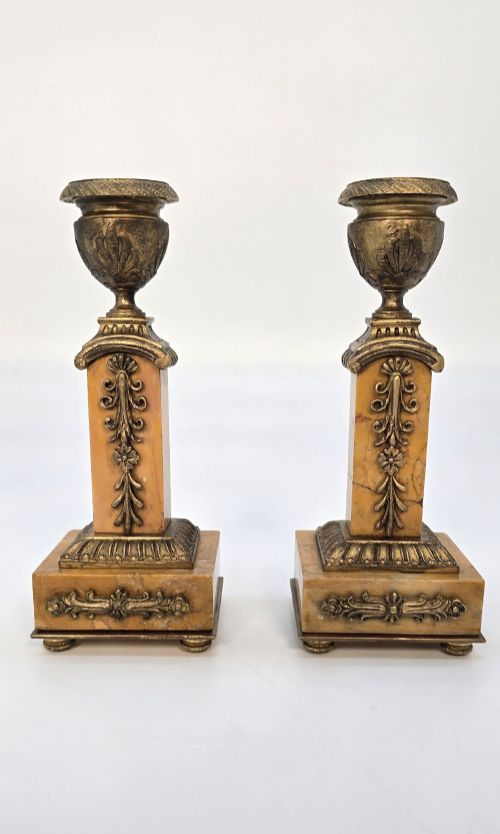
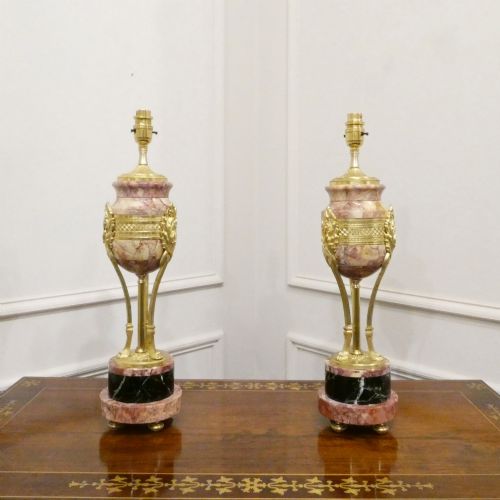
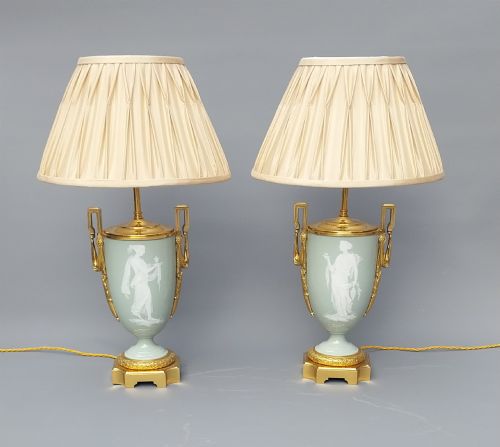
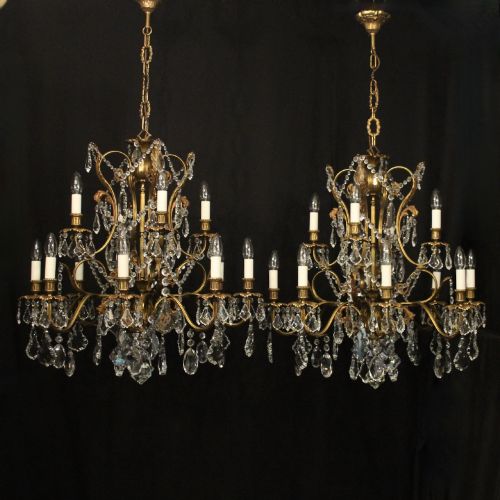
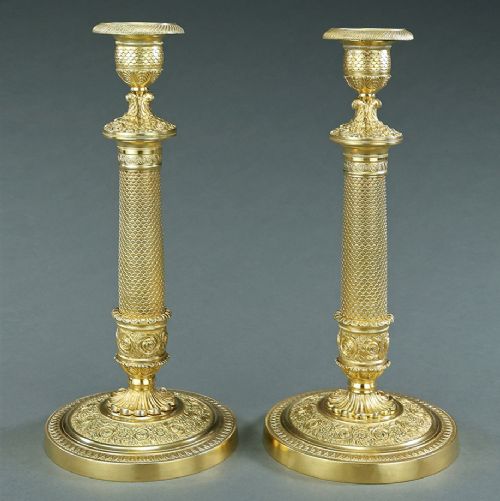
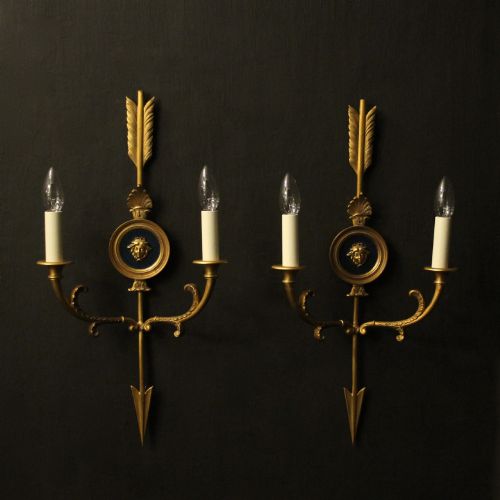
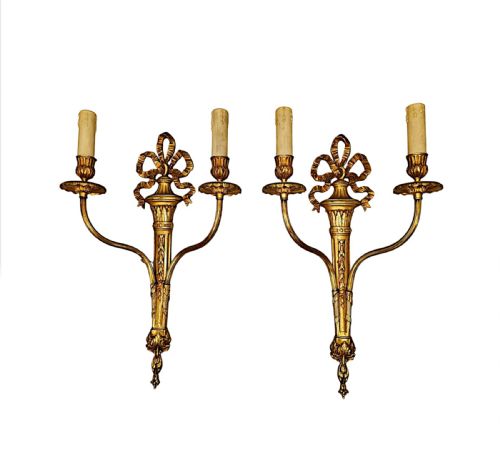
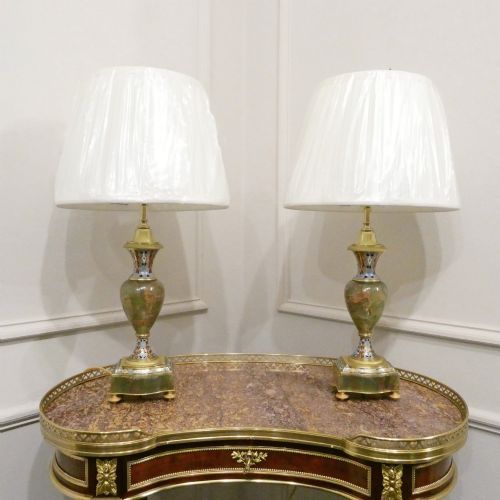
Paired French Bronze Lighting
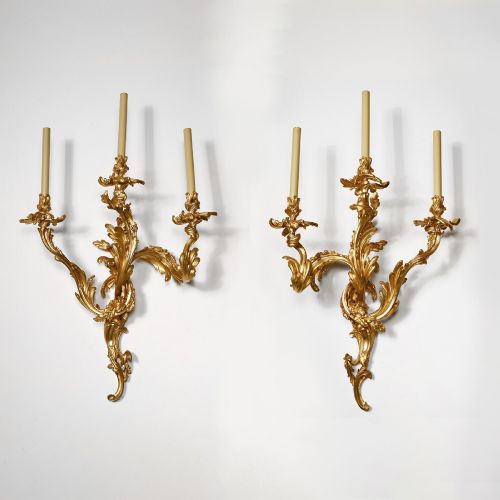
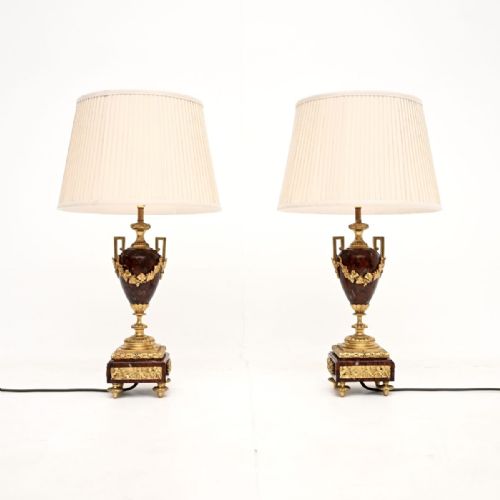
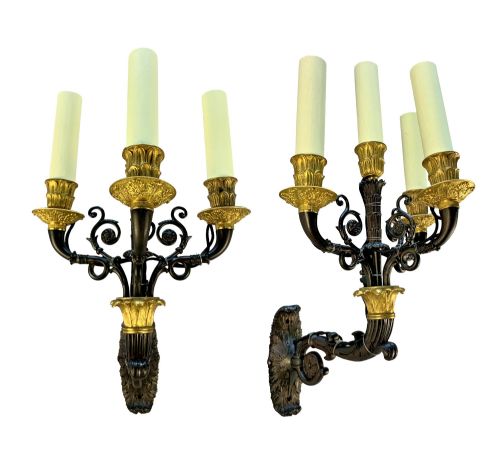
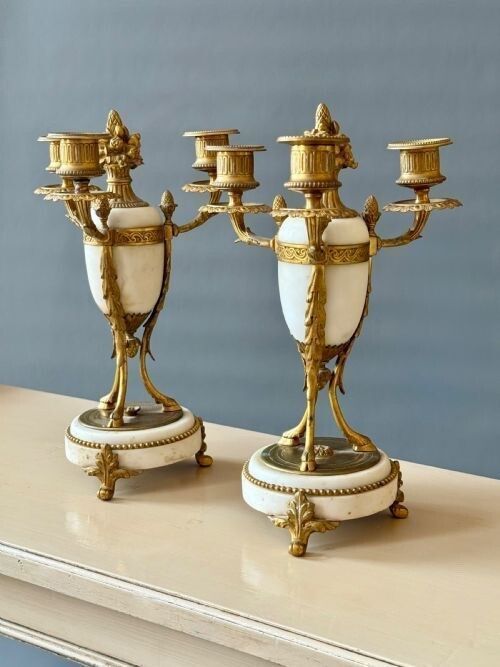
Paired french bronze lighting brings warmth and architectural balance to a room through matched illumination and classical metalwork.
Paired French Bronze Lighting
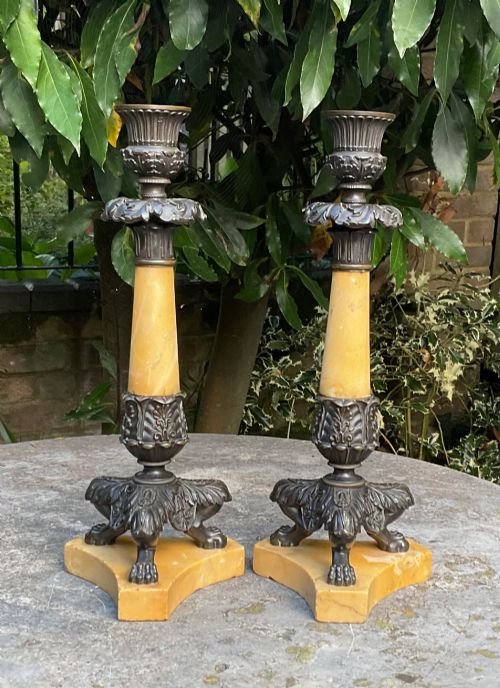
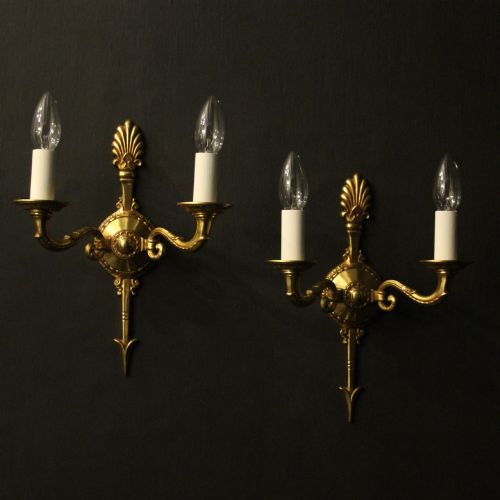
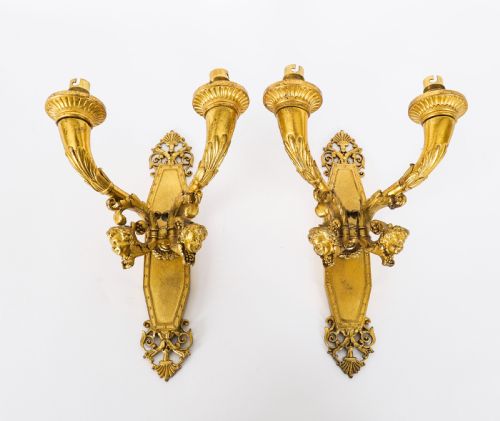
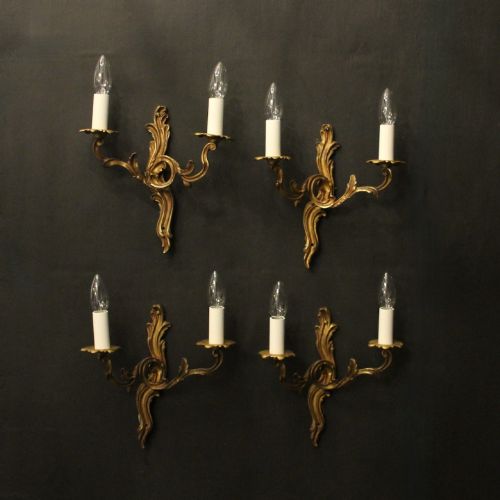
The selection here draws heavily from nineteenth-century revivals and early twentieth-century production, frequently taking the form of twin-arm wall lights and candelabra. Pieces often integrate figural motifs, including cherubs and putti, alongside structural metalwork.
Buyers encounter both functional lighting adapted for electricity and traditional candle-holding forms across various stylistic revivals. The overarching category spans from intimate candleholders to substantial multi-arm candelabra and lanterns.
Factors determining the standard of pieces
The standard also depends on the preservation of the original mercury gilding or ormolu surface, alongside the integration of secondary materials like marble and crystal. Harmonious proportions between the arms, bobeches, and central stems distinguish finer workshop production from standard commercial output.
Listings span periods from the eighteenth century through the 1930s, featuring materials such as gilt bronze, marble, onyx, and crystal.
Barbedienne·Francois Redmond·E Rousseau·Pierre Philippe Thomire·Casier
The Paired French Bronze Lighting Glossary
- Ormolu
- Gilt bronze produced by applying a finely ground high-carat gold-mercury amalgam to a bronze object before firing. This technique produces a durable golden finish characteristic of decorative metalwork.
- Candelabra
- A branched candlestick designed to hold multiple candles simultaneously. These fixtures often feature removable branches or central finials.
- Sconce
- A wall-mounted light fixture designed to hold candles or electric bulbs. These items project forward from vertical surfaces to illuminate surrounding spaces.
- Bobeche
- A small collar or drip pan fitted beneath the candle nozzle to catch melting wax. It protects the arms and stem of the lighting fixture.
- Patinated bronze
- Bronze treated with chemical solutions to produce a darkened or coloured surface oxidation. This finish highlights sculptural contours and prevents active corrosion.
Paired French Bronze Lighting: Frequently Asked Questions
How do I clean bronze lighting?
Dust surfaces gently with a soft dry brush to remove accumulated particles without disturbing the protective metal patina. Avoid harsh commercial polishes that can strip original gilding or damage underlying bronze.
For gilt or ormolu finishes, a mild solution of soapy water on a damp cloth followed by immediate drying is usually sufficient. Take care around mixed materials such as marble or crystal to prevent moisture damage.
Are these pieces wired for electricity?
Many items in this category retain their original candle-holding configuration or have undergone conversion for modern electrical systems at various points in their history. Listings generally indicate whether fittings are adapted for contemporary wiring.
Buyers planning to electrify traditional pieces should consult a qualified professional to ensure internal wiring meets safety standards without altering antique components. Conversion can often be executed discreetly through existing channels within the metal stem.
How do I date a piece?
Dating relies on stylistic indicators such as neoclassical motifs, rococo curves, or the specific character of the bronze casting and chasing. Construction methods, assembly screws, and the composition of secondary materials like marble or crystal also provide chronological clues.
Comparing decorative details against established nineteenth-century revival styles helps narrow the period of manufacture. Signature stamps or foundry marks, when present, offer definitive attribution to specific makers or workshops.