




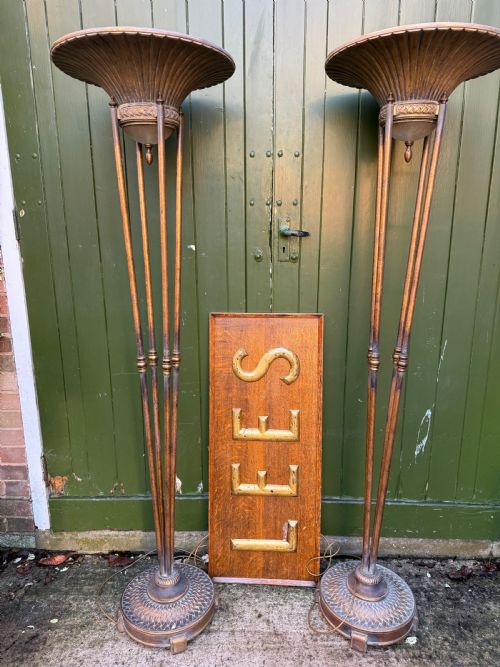


Paired Floor Lamps
These paired floor lamps bring stature and measured symmetry to a room, offering height and directed illumination from matched designs.
Paired Floor Lamps
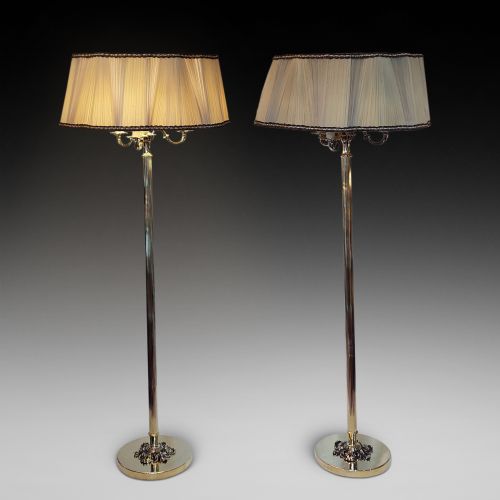
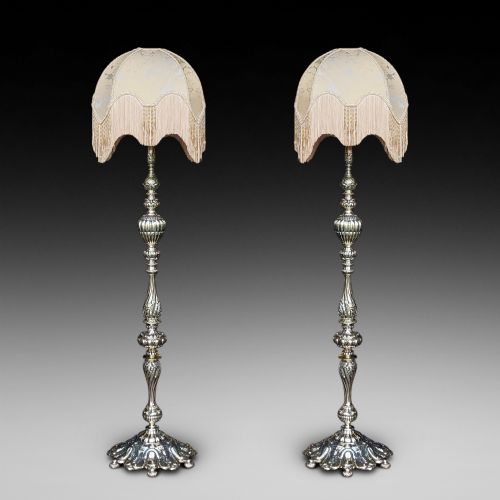
When buyers search for paired floor lamps, they look for matching vertical lighting fixtures that balance a room through symmetry and height. These items appear in various forms, including standard lamps, figural torchères, and candelabras designed to stand directly on the floor.
The selection on this page spans several historical periods, ranging from Georgian and Victorian eras through Edwardian designs into the early twentieth century. Common materials include brass, mahogany, giltwood, fabric, metal, glass, and wrought iron, reflecting diverse stylistic influences such as Venetian Baroque, Spanish Revival, and Art Deco.
How they were made
The construction of these pieces relies heavily on durable metals like brass, bronze, and cast iron, often shaped through casting and turned woodwork in materials such as mahogany and walnut. Giltwood, alabaster, and marbleized finishes frequently add surface decoration and colour to the primary structure.
Many examples incorporate functional mechanisms, such as adjustable standards or converted gas and candle mounts adapted for modern electrical wiring. Skilled artisans utilised carving, patination, and metalwork to achieve the elaborate figural and architectural details seen on torchères and candelabras.
Paired Floor Lamps Retail Price Guide 2026
Typical asking prices for paired floor lamps among the pieces listed under this phrase on Sellingantiques today, from the lower quarter to the upper quarter. They describe what is for sale here now, not the wider market.
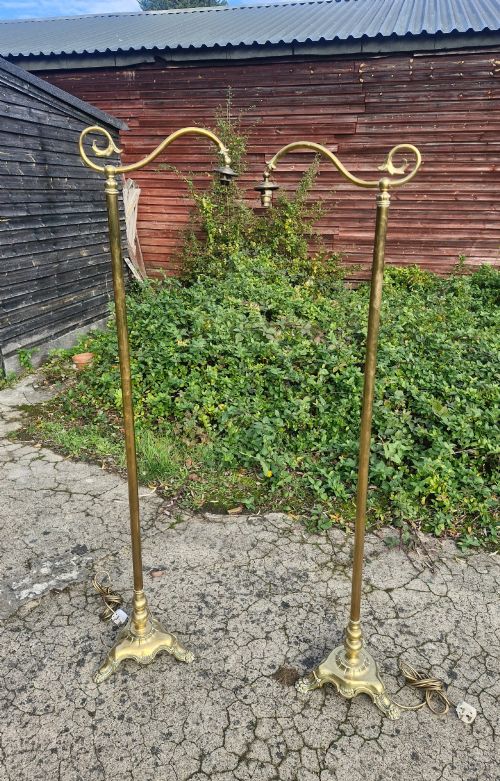
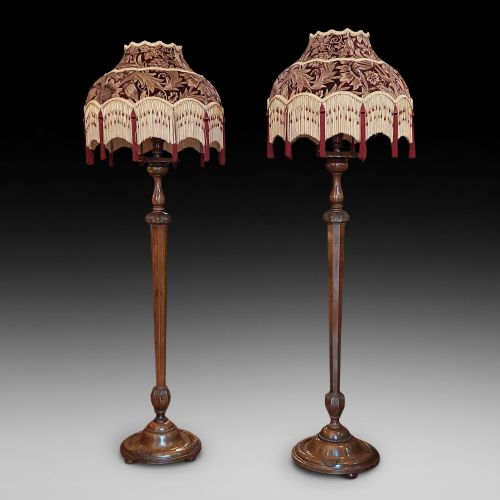
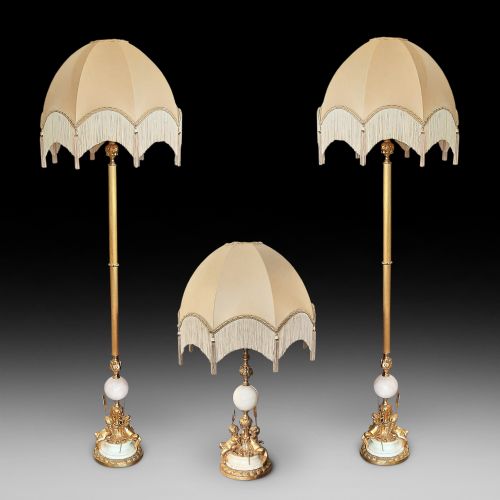
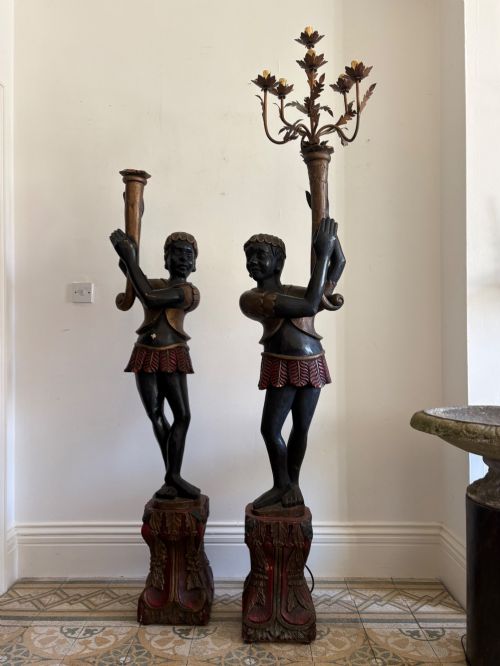
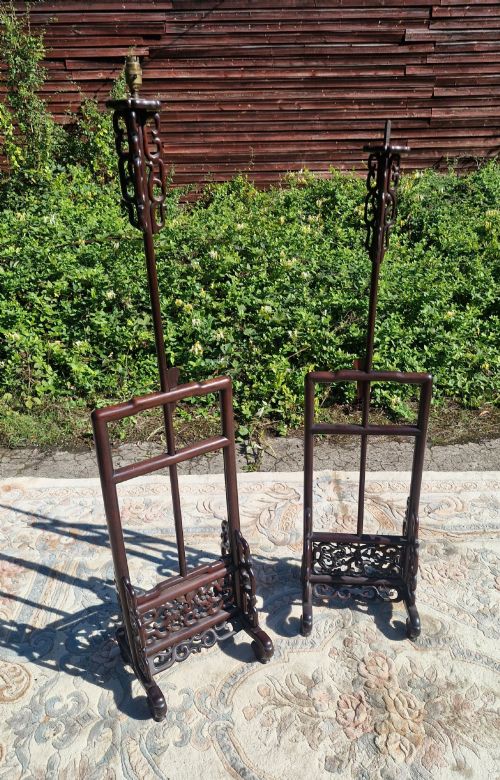
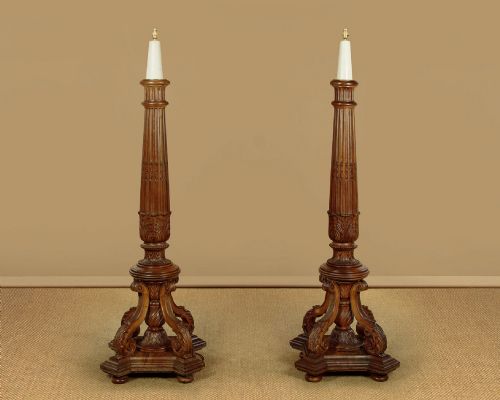
Standard lamp forms include adjustable Chinese brass standards, heavy Victorian timber shafts, and Venetian carved wood figures.
What varies in quality
Quality in these items rests upon the precision of the carving, the weight and purity of the metal components, and the harmony between the matched pair. Superior examples display crisp detail in figural elements and sturdy, well-balanced construction that maintains stability at tall heights.
The sophistication of the design and the integrity of original surface finishes, such as patination or gilding, distinguish finer pieces from simpler utilitarian lighting. Original or historically appropriate adaptations to wiring and mechanics also influence the overall standard of the pair.
F. De Luca·François-Christophe-Armand Toussaint
The Paired Floor Lamps Glossary
- Torchere
- A tall ornamental stand or floor lamp designed to hold a light source high above the ground. These figures or columns often serve a decorative function alongside illumination.
- Standard lamp
- A British term for a floor lamp, consisting of a heavy base and a tall vertical shaft. It typically supports a shade and stands independently in a room.
- Cairoware
- Metalwork inlaid with silver and copper, originating from Cairo and popular in decorative arts during the late nineteenth and early twentieth centuries. Pieces featuring this technique bring intricate Islamic patterns to lamp standards.
- Giltwood
- Wood that has been treated with a thin layer of gold leaf or gold paint. This technique provides a bright, reflective surface characteristic of Baroque and revival styles.
Paired Floor Lamps: Frequently Asked Questions
How do I place paired floor lamps in a room?
These lamps work well framing a fireplace, a large piece of furniture, or the entrance to an adjoining space to create visual balance. Their height allows them to anchor empty corners while providing ambient or uplight illumination.
Because they come as matched sets, placing them symmetrically enhances the formal layout of a traditional interior. Ensure there is adequate floor space around them so the bases and cords remain unobstructed.
Were these lamps originally electric?
Many older examples began as gas lights, candle holders, or oil lamps before later conversion to electricity. This evolution is common in pieces dating from the nineteenth and early twentieth centuries.
When evaluating older wiring, buyers often consult an electrician to ensure the internal components meet current safety standards. The conversion process preserves the historic standard while allowing modern use.
How do I date a pair of standard lamps?
Dating relies on observing the primary materials, construction methods, and stylistic cues present in the woodwork or metal casting. Details such as turned mahogany bases point towards Georgian or Victorian preferences, while geometric lines suggest later periods.
Comparing the decorative motifs, such as Baroque gilding or Art Deco geometry, helps narrow down the decade of manufacture. Hardware and weighting at the base also provide clues to the period of origin.