




Pair Vintage Vase Lamps
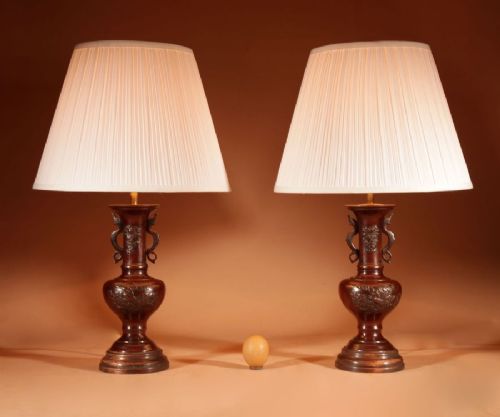
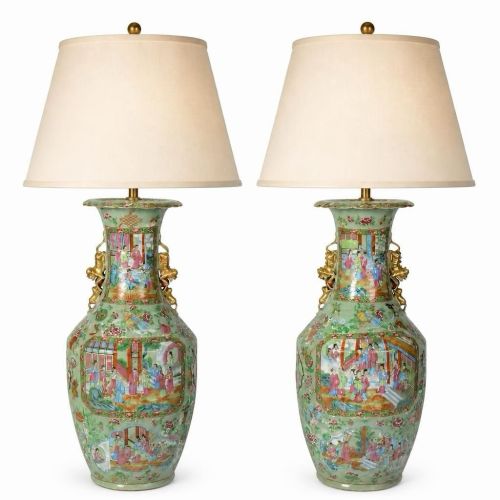
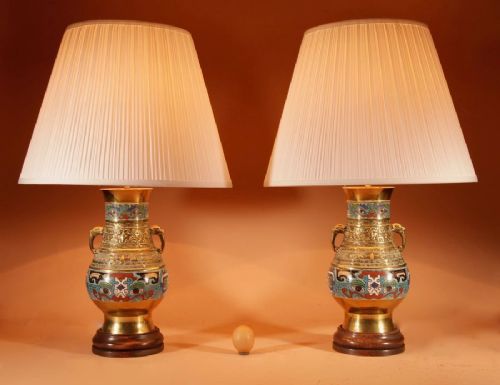
These pair vintage vase lamps unite decorative ceramics and metalwork with domestic lighting, offering symmetry and period character for interior settings.
Pair Vintage Vase Lamps
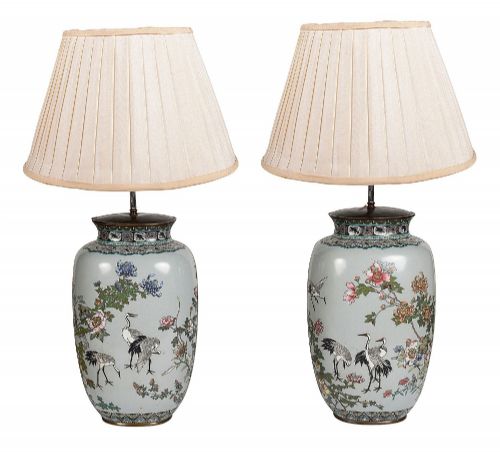
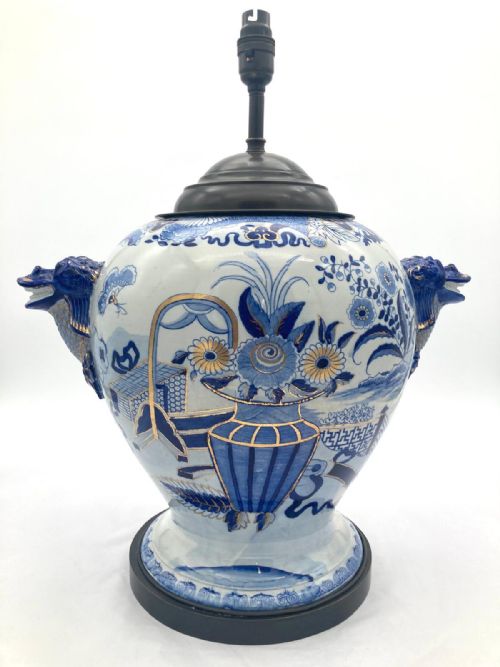
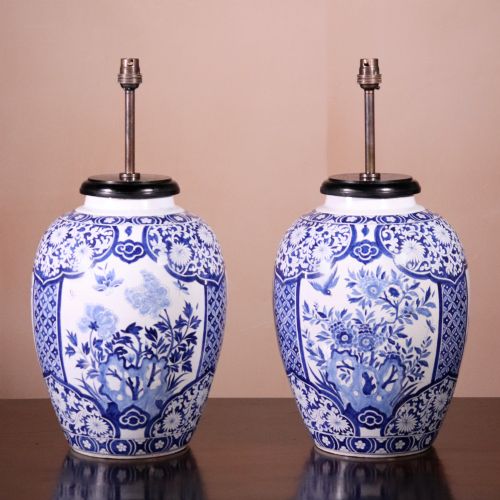
When searching for pair vintage vase lamps, buyers encounter matched configurations created by converting historical vessels into functional lighting. These assemblies predominantly utilise bodies originating from nineteenth-century Japanese and Chinese workshops, alongside European porcelain and earthenware.
The material forms on this page span Satsuma, Cloisonné enamel, Kutani porcelain, blue and white ceramics, and bronze. Makers adapted these ornamental vessels, pairing them to sit symmetrically upon tables and mantles.
Dating ranges from the eighteenth century through the Edwardian era and the early twentieth century. Japanese Meiji period examples and Chinese export wares form a significant portion of the available pieces.
Materials and conversion techniques
Craftsmen utilised porcelain, ceramic, brass, bronze, and enamel to form the original decorative vessels. Artisans applied hand-painted pigments, crackleware glazes, and detailed metal wirework to construct the varied surface patterns.
Conversion into lamps involved mounting the vases with metal fittings, such as ormolu or brass bases and necks, to securely house electrical components. Many examples retain complementary fabric or silk shades that complete the lighting composition.
Materials recorded on this page include brass, fabric, porcelain, enamel, wood, ceramic, silk, and Cloisonné enamel.
Assessing the examples
Quality rests upon the artistic execution of the original vase body and the precision of the metal mounts. Finer pieces display crisp hand-painted detail, intricate enamel work, and well-integrated hardware that complements the ceramic form.
The balance and proportion of the matched pair dictate visual success. Superior examples maintain exact symmetry in size, colour saturation, and decorative motifs between both lamps.
The Pair Vintage Vase Lamps Glossary
- Cloisonne Enamel
- A metalwork technique where thin wire partitions hold coloured enamel paste before firing. This method creates intricate patterned cells across vases and lamps.
- Satsuma
- A type of Japanese earthenware featuring a pale, crackled ivory glaze decorated with polychrome enamels and gilding. These ceramics are frequently converted into table lamps.
- Imari
- Japanese porcelain decorated in underglaze blue, iron red, and gold, originating from the Arita region. Pieces often display dense floral and geometric panels.
- Ormolu
- Gilded bronze mounts used historically to embellish decorative objects and furniture. In lamp conversions, ormolu provides ornate bases and neck fittings.
- Famille Verte
- A Chinese porcelain palette dominated by green enamel overglaze colours, developed during the Qing dynasty. The style depicts natural scenes, figures, and florals.
Pair Vintage Vase Lamps: Frequently Asked Questions
How do I choose matching lamps?
Look for balanced scale, matching ceramic bodies, and consistent painted motifs across both vessels. Even with converted antiques, symmetry remains the primary consideration for visual harmony.
Verify that the mounting hardware and shades complement each other equally to maintain a cohesive pair.
What periods do these lamps date from?
The listings encompass items spanning the eighteenth, nineteenth, and early twentieth centuries. Many pieces incorporate nineteenth-century Asian ceramics adapted during later decades.
Eras such as the Meiji period and Edwardian epoch are frequently represented among the available conversions.
Where should I place these lamps?
These lamps suit side tables, mantles, and larger surface areas where a symmetrical arrangement creates focal points. Their decorative ceramic bodies function as sculptural art during daylight hours.
Ensure adequate clearance around the shades to showcase the detailed enamel, bronze, or porcelain work.
Are the shades original?
Shades vary widely, with many selections featuring fabric or silk additions paired during the conversion process. Some configurations incorporate modern shades tailored to historical bases.
Review individual descriptions to determine the exact composition of the provided shades.