



Chinese Cloisonne Table Lamps
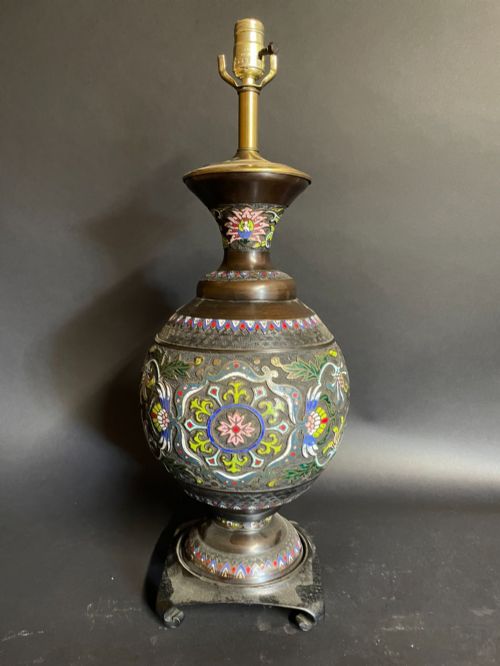
Chinese cloisonne table lamps bring vivid colour and intricate wirework into a room, offering a distinct blend of historical craftsmanship and decorative presence.
Chinese Cloisonne Table Lamps
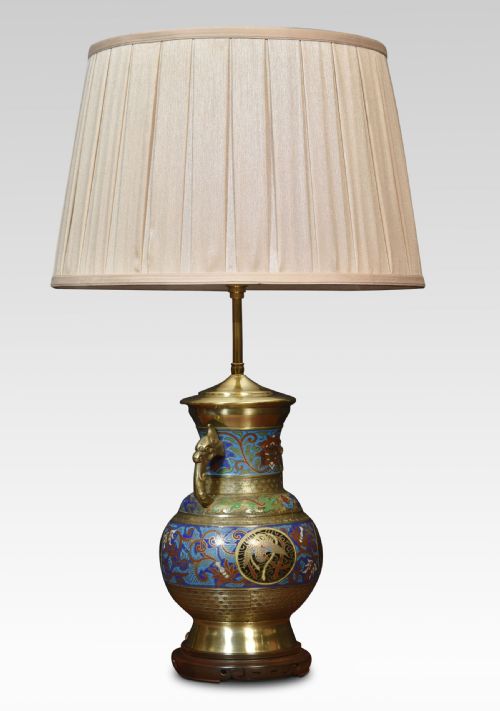
Most examples appear as matched pairs, though single lamp bases also surface. Forms range from twin handled bases to slender vase shapes, often mounted on ormolu or paired with fabric and silk shades.
The aesthetic draws heavily on Chinese Export and Chinoiserie traditions, bringing vibrant enamelled surfaces into domestic interiors. These objects merge traditional Asian metalwork with Western electrical adaptation.
How They Were Made
The construction relies on a metal foundation of brass, copper, or bronze, onto which fine metal wires are soldered to outline the decorative cells, known as cloisons. Artisans then fill these compartments with coloured enamel paste before firing the piece at high temperatures.
After firing, the surface is ground and polished down until the metal wires and enamel fields sit flush. Many nineteenth and early twentieth-century examples incorporate gilt bronze or ormolu mounts to frame the enamelled body, while wooden elements often support the base structure.
Several listings feature twin handles, turning erstwhile flower containers into sturdy companions for your reading nook.
What Varies in Quality
Quality rests primarily on the precision of the wirework and the depth of the enamel palette. Finer pieces display crisp, uniform cell boundaries and rich, evenly fired colour fields without pitting or cloudiness.
The integration of the metal mounts and the retention of original gilding also distinguish superior examples. Furthermore, pairs that maintain balanced symmetry and harmonious colouration command greater visual cohesion than mismatched or heavily altered conversions.
The Chinese Cloisonne Table Lamps Glossary
- Cloisonne
- A decorative metalwork technique where metal wires are soldered to a base to create compartments filled with enamel. This method defines the primary surface pattern of the lamps.
- Ormolu
- Gilded bronze applied as a mount or decorative trim. It frequently frames the base or collar of nineteenth-century pieces.
- Chinoiserie
- A Western stylistic tradition reflecting Chinese artistic motifs. It informs the decorative character of many export pieces.
- Qing Dynasty
- The final imperial dynasty of China, spanning the seventeenth to early twentieth centuries. Many listed vases date to the latter years of this period before conversion.
- Chinese Export
- Goods manufactured in China specifically for Western markets. These objects often combine Eastern techniques with forms suited to European and American homes.
Chinese Cloisonne Table Lamps: Frequently Asked Questions
Are these lamps converted from old vases?
Many chinese cloisonne table lamps began life as nineteenth or early twentieth-century vases before being adapted for electricity. The conversion process typically involves drilling the base or mounting the vessel with appropriate electrical fittings.
This method allows historic decorative objects to serve a functional purpose in modern interiors while retaining their original craftsmanship.
Do they come in pairs?
A significant portion of the available lighting consists of matched pairs, particularly those fashioned from symmetrical vases. Single lamp bases also appear within the selection.
Pairs offer greater versatility for mantelpieces, sideboards, or bedside tables where balanced illumination is desired.
What materials are used in the bodies?
The structural body typically consists of copper, brass, or bronze, which supports the intricate wirework and coloured enamel fields. Gilt bronze or ormolu mounts frequently accent the top and bottom of the vessel.
Wooden components and fabric or silk shades complete the conversion into a functional table lamp.
How do I date these lamps?
Dating relies on stylistic markers from periods such as the nineteenth century, the Qing Dynasty, or the early twentieth-century Chinese Republic era. The character of the enamelwork and the style of the metal mounts provide key chronological clues.
Expertise in historical manufacturing techniques helps distinguish late nineteenth-century production from subsequent decades.