

Pair Victorian Bedside Cabinets
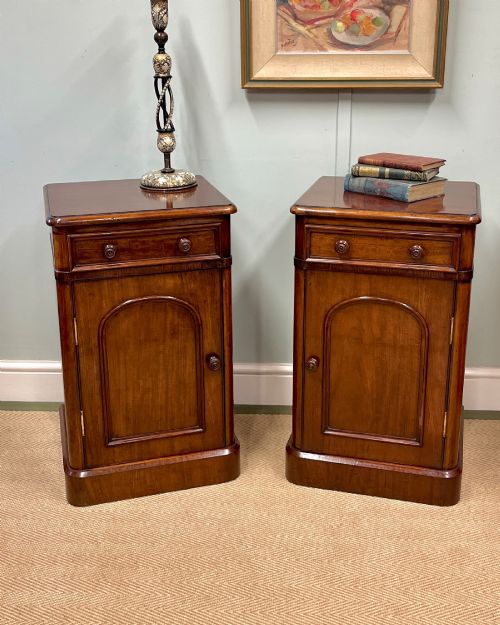
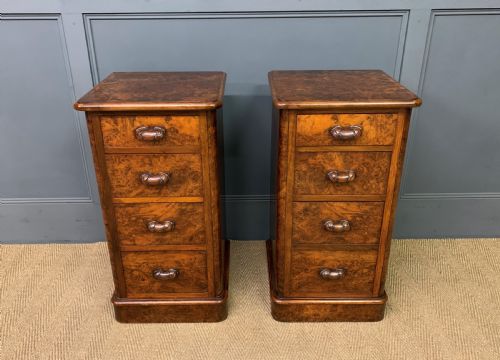
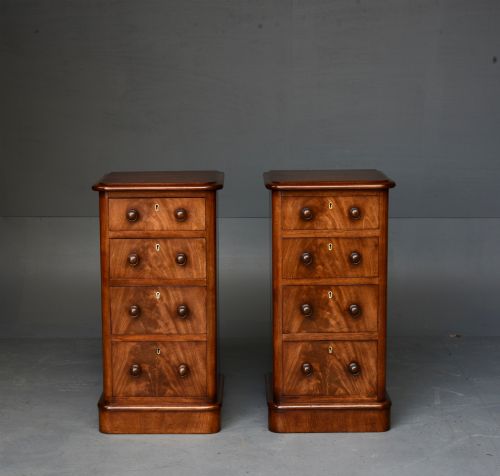
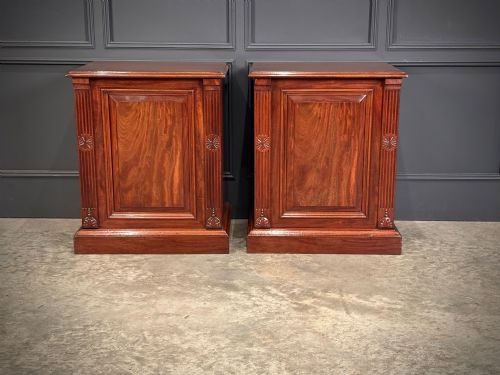
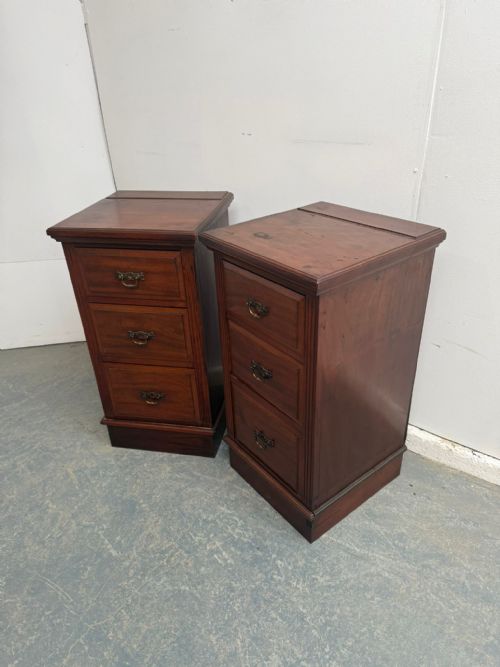
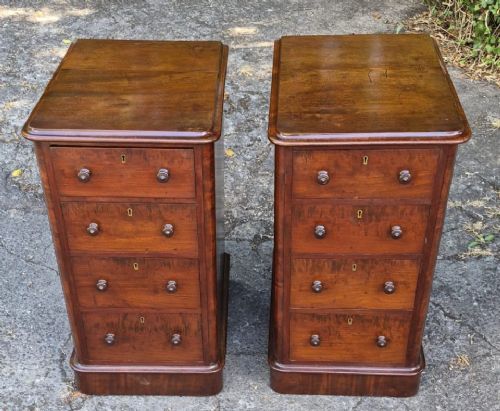
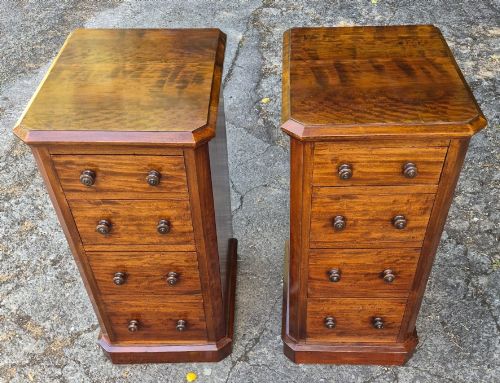
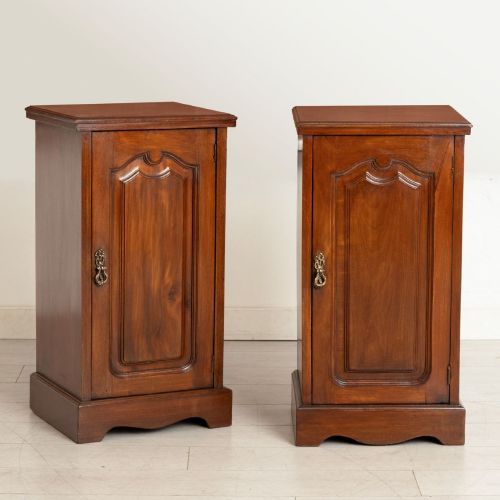
Pair victorian bedside cabinets provide matched bedside storage in timber ranging from flame mahogany to burr walnut.
Pair Victorian Bedside Cabinets
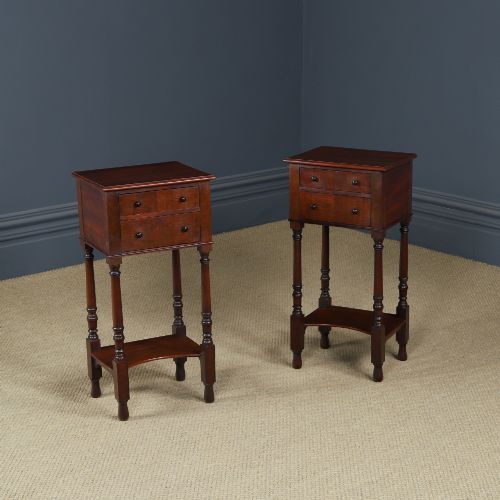
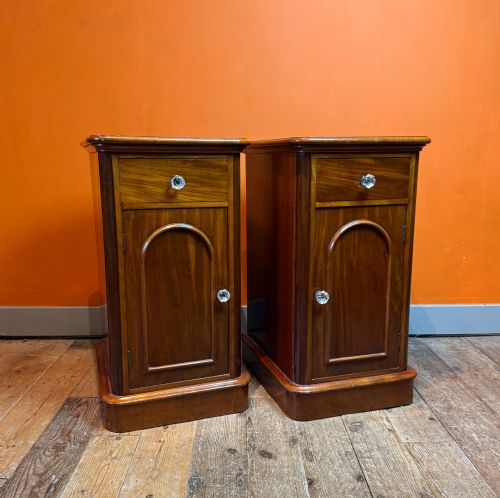
Pair victorian bedside cabinets encompass matched pairs of small cupboards, chests of drawers, and pot cupboards produced during the nineteenth century. The examples encountered here date primarily from the mid to late Victorian decades, alongside related nineteenth-century adaptations and regional styles. They serve beside a bed to hold night-time necessities while balancing the symmetry of a bedroom layout.
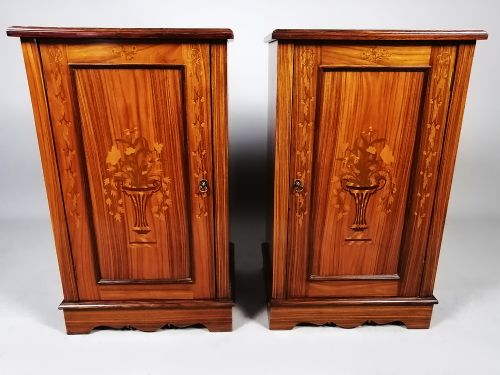
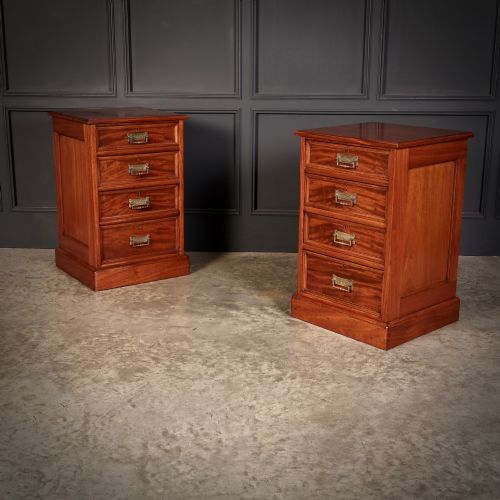
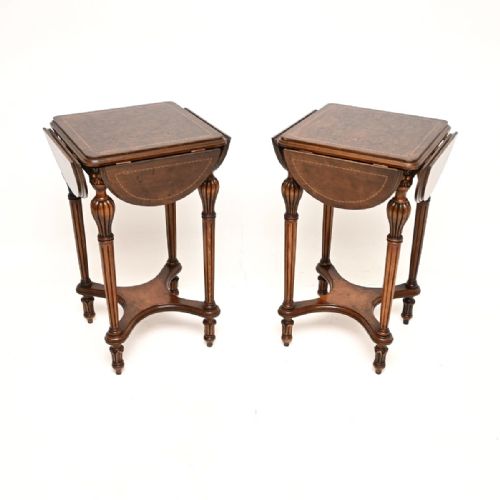
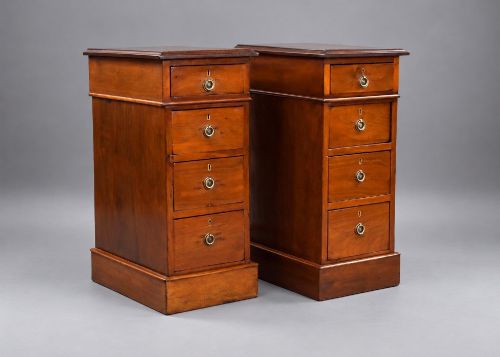
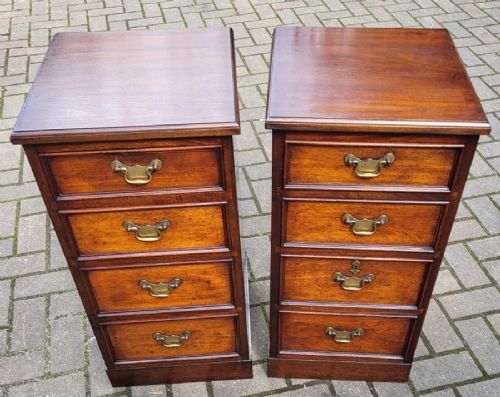
The dominant forms are pedestal cabinets with a single door enclosing a shelf, and small chests containing three or four graduating drawers. Variations include marble tops, upstands, and open nightstands, reflecting the diverse domestic requirements of the Victorian period. Mahogany and pine predominate among the surviving pieces, supplemented by walnut, rosewood, and oak.
Materials and Construction
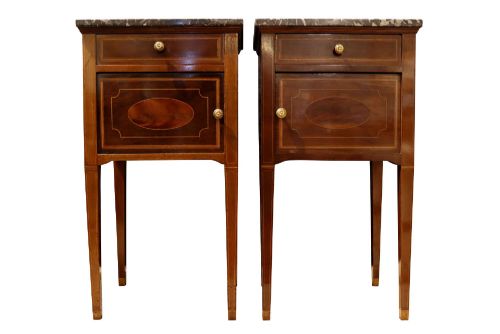
Cabinet makers utilised solid timbers alongside figured veneers such as burr walnut, flame mahogany, and amboyna applied to secondary carcases. Drawer construction typically relied on hand-cut dovetails and solid timber linings, while doors incorporated panelled or veneered construction to prevent warping. Brass handles, marquetry inlay, and carved details finish the surfaces.
Marble tops appear frequently on higher-status walnut and mahogany examples, providing a durable, wipe-clean surface for water jugs and wash accessories. Waxing and polishing were the standard finishing methods for both hardwood show pieces and softer pine utility items. Faux bamboo turning and brass hardware further demonstrate the varied workshop techniques of the era.
Pair Victorian Bedside Cabinets Retail Price Guide 2026
Typical asking prices for pair victorian bedside cabinets among the pieces listed under this phrase on Sellingantiques today, from the lower quarter to the upper quarter. They describe what is for sale here now, not the wider market.
Periods represented span the early nineteenth century through to Edwardian transitions, with the 1880s and 1890s providing the highest concentration of survivals.
Quality and Distinction
The distinction between standard utility furniture and high-status pieces lies in the selection of timber and the precision of decorative details. Matched grain patterns across both cabinets of a pair and intricate marquetry or brass inlay elevate a piece above plain pine or standard mahogany. Original marble tops, well-figured burr walnut veneers, and solid brass handles indicate workshop care.
Structural integrity depends on timber seasoning and the retention of original backboards, drawer linings, and locks. Adaptations and alterations, such as height adjustments or converted components, differentiate strictly original specimens from later joined pairs.
Warings Liverpool·Waring and Gillows
The Pair Victorian Bedside Cabinets Glossary
- Marquetry
- The art of applying decorative veneer pieces to a structure to form intricate geometric or floral designs. This technique appears on late nineteenth-century rosewood and walnut cupboards.
- Pot Cupboard
- A traditional bedside cabinet containing a single door and an internal shelf designed originally to house a chamber pot. They form a large proportion of the matched pairs found in nineteenth-century bedrooms.
- Flame Mahogany
- A veneer cut from the fork of the mahogany tree where the grain produces a distinctive flamelike pattern. Cabinet makers used it on prominent drawer fronts and door panels.
- Upstand
- A vertical wooden barrier attached to the rear edge of a tabletop or cabinet top to prevent items from sliding off. This feature is common on pine and mahogany bedroom storage.
Pair Victorian Bedside Cabinets: Frequently Asked Questions
Were these cabinets originally made as pairs?
Many nineteenth-century cabinets were produced as matched pairs to satisfy the Victorian preference for bedroom symmetry.
Some surviving pairs, however, consist of similar single pieces assembled together at a later date based on matching timber and dimensions.
How do I care for antique marble tops?
Marble surfaces require regular cleaning with a damp cloth and neutral soap, avoiding acidic substances like lemon or vinegar that etch the stone.
Applying a specialist stone wax protects the polished finish from moisture rings and stains.
Are pine bedside cabinets authentic period pieces?
Pine examples served as utilitarian bedroom furniture throughout the Victorian era, often finished with plain wax or painted surfaces.
They offer a simpler alternative to figured mahogany and walnut pieces while retaining authentic nineteenth-century construction methods.