


Pair Tall Desk Lamps
These pair tall desk lamps bring commanding height and direct illumination to a workspace, built from solid brass, oak, crystal, and porcelain across multiple historical periods.
Pair Tall Desk Lamps
When you search for pair tall desk lamps, you encounter substantial vertical lighting solutions designed for large surfaces and writing desks. These pieces span from the nineteenth century through the Art Deco era, offering considerable elevation compared to standard domestic table lighting.
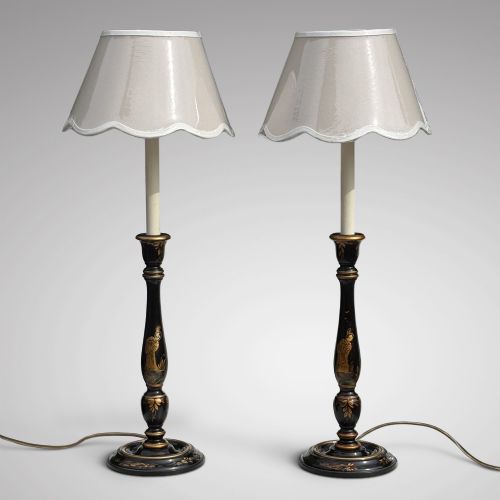
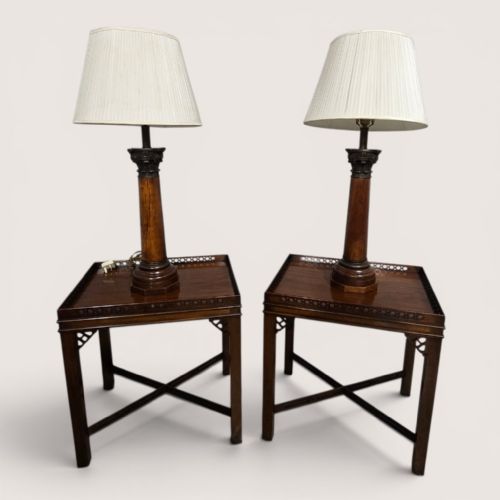
The most common examples you meet on this page utilise classical architectural forms such as Corinthian columns in brass or carved timber. Alongside these column designs appear Chinese turquoise glaze porcelain figures, lacquered Chinoiserie cylinders, and converted silver-plated candlesticks.
Origins range across British, French, and Chinese aesthetics, embracing styles from Regency and Victorian through to Art Deco glamour. The common thread is height and symmetry, delivered as a matched pair ready for placement.
How they were made
Construction relies heavily on cast and turned brass, often taking the form of fluted Corinthian columns with stepped square bases. Ormolu, silver plate, and carved oak provide alternative structural weight for these tall silhouettes.
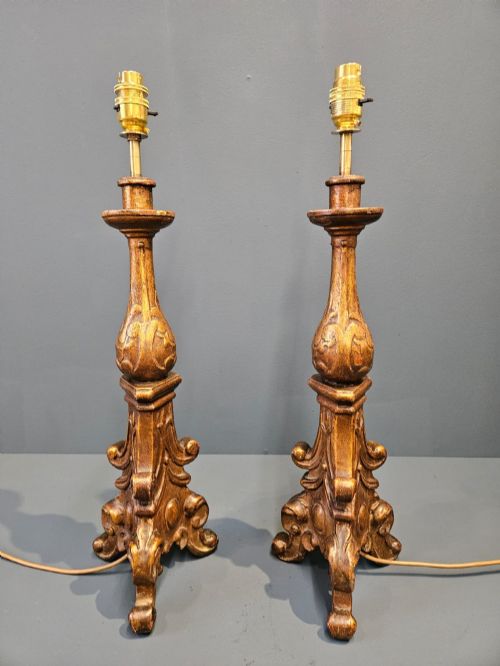
Decorative surfaces incorporate hand-applied lacquer, gilding, and painted details on timber or metal. Porcelain elements feature monochrome or turquoise glazes, while crystal components are cut and secured with metal mounts.
Styles recorded here range from strict Neoclassical columns to whimsical Chinoiserie and ornate French Rococo designs.
What varies in quality
The distinction between ordinary and superior pair tall desk lamps lies in the crispness of the casting and the weight of the metal. Heavier gauge brass and deeply carved timber demonstrate superior initial manufacture.
Proportion and architectural correctness dictate visual success, particularly on column forms where capital detailing must align with the shaft. Original gilding, intact patination, and unpolished surfaces elevate the standing of any pair.
The Pair Tall Desk Lamps Glossary
- Corinthian column
- An architectural column order featuring an ornate capital decorated with acanthus leaves. This motif appears frequently on nineteenth and early twentieth century metal lamp bases.
- Ormolu
- Finely ground high-carat gold applied to a bronze or brass object using a mercury amalgamation process. This technique gives a rich, warm metallic lustre found on French pieces.
- Chinoiserie
- European artistic style reflecting Chinese motifs and techniques, often executed in lacquered wood. It brings painted narrative scenes to cylindrical lamp bodies.
- Silver plate
- A thin layer of silver bonded to a base metal core such as copper or brass. It provides the visual appeal of solid silver with practical durability for desk use.
Pair Tall Desk Lamps: Frequently Asked Questions
How tall are these desk lamps typically?
These lamps stand significantly higher than standard table lighting, often reaching two feet or more to clear paperwork and dominate a large desk surface.
Such height requires a sturdy weighted base, which most brass and timber examples provide naturally through solid construction.
Can these desk lamps be used safely today?
Most antique lighting requires professional rewiring to meet modern electrical standards before daily use in a home or office.
Qualified electricians can update internal wiring and fit appropriate lamp holders without altering the historic exterior appearance.
How do I identify a Regency period lamp?
Regency pieces display neoclassical restraint, heavily influenced by ancient Greek and Roman design principles. Look for clean architectural lines and substantial cast brass forms.
Original items from this era often started life as candlesticks before later conversion to electricity.
What is the difference between brass and ormolu?
Brass is an alloy of copper and zinc used for structural strength and bright metallic finishes throughout various design periods. Ormolu involves a gold finish applied over bronze or brass, creating a deeper, richer hue.
Ormolu appears predominantly on finer French decorative items from the nineteenth and early twentieth centuries.