


Antique French Sideboard Lamps
Antique French sideboard lamps bring striking height, heavy cast metals and romantic period illumination to a dining room or hallway.
Antique French Sideboard Lamps
Antique french sideboard lamps encompass decorative lighting forms designed to sit on large dining room furnishings or console tables. These pieces draw from periods such as the nineteenth century, Victorian era, nineteen-ten and nineteen-twenty. Buyers encounter heavy metal and crystal formations originating from continental workshops.
The objects listed range from classical urn shapes and converted candelabra to column lamps and console lights. Brass and ormolu dominate the selection, frequently paired with glass, marble or fabric elements. Styles lean heavily towards neoclassical, empire, gothic revival and french art nouveau designs.
How they were made
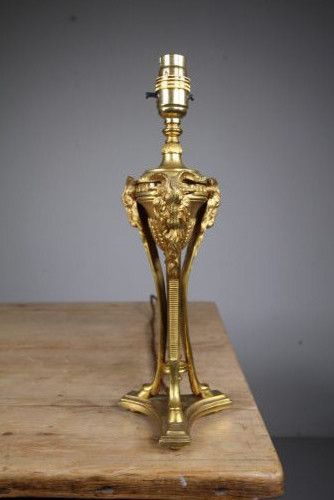
Maker workshops utilised heavy casting techniques for bronze, brass, ormolu and gilt bronze frames. Metal components were shaped into rams heads, classical urns, and architectural columns before receiving gilding or patination. These dense metal foundations provided the stability required for tall table lighting.
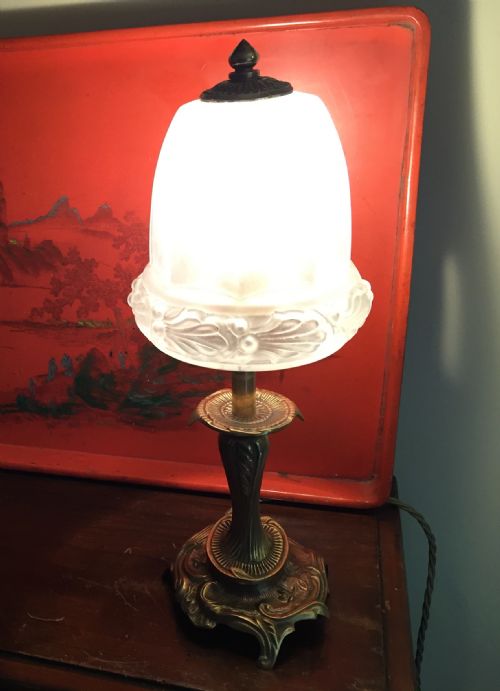
Makers incorporated cut crystal drops, white glass bodies, and frosted glass shades into the metallic structures. Marble bases were carved to support multi-branch candelabra and column lamps. Fabric shades completed the construction on wired examples.
Some nineteenth century lamps feature angry brass rams gazing out from the sideboard.
What varies in quality
The fineness of the metal casting dictates the visual success of the piece, separating crisp ormolu and detailed bronze work from softer, less defined mouldings. Depth of chasing on classical urns and columns reveals the hand of a skilled artisan.
The integration of mixed materials alters the overall standard. High quality examples combine substantial marble plinths, heavy cut crystal or frosted glass elements, and well-preserved gilding rather than superficial surface finishes.
The Antique French Sideboard Lamps Glossary
- Ormolu
- A gilded bronze technique used extensively in French metalwork. This process creates a rich, gold-coloured finish on decorative mounts and lamp bases.
- Empire style
- A design movement inspired by classical antiquity and Roman military power. Pieces in this style feature formal symmetry and heavy gilded bronze components.
- Candelabra
- A branched candleholder adapted for electric illumination. These fixtures frequently appear as large matching pairs on sideboards.
- Gilt bronze
- Bronze metal treated with a gold leaf or mercury gilt application. It provides a durable and reflective surface on nineteenth century lighting.
Antique French Sideboard Lamps: Frequently Asked Questions
Where should I place these lamps?
These tall lighting pieces sit well on large dining room sideboards, console tables, or wide hallway chests. Their height and heavy metallic presence demand substantial furniture.
Position them where the detailed cast bronze, ormolu, or crystal elements catch ambient light. They create a strong focal point in traditional rooms.
How do I identify the period?
Look closely at the decorative vocabulary and casting methods used in the metalwork. Styles range from gothic revival and neoclassical to empire and art nouveau.
Materials such as heavy ormolu, cut crystal, and specific marble bases point towards nineteenth century or early twentieth century French production.
Are these pieces electrified?
Many examples on the market have been adapted for modern electrical use over time. Some retain multi-branch configurations originally built for candles or early wiring.
Buyers should examine the internal wiring and consult an electrician to ensure safety standards match modern domestic requirements.
What styles are most common?
Neoclassical and Empire designs appear frequently, alongside French art nouveau and gothic revival pieces. These aesthetics utilise classical motifs like rams heads and urns.
Makers also produced column lamps and console lamps utilising bronze, brass, and frosted glass to achieve a grand decorative effect.