



Pair Swedish Carver Chairs
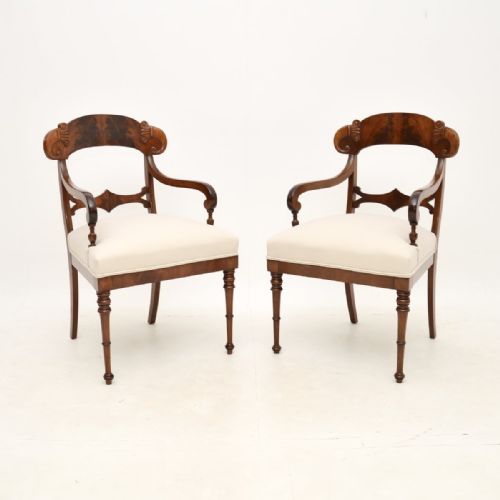
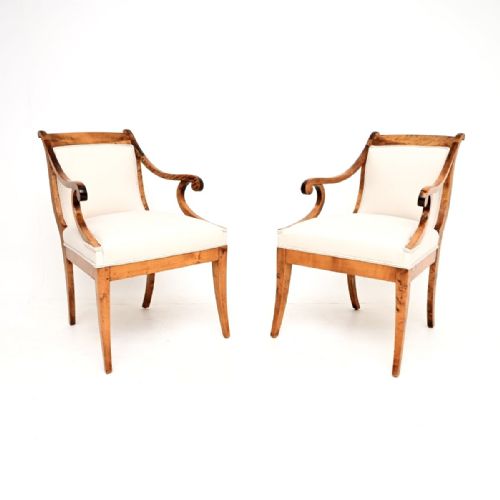
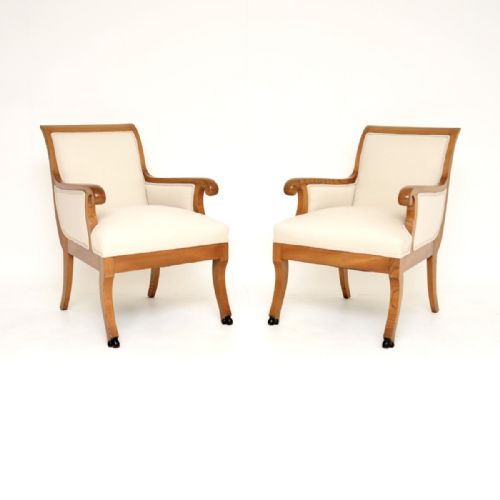
Pair swedish carver chairs bring striking Nordic form to a room, offering comfortable seating with distinct regional lines.
Pair Swedish Carver Chairs
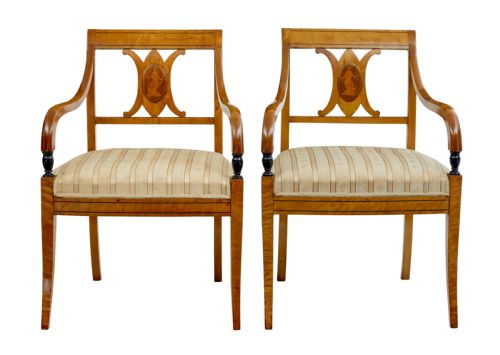
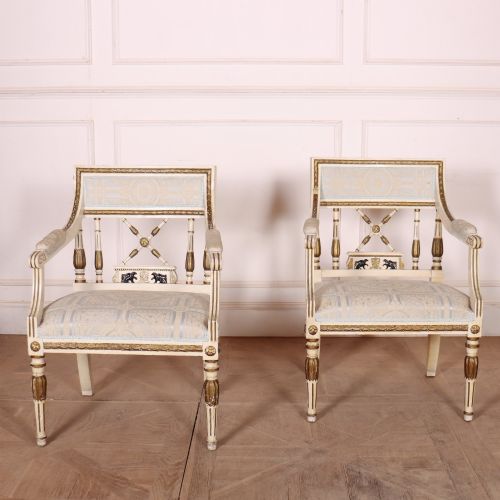
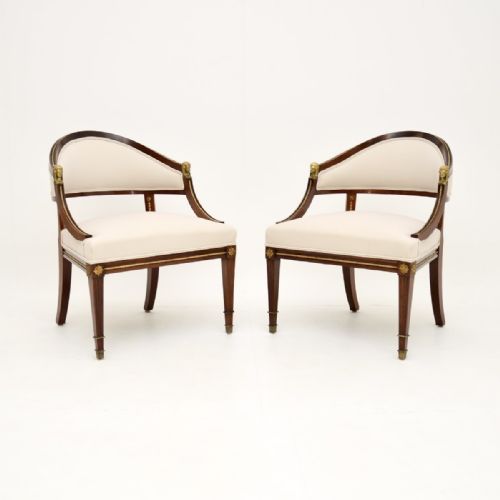
When you search for pair swedish carver chairs, you encounter robust armchairs rooted in nineteenth and early twentieth century Scandinavian design. The selections span notable regional movements including Biedermeier, Neoclassical, Empire Revival, and Art Deco.
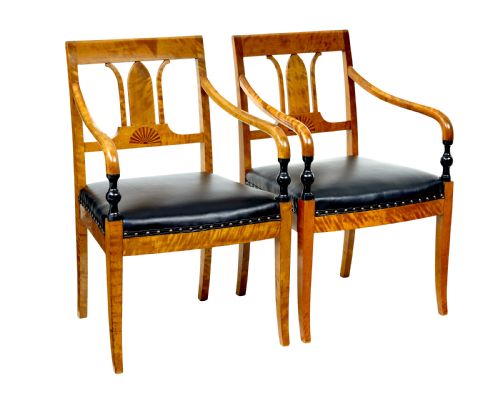
The aesthetic ranges from the restrained geometry of early nineteenth century neo-classical models to the warmer, figured grains of mid-century birch. Collectors find that matching pairs maintain a strong symmetrical presence in traditional and modern interiors alike.
Materials and construction
Makers utilised native Scandinavian timber, particularly birch and satin birch, alongside imported mahogany for deeper tones. Ebonised wood and painted surfaces also appear, giving contrast to the structural frames.
Upholstery relies on traditional fabric and leather coverings secured over sprung or padded armchairs. Brass detailing occasionally surfaces on neoclassical and empire revival frames for subtle accent.
Pair Swedish Carver Chairs Retail Price Guide 2026
Typical asking prices for pair swedish carver chairs among the pieces listed under this phrase on Sellingantiques today, from the lower quarter to the upper quarter. They describe what is for sale here now, not the wider market.
Listings feature birch and mahogany timber across nineteenth century neoclassical and early twentieth century art deco periods.
Assessing quality and execution
Superior examples demonstrate meticulous timber selection, particularly in figured birch veneers where the grain mirrors symmetrically across the backrest and arms. Carved elements show sharp, deliberate chisel work rather than soft, mass-produced moulding.
The integrity of the frame construction dictates longevity, with tighter joinery and heavier wood stock marking superior workshop output. Original surface finishes that retain a warm, historic patina elevate the standing of any pair.
The Pair Swedish Carver Chairs Glossary
- Carver chair
- An armchair designed with solid wooden armrests, historically placed at the head of a dining table or used as a standalone seat. These pieces provide structured support with prominent wooden framing.
- Biedermeier
- A influential Central European and Scandinavian style spanning the nineteenth century prioritising clean lines, domestic comfort, and prominent wood grain over heavy ornamentation. This aesthetic defines several birch armchairs on the market.
- Neoclassical
- A revival movement drawing inspiration from classical antiquity, featuring symmetrical forms, straight tapered legs, and restrained architectural details. It forms the basis of numerous nineteenth century Swedish seat designs.
- Satin birch
- A light-coloured timber featuring a shimmering, reflective grain pattern highly prized by Scandinavian cabinet makers. It provides a luminous quality to nineteenth century seating.
- Ebonised wood
- Timber treated with a dark finish to imitate expensive ebony, frequently utilised for decorative contrast on neoclassical and nineteenth century furniture frames.
Pair Swedish Carver Chairs: Frequently Asked Questions
How do I style pair swedish carver chairs?
These armchairs work effectively when placed opposite a sofa or used to anchor an empty corner in a living room. Their distinct timber frames provide a strong focal point.
Keep surrounding decor relatively understated to let the wood grain and period silhouettes stand out without visual clutter.
Were these chairs used at dining tables?
Carver chairs historically served as head-of-table seating or occasional chairs in parlours and halls. Their supportive armrests made them comfortable for extended sitting.
Today, they function equally well as desk chairs or accent seating in bedrooms and libraries.
How do I identify a Biedermeier armchair?
Biedermeier pieces focus on minimalist forms, smooth surfaces, and striking veneers rather than elaborate carvings. Look for warm honey-coloured birch and gentle curves.
They date primarily from the mid-nineteenth century and offer a clean, transitional aesthetic.
What is the difference between Empire and Neoclassical styles?
Neoclassical seating leans towards lighter, geometric proportions with straight tapered legs and subtle classical motifs. Empire style, and its later revivals, introduces heavier, more imposing silhouettes with grander proportions.
Both styles draw on ancient Greek and Roman design principles but execute them with varying degrees of visual weight.