

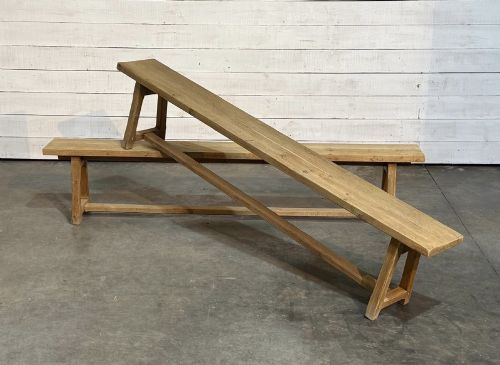
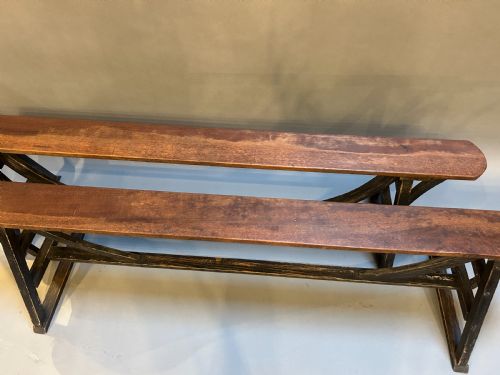
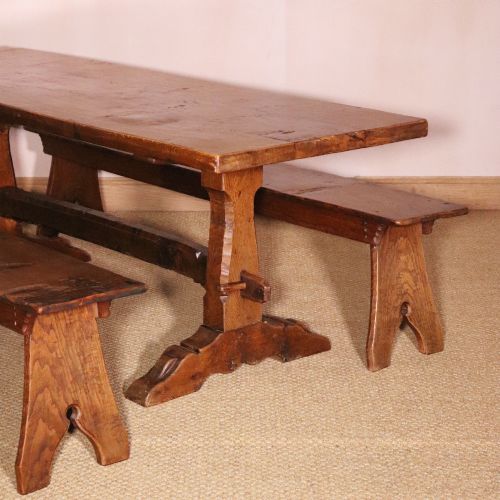

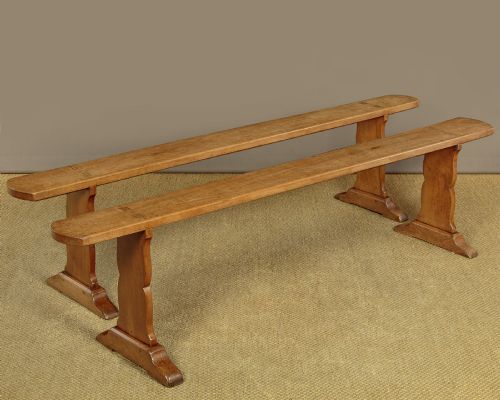

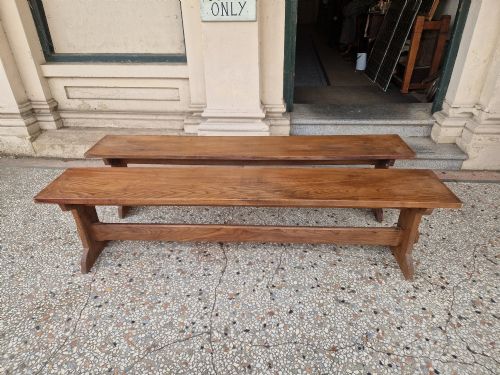
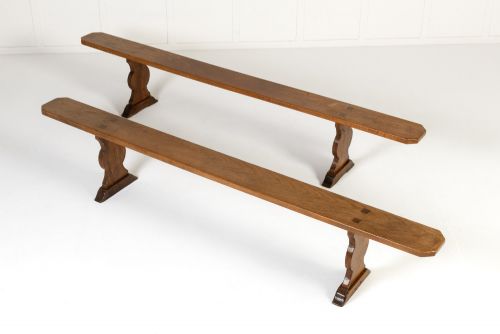
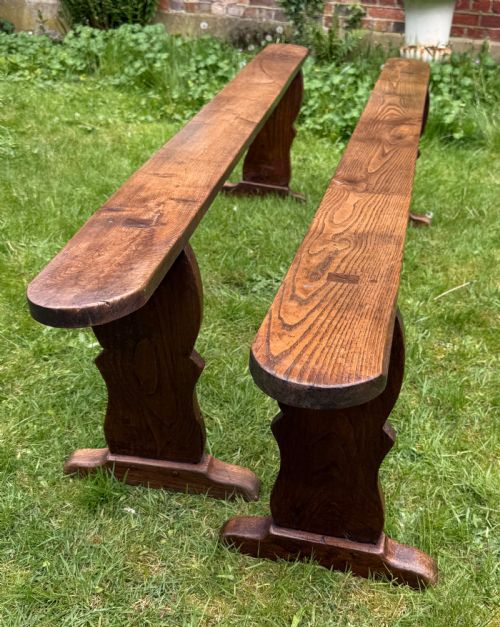
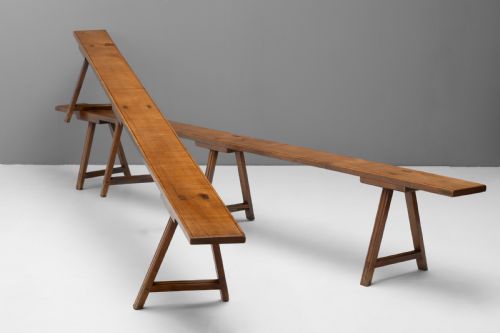

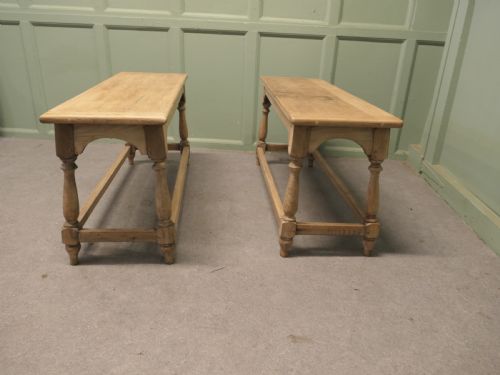
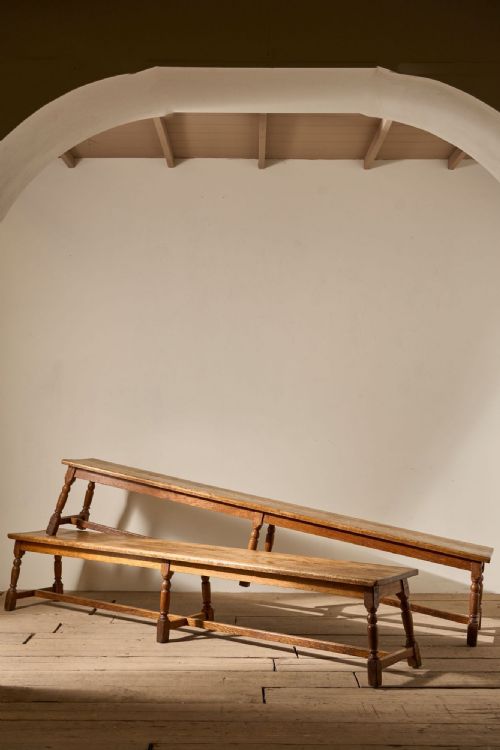


Pair Rustic Wooden Benches
Pair rustic wooden benches bring honest character to an interior, offering matching seating shaped by decades of everyday use.
Pair Rustic Wooden Benches
These pair rustic wooden benches encompass seating forms created across the nineteenth and early twentieth centuries, spanning French, English, and Scandinavian traditions. Buyers seeking pair rustic wooden benches will encounter dining benches, hall benches, and school benches suited for communal seating.
The selection frequently includes examples rendered in regional styles such as French provincial, rustic farmhouse, and colonial designs. Most pieces serve practical functions in hallways, kitchens, or dining spaces where matching lengths are required.
How they were made
Carpenters constructed these benches from solid timbers including oak, pine, cherrywood, elm, fruitwood, and hardwood. These native woods were selected for structural resilience and worked using traditional joinery methods appropriate for heavy utility.
Surfaces often show the straightforward finishing characteristic of country workshops, occasionally featuring bleached treatments or historic painted finishes. Construction prioritises durability, utilising pegged joints and solid boards to withstand continuous daily wear.
Pair Rustic Wooden Benches Retail Price Guide 2026
Typical asking prices for pair rustic wooden benches among the pieces listed under this phrase on Sellingantiques today, from the lower quarter to the upper quarter. They describe what is for sale here now, not the wider market.
Listings feature timbers including oak, pine, cherrywood, elm, fruitwood, and hardwood spanning the nineteenth and early twentieth centuries.
What varies in quality
Quality rests primarily in the integrity of the timber and the honesty of the construction, distinguishing robust architectural proportions from lighter utility pieces. Benches retaining their original surface patination and substantial timber thickness command greater interest.
The degree of wear and the preservation of original joinery define the standing of individual pairs. Pieces displaying balanced proportions and well-matched timber grain across both benches demonstrate superior workshop origin.
The Pair Rustic Wooden Benches Glossary
- Bleached oak
- Oak timber treated to lighten its natural tone, a finish often found on country furniture of the late nineteenth and early twentieth centuries. This process subdues the yellow undertones of the wood.
- Cherrywood
- A dense fruitwood utilised for regional cabinetmaking and seating due to its fine grain and warm colour. It ages to a deep patina with prolonged exposure to light.
- Joint bench
- A sturdy form of wooden bench constructed with pegged mortise and tenon joints rather than nailed assembly. This method provides exceptional rigidity.
- Refectory bench
- A long, narrow seating form traditionally paired with a communal dining table. These pieces originated to accommodate large households in halls and refectories.
- Pitch pine
- A resinous pine variety known for its distinct grain pattern and durability, frequently employed in institutional and school furniture. It resists moisture well due to its natural sap content.
Pair Rustic Wooden Benches: Frequently Asked Questions
How do I care for wooden benches?
Maintain the timber by dusting regularly with a dry cloth and avoiding placement near direct heat sources that cause wood to split.
Apply occasional natural wax feeds sparingly to nourish dry surfaces without building up heavy residues.
Are these benches sturdy enough for daily dining?
Most examples were built for robust service in farmhouses, schools, or halls, making them structurally suited for everyday seating.
Solid timber construction and pegged joints ensure they handle regular weight without losing stability.
How can I tell the period of a wooden bench?
Examine the tool marks, timber selection, and joint construction for indicators of nineteenth or early twentieth-century hand-working.
Surface patination and wear patterns around the footrests and edges also offer clues to the age of the piece.