
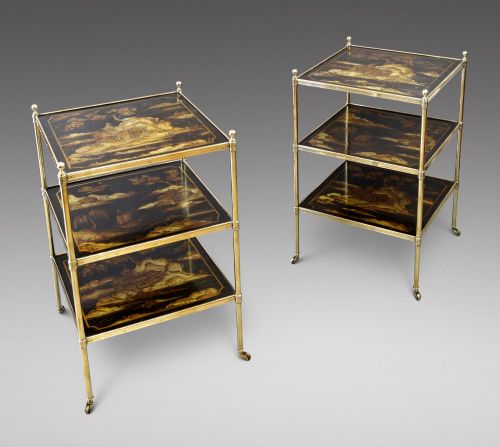
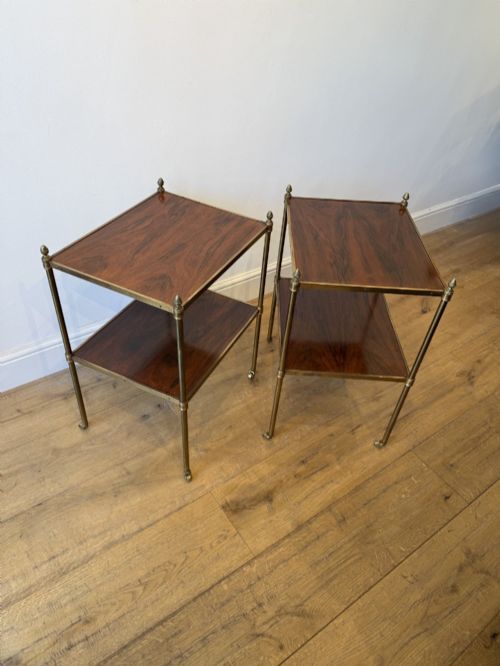


Pair Regency Nightstands
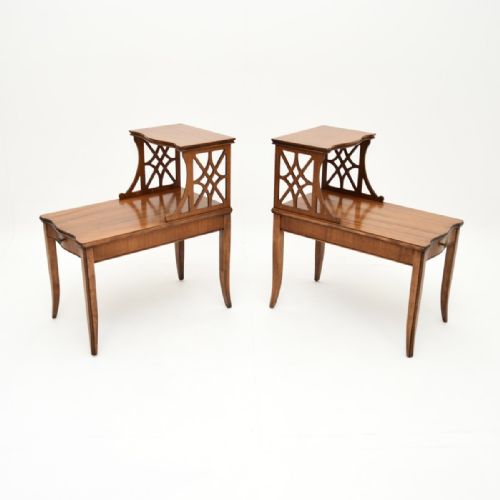
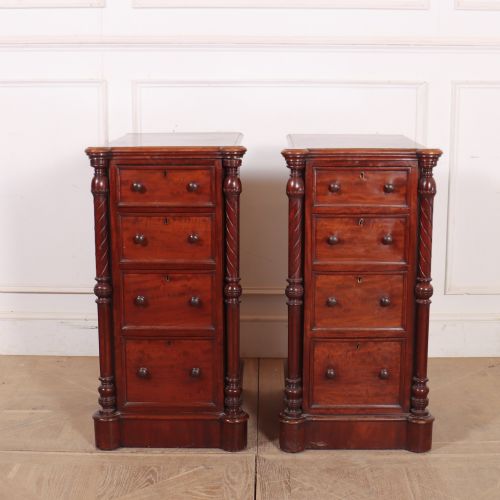
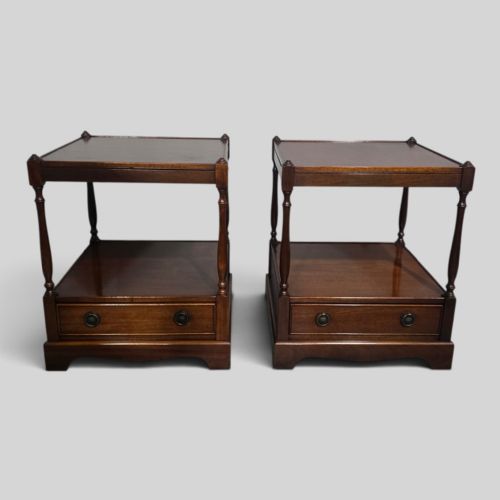
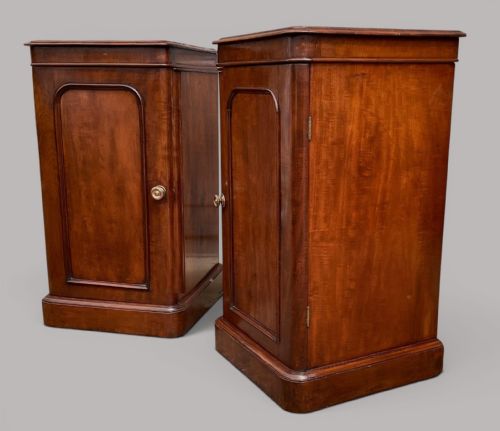
Pair regency nightstands bring matched proportion and classical symmetry to a bedroom, offering concealed storage alongside the bed.
Pair Regency Nightstands
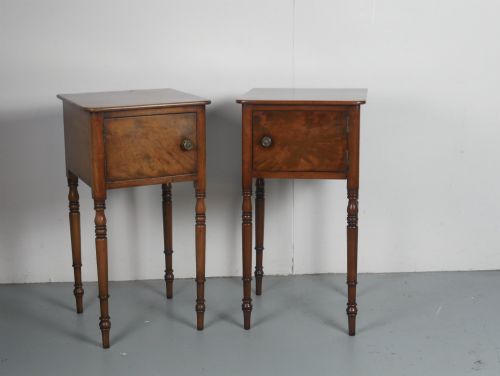
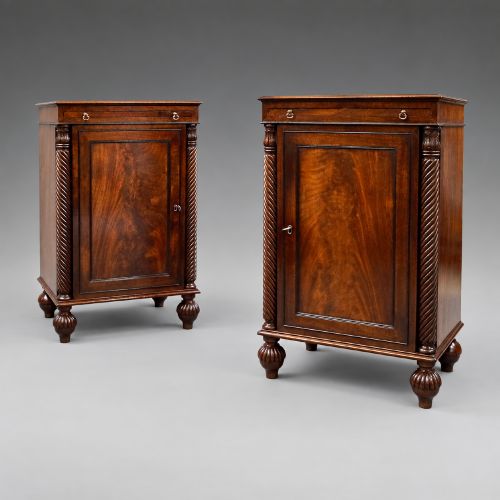
A pair regency nightstands typically comprises matching bedside cabinets, pedestals, or small lamp tables designed to sit symmetrically on either side of a bed. These pieces draw from the formal vocabulary of the early nineteenth century, featuring architectural proportions and clean lines.
While genuine period examples date from the Regency and George IV eras, buyers frequently encounter later revivals from the nineteenth and early twentieth centuries. These later interpretations adopt the classic forms of the original period while serving modern bedroom layouts.
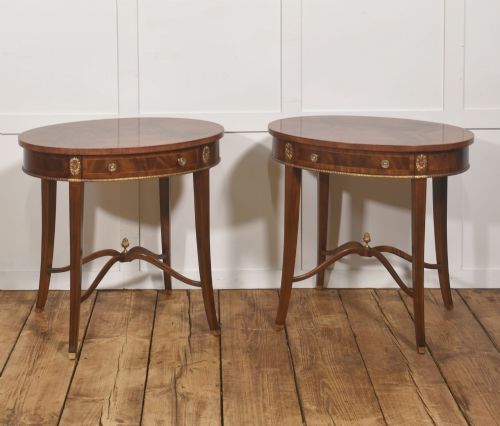
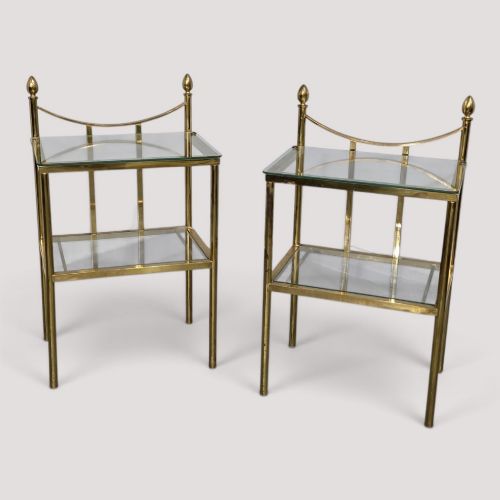
The objects function primarily as bedside storage or display surfaces, taking the form of enclosed cupboards, chests of drawers, or open étagères. Mahogany and rosewood dominate the selection, often complemented by brass mounts and flame veneer surfaces.
Materials and construction
Cabinetmakers utilised solid timber frames faced with figured mahogany, flame mahogany veneer, or rosewood to create rich grain patterns across the primary surfaces. Secondary timbers provided internal structural stability for drawers and carcases.
Metal detailing played a functional and decorative role, with cast brass handles, gallery rails, and sometimes glass tiers incorporated into the design. Ebonised wood accents occasionally provided contrast against the warmer tones of the main timber.
Some nineteenth-century bedside cabinets secretly doubled as washstands, hiding basins behind panelled doors for the morning routine.
Assessing quality and execution
Quality rests in the selection of timber veneers and the precision of the joinery, particularly where drawer linings and carcase joints meet. Superior pieces display continuous grain matching across drawer fronts and balanced figuring in flame mahogany.
The refinement of carved details, turning on supports, and the weight of cast brass handles distinguish higher-tier workshops from standard commercial production. Maker attributions or signatures further elevate the standing of individual pieces within this category.
Gillows·Holland and Sons·Mallett
The Pair Regency Nightstands Glossary
- Flame mahogany
- A veneer cut from the fork of the mahogany tree to produce a distinctive flame-like pattern. This decorative figuring was favoured for prominent surfaces on high-end furniture.
- Pedestal cupboard
- A freestanding cabinet with a single door enclosing interior shelving or space. These units often stand on a plinth base.
- Étagère
- A set of open shelves for displaying small objects or lamps. These tiered pieces provide lighter visual weight than enclosed cabinetry.
- Ebonised wood
- Timber treated with a dark stain or finish to imitate ebony. This technique provided sharp contrast on mouldings and decorative details.
- Bowfront
- A convex curved front section on a cabinet or set of drawers. This shape softens the angles of the piece and reflects light across the veneer.
Pair Regency Nightstands: Frequently Asked Questions
How do I spot a true period pair?
Examine the secondary timbers used inside the drawers and back panels, as period pieces typically employ oak or pine consistent with their era of origin. Construction methods like hand-cut dovetails indicate older workshop practices.
Compare the proportions and hardware against documented examples from the early nineteenth century. Matching wear patterns across both pieces also help confirm they have remained a pair over time.
Are these tables suitable for modern beds?
Many historical bedside tables sit lower than contemporary mattress heights, so measuring your bed frame before purchase is essential. Certain designs offer adjustable solutions or taller proportions that align comfortably with modern furniture.
Consider the footprint of the piece alongside the available wall space flanking the bed. Compact variations provide functional surface area without overwhelming smaller bedrooms.
How do I care for antique mahogany surfaces?
Maintain the timber by applying a quality beeswax periodically to nourish the grain and protect the finish from moisture. Avoid placing pieces in direct sunlight or near heat sources to prevent the veneer from drying out.
Use coasters under glasses and clean surfaces with a soft, dry cloth. Gentle maintenance preserves the natural lustre of the polished wood over decades of daily use.