


Pair Painted Footstools
Pair painted footstools bring decorative woodwork and upholstered comfort together, offering versatile low seating rooted in historical design.

Pair Painted Footstools
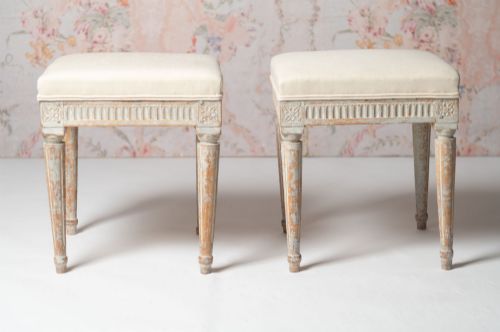
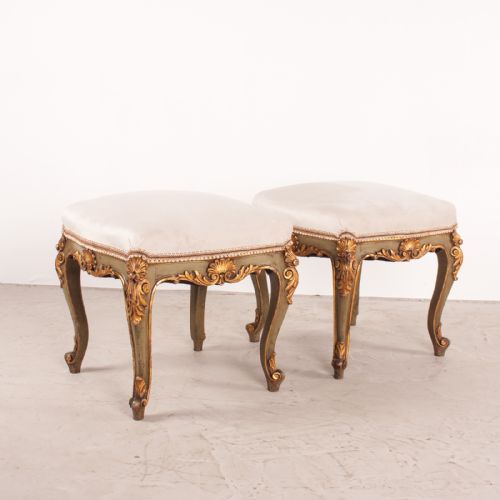
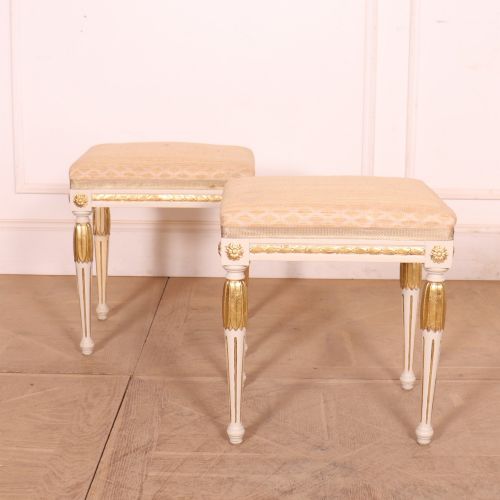
When you search for pair painted footstools, you encounter matching low seating united by painted wooden frames and upholstered tops. These pieces appear in styles ranging from Swedish Gustavian and French Louis XV to Asian folk art and Grand Regency forms.
The selection here draws primarily upon nineteenth-century craftsmanship alongside eighteenth-century origins and twentieth-century interpretations. Most examples feature wood structures prepared with paint finishes, occasionally heightened with gold leaf or detailed carving.
Buyers frequently find that these items function equally well as low seats or footrests in traditional and eclectic interiors. The matching format ensures balanced placement across rooms, whether flanking a fireplace or positioned beneath a table.
Materials and construction methods
Carpenters formed the structural foundations using solid wood, applying carving techniques to shape cabriole legs, rails, and frames. Artisans then applied layers of paint, sometimes incorporating gold leaf highlights to accentuate decorative motifs.
Upholstery completed the pieces, with craftspeople securing materials like fabric, linen, and velvet over padding. This combination of painted woodwork and soft textile tops defined the traditional production of decorative footstools across European and Continental workshops.
The inventory incorporates Swedish Gustavian, Continental Rococo, and French Louis XV styles alongside Asian folk art.
Assessing craftsmanship and finish
The refinement of the woodwork dictates much of the distinction between standard examples and finer items. Crisp carving on the wooden frames and the preservation of original painted surfaces elevate the character of a pair.
The harmony of the upholstery textiles relative to the age of the frame influences the overall integrity. Cohesion between the painted finish and the structural form marks the difference in desirability.
The Pair Painted Footstools Glossary
- Gustavian
- A Swedish neoclassical design movement known for restrained elegance and pale painted finishes. It emerged during the late eighteenth century under King Gustav III.
- Louis XV Style
- A decorative aesthetic characterised by asymmetrical curves, organic motifs, and rococo influence. Originating in France, it experienced revivals throughout the nineteenth century.
- Grand Regency
- A British design period defined by classical restraint and refined proportions. Pieces from this era often display clean architectural lines.
- Gold Leaf
- Extremely thin sheets of beaten gold applied to wooden surfaces for decoration. It provides metallic contrast against painted frames.
- Upholstery
- The materials including padding, webbing, and fabric that form the soft seat of a stool. It transforms a wooden frame into a comfortable resting place.
Pair Painted Footstools: Frequently Asked Questions
Where should I place pair painted footstools?
These pieces suit placement at the foot of a bed, beside a fireplace, or beneath a low window. Their matching format creates visual symmetry in living areas and bedrooms alike.
Because they occupy minimal floor space, you can easily reposition them as extra seating when guests arrive.
How do I care for painted wooden frames?
Dust the wooden surfaces regularly with a soft, dry cloth to prevent dirt accumulation. Avoid harsh chemical cleaners that might degrade historical paint layers.
Keep the stools away from direct sunlight and excessive moisture to protect both the wood and the painted finish over time.
What defines Swedish Gustavian stools?
Swedish Gustavian pieces typically feature light-coloured paint finishes and understated neoclassical carving. This style reflects Scandinavian interpretations of French court aesthetics.
Simplicity of form and pale tones distinguish these items from more ornate Continental designs.
Can I use these stools for daily seating?
Most antique stools serve well for occasional seating or resting feet rather than heavy daily use. The stability depends on the original wooden construction and subsequent upkeep.
Checking the firmness of the frame helps determine suitability for everyday placement.