
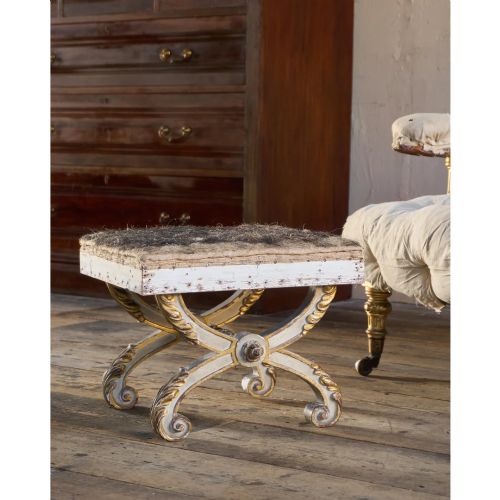


Gilded Regency Stool
These gilded regency stool selections combine classical proportion with surface splendour, offering versatile seating rooted in nineteenth-century design.

Gilded Regency Stool
A gilded regency stool brings neoclassical elegance and compact luxury to any interior, drawing on forms developed during the early nineteenth century. When searching for a gilded regency stool, buyers encounter formats ranging from X-frame curule footstools to adjustable piano seats and window benches.
The pieces available on this page reflect the aesthetic vocabulary of the Regency, Grand Regency, and Neoclassical styles. Makers and workshops of the nineteenth century utilised classic architectural motifs, translating ancient Roman and Greek curule forms into sophisticated domestic seating.
Most examples date from the nineteenth century, including specific items from around eighteen hundred and eighteen eighty. Forms vary from simple footstools to elaborate scroll-top designs and pairs of window seats upholstered in rich textile fabrics.
How they were made
The foundation of these pieces relies on carved wood, mahogany, or painted wood, prepared with layers of gesso to create a smooth base for water gilding or oil gilding. Craftsmen applied thin leaves of metal over the gesso, burnishing the surface to achieve a brilliant metallic lustre.
Upholstery completed the construction, utilising traditional textiles and fabrics secured over sturdy wooden frames. Brass components, including adjustable screw mechanisms on piano stools, provided functional versatility alongside decorative splendour.
Carved details such as scroll tops and curule X-frames required precise joinery and sculptural skill. The integration of giltwood and painted finishes reflects the eclectic tastes of the Regency and Empire periods, incorporating Rococo Revival and Italian Empire influences.
Some nineteenth-century pianists enjoyed a gilded brass screw mechanism to adjust their height while maintaining an uncompromisingly regal posture.
What varies in quality
Quality in a gilded regency stool is determined by the crispness of the wood carving and the depth of the gesso preparation beneath the gold leaf. Superior pieces exhibit confident handling of classical forms, such as balanced X-frame curves and harmonious scroll proportions.
The integrity of the gilding and the preservation of the original wooden structure distinguish finer examples from later adaptations. Pieces associated with documented makers or specific design book traditions demonstrate higher levels of artisanal execution in their joinery and decorative detailing.
Miles & Edwards·Mathew Gregson
The Gilded Regency Stool Glossary
- Curule
- An ancient Roman X-shaped magistrate seat form adopted by Regency designers for folding or cross-frame stools. This architectural shape gives the seating a distinctly classical silhouette.
- Giltwood
- Timber coated with gold leaf or metallic powder applied over a prepared gesso ground. It provides the signature luminous surface seen on neoclassical furniture.
- Gesso
- A plaster mixture applied to wood surfaces as a smooth preparation layer before gilding. This substance allows craftsmen to achieve sharp relief in carved ornaments.
- Neoclassical
- A style drawing inspiration from the classical art and architecture of ancient Greece and Rome. It dominates the decorative language of the Regency era.
- Scroll top
- A decorative terminal shaped like an outward-curling scroll, frequently found on the ends of nineteenth-century footstools and window seats.
Gilded Regency Stool: Frequently Asked Questions
How do I identify a Regency period stool?
Look for neoclassical motifs, giltwood finishes, and characteristic forms like scroll tops and X-frames. Evidence shows these pieces date primarily from the nineteenth century and reflect Empire or Italian influence.
Proportions tend to follow classical architectural rules, distinguishing them from later revival items.
Where were these stools placed historically?
Gilded stools and window seats were positioned in principal reception rooms, parlours, or private music rooms. Their decorative surfaces were intended to catch candlelight and complement formal interior schemes.
Adjustable piano stools specifically served domestic music salons where seating height required modification.
What materials are typical for these pieces?
Construction relies predominantly on wood, mahogany, or painted wood finished with gesso and gilt. Upholstery fabrics and textiles complete the seat pads, occasionally supported by brass mechanical components.
The combination of carved giltwood and tactile fabric defines their aesthetic.
Are pairs common in nineteenth century seating?
Matching pairs of window seats and stools appear frequently in nineteenth-century production. Wealthy households ordered symmetrical seating arrangements for placement beneath large bay windows or flanking fireplaces.
Survival of a complete pair offers insight into original decorative schemes.