

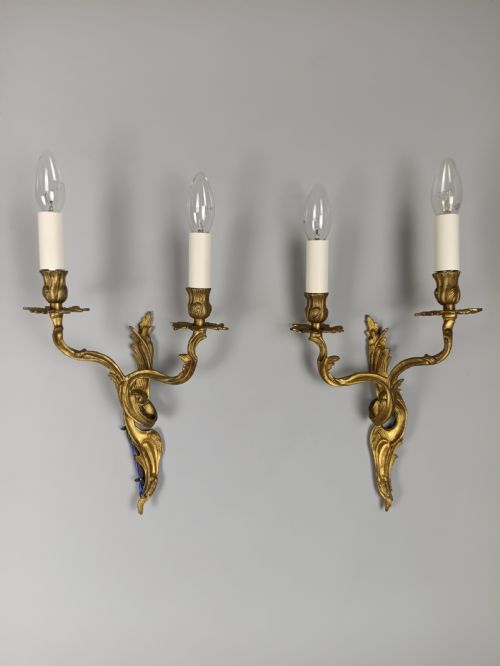
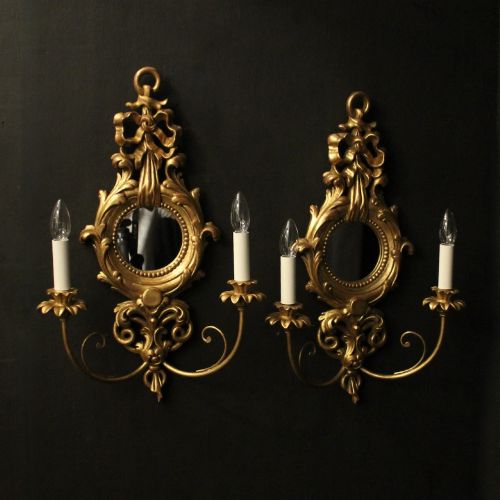
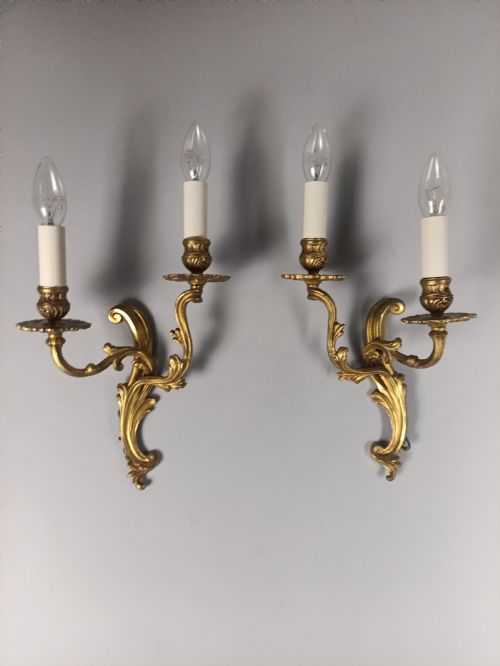
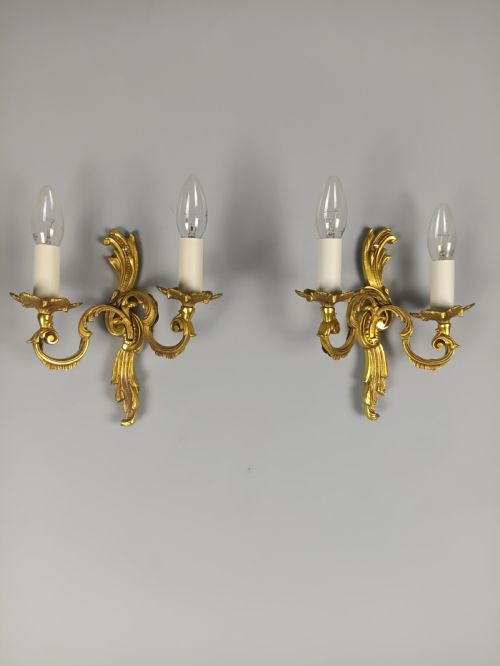



Pair Ornate Wall Lights
These pair ornate wall lights bring heavy French design and bright metalwork straight to your wall.
Pair Ornate Wall Lights
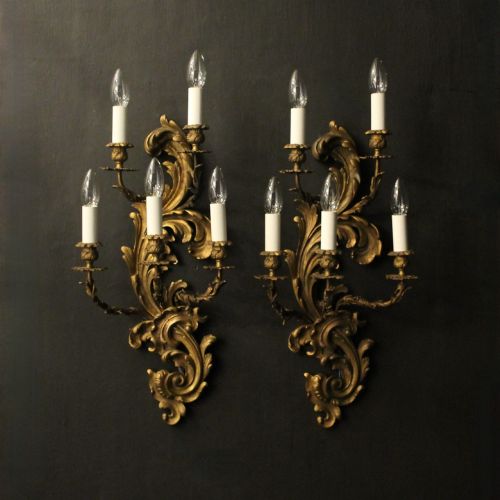
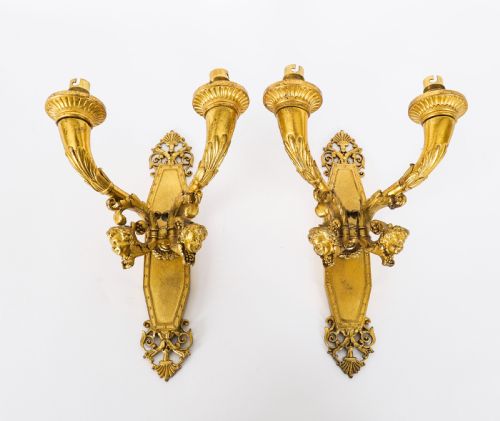
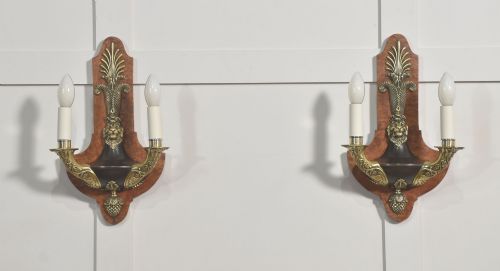
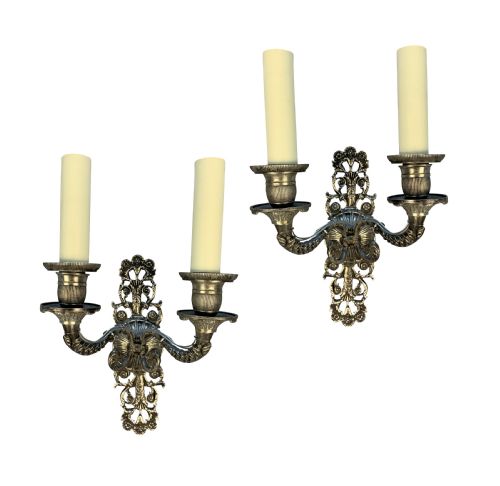
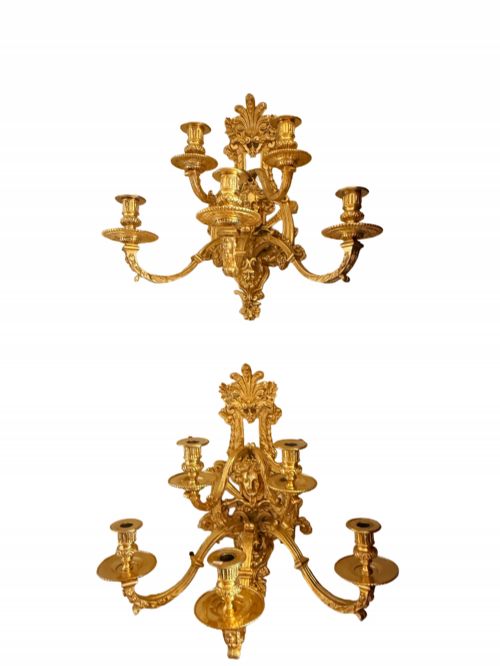
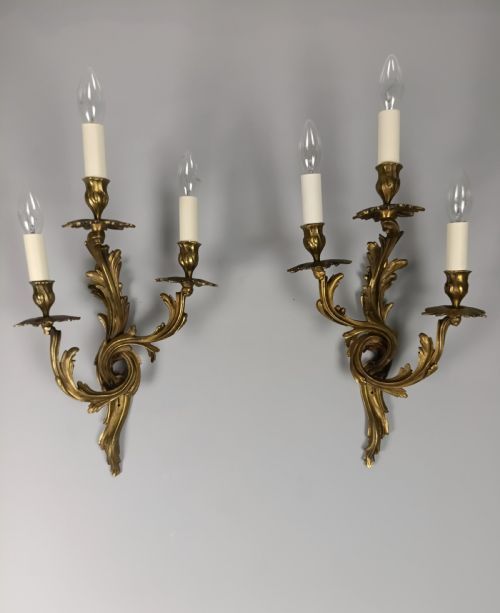
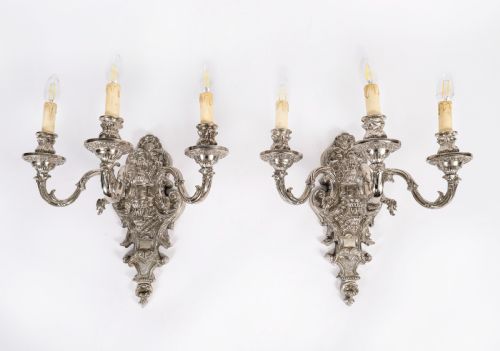
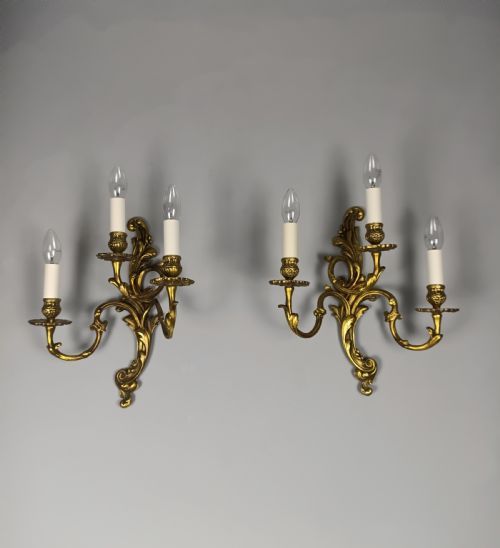
When you search for pair ornate wall lights, you encounter fixtures designed to flank mirrors, paintings or fireplaces with twin or triple branches of candle-holders converted for electricity. Most examples recorded here originate from French workshops spanning the nineteenth and early twentieth centuries.
The dominant aesthetic draws heavily on the decorative vocabulary of French Rococo, Louis XIV and Louis XVI revivals, alongside Empire style influences. You will regularly find matching twin-arm or triple-arm sconces cast in gilded metals and styled with elaborate scrollwork.
Beyond standard brass and bronze models, the selection includes mirrored wall sconces, girandoles with reflective glass backs, and occasional examples incorporating crystal drops or carved giltwood frames.
How they were made
The construction relies fundamentally on metal casting, predominantly using brass, bronze, or copper alloy finished with surface gilding such as ormolu or fire gilt. Metal parts are cast in sections, chased by hand to sharpen the leaf and scroll details, and then joined mechanically or screwed together.
Where mirrors form part of the construction, thick glass plates are hand-bevelled and set into the cast metal or carved wooden frames. Secondary materials such as silver plating and crystal pendants appear frequently to amplify the reflective qualities of the fixture.
Materials documented across the inventory include solid brass, gilt bronze, silver-plated metal, crystal accents, and burr walnut details.
What varies in quality
Quality rests principally on the crispness of the original metal casting and the depth of the subsequent hand-chasing. Superior examples display sharply defined acanthus leaves, cherubs and rococo scrolls where the artisan has cleaned up the raw cast by hand.
The choice of base metal and the method of gilding also separate standard production from high-end pieces. Heavy fire-gilt bronze and ormolu retain a warm, complex lustre over centuries, whereas lower-tier pieces rely on simpler surface plating that wears down differently.
The Pair Ornate Wall Lights Glossary
- Ormolu
- A technique of applying finely ground high-carat gold to a bronze object using a mercury amalgamation process. This finish provides a distinct warm golden tone characteristic of fine French decorative arts.
- Girandole
- A branched wall light or sconce, often incorporating a mirror backplate to multiply the reflected candlelight. The glass helps brighten dark panelled rooms.
- Appliqué
- A French term frequently used interchangeably with wall sconce or wall light. It denotes a decorative bracket mounted directly onto vertical surfaces.
- Rococo Revival
- A nineteenth-century design movement mimicking the asymmetrical curves, C-scrolls and naturalistic plant motifs of the eighteenth-century French court. It favours fluidity over strict symmetry.
Pair Ornate Wall Lights: Frequently Asked Questions
How do I mount these safely?
Most heavy cast metal sconces require secure fixing into solid masonry or wall studs using appropriate steel brackets due to their substantial weight.
Because many vintage examples retain old wiring or have been recently rewired, consult a qualified electrician to ensure the backplate earth and terminal connections meet current safety standards before installation.
Are these wired for modern use?
A significant portion of the recorded fixtures arrive fully rewired and ready for domestic installation, often updated with modern internal lamp holders.
Unconverted pairs still exist for buyers who prefer traditional setups, though standard electrical conversions allow straightforward integration into household circuits.
How do I clean gilded metal?
Dust the surface gently with a soft dry microfibre cloth or a clean artist paint brush to remove settled particles without disturbing the underlying finish.
Avoid commercial metal polishes, abrasive cloths or chemical cleaning solutions entirely, as these aggressive agents strip away delicate ormolu, gilding and silver plating.
How do I date these wall lights?
Dating relies on examining the casting techniques, fixing screws, backplate construction, and stylistic markers tied to nineteenth-century revival movements or early twentieth-century production.
Comparing the specific floral motifs, scrollwork symmetry, and fastening nuts against documented historical periods helps establish whether a piece originates from the nineteenth century or the Edwardian era.