




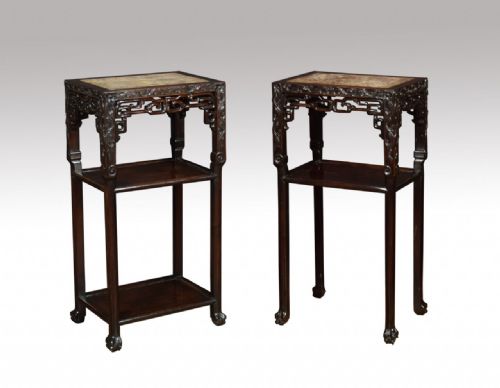


Pair Oriental End Tables
Pair oriental end tables bring proportion and striking surface pattern to a room, offering matching low tables, stands, and cabinets built to accent a seating group.
Pair Oriental End Tables
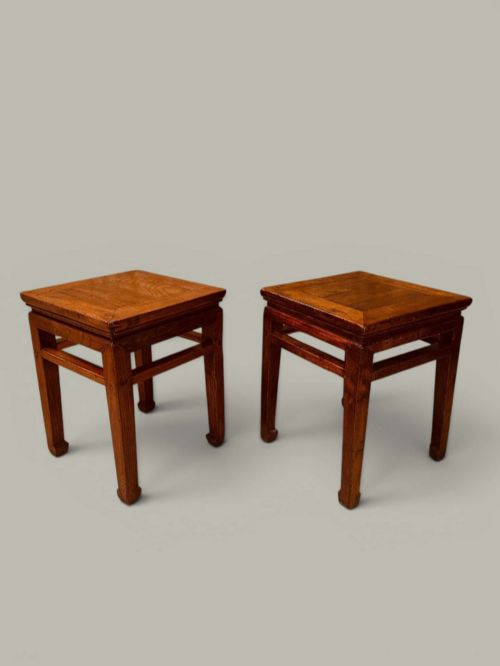
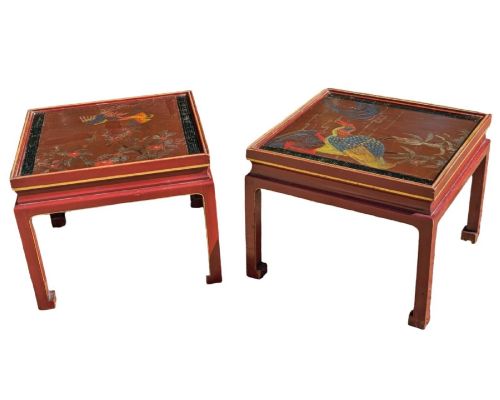
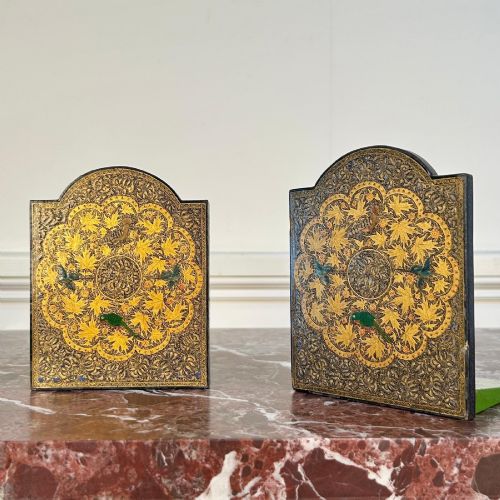
When you search for pair oriental end tables, you encounter matching small furnishings spanning the nineteenth century up to nineteen-twenty, predominantly taking the form of side tables, stands, and cabinets. These items originate from diverse traditions, encompassing Chinese Qing Dynasty work, Kashmiri pieces, and English Chinoiserie interpretations.
The assortment on this page ranges from low coffee surfaces and folding tables to tall plant stands and bedside lamp cabinets. Hardwood examples and lacquer finishes dominate the selections, frequently incorporating inset marble tops, porcelain panels, or cloisonne details.
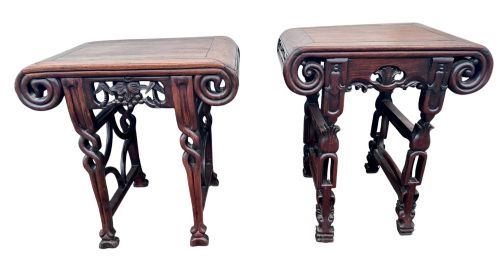
Buyers frequently select these matching sets to anchor a room layout with symmetrical surfaces. The forms vary from carved huali wood to papier-mache and pigment-decorated pieces, reflecting both traditional Asian craftsmanship and later stylistic revivals.
Materials and construction methods
Carpenters utilised dense timbers such as rosewood, huali hardwood, and general hardwoods to construct the sturdy frames of these tables and stands. Joinery methods allowed complex carved motifs and folding mechanisms to endure decades of domestic use.
Surface decoration involved layered lacquer, applied pigment, and gilt work, occasionally paired with contrasting insets like rouge marble and porcelain panels. Some items employed papier-mache techniques to achieve smooth, decorated bases for intricate painting.
Pair Oriental End Tables Retail Price Guide 2026
Typical asking prices for pair oriental end tables among the pieces listed under this phrase on Sellingantiques today, from the lower quarter to the upper quarter. They describe what is for sale here now, not the wider market.
Listings feature items spanning the nineteenth century, eighteen-ninety, nineteen hundred, and nineteen-twenty, utilising lacquer, hardwood, gilt, rosewood, and marble.
Factors of quality
The standard of a pair rests upon the integrity of the timber and the precision of the carving, where deep, crisp detail separates superior examples from softer work. Timber selection matters immensely, with dense rosewood and huali holding carved lines far sharper than secondary woods.
Surface preservation dictates the upper tier of the range, particularly on lacquered and gilt pieces where original pigment remains intact without extensive modern repainting. Well-fitted inset marble tops and secure porcelain panels indicate higher workshop standards during production.
The Pair Oriental End Tables Glossary
- Chinoiserie
- European decorative style reflecting Chinese artistic influences, popular in furniture decoration and lacquerwork. This aesthetic produced items featuring painted scenes and gilt motifs on wood surfaces.
- Huali
- A fragrant hardwood native to Asia, prized for its rich grain and durability in fine furniture. Craftsmen utilised this timber for carved stands and tables requiring sturdy construction.
- Cloisonne
- Enamelwork technique where thin metal wires form compartments on a base, which are then filled with coloured paste and fired. This method appears on decorative panels integrated into table surfaces.
- Papier-mache
- Composite material made from paper pulp or sheets mixed with glue, moulded and dried to form a solid base for lacquer. It allowed artisans to create lightweight decorative objects with smooth painted finishes.
Pair Oriental End Tables: Frequently Asked Questions
What rooms suit these tables?
These matching pairs fit well beside low seating in a living room or function as bedside cabinets in a bedroom. Their modest scale allows them to sit comfortably in reading corners or hallways without dominating the floor space.
The variety of heights, from low tables to tall plant stands, means you can match the surface level to your existing furniture layout. Placing them together or splitting them across a room creates a balanced interior scheme.
How do I clean lacquered surfaces?
Dust lacquer and wood surfaces regularly with a soft, dry cloth to prevent grit buildup. Avoid harsh chemical cleaners, alcohol, or excessive water, which can damage old pigment and gilt layers.
Maintain a stable room humidity to protect wooden frames and prevent lacquer from cracking. Gentle polishing with appropriate wax should be done sparingly and only on unpainted hardwood areas.
How are nineteenth century dates determined?
Cabinetmakers relied on traditional joinery methods, specific timber selections, and hand-carving techniques that shifted over the decades. Examining the wear on the undersides and the formulation of the lacquer provides further clues to age.
Stylistic markers, such as specific Qing Dynasty carving patterns or turn of the century folding mechanisms, help narrow down the production period between eighteen-ninety and nineteen-twenty.
Can marble inserts be removed?
Marble tops sit within wooden frames, held in place by their weight and surrounding rebates rather than permanent adhesives. Pushing them from underneath should only be attempted with extreme care to avoid chipping the stone or breaking the frame.
Leaving the marble secured in its original recess is generally advised during routine cleaning and maintenance. If removal is necessary for moving, support the entire stone evenly from below.