

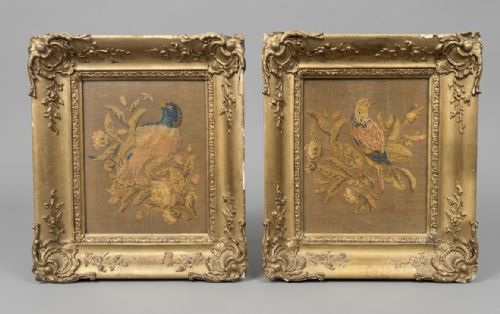


Pair of Wall Tapestries
These pair of wall tapestries bring centuries of woven and stitched artistry into modern rooms, offering symmetry and historic depth to a wall.
Pair of Wall Tapestries
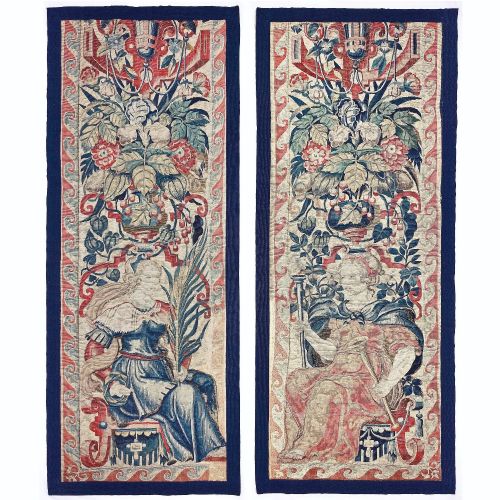
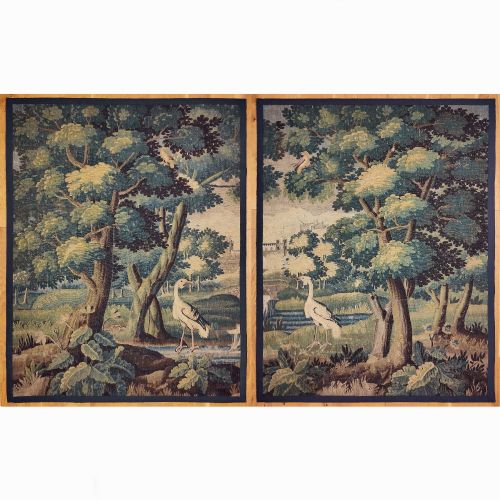
A pair of wall tapestries encompasses woven textile panels, framed needlework pictures, and tribal weavings designed to hang symmetrically as matching pairs. The examples span from seventeenth-century Flemish verdure panels and Aubusson fragments to nineteenth-century silkwork pictures, Regency long stitch embroideries, and twentieth-century pictorial Kashan rugs.
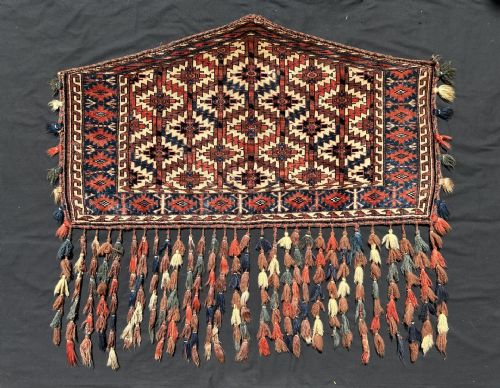
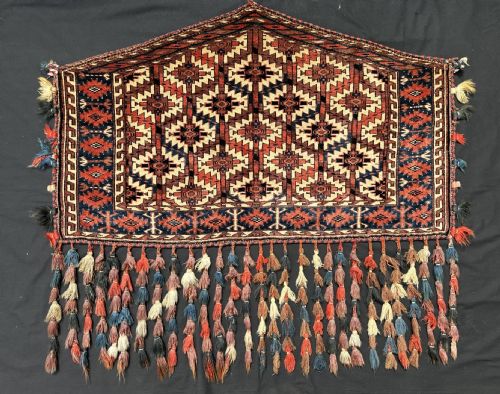
Buyers will encounter substantial seventeenth-century verdure and Flemish fragments alongside nineteenth-century framed embroideries, silk pictures, and Central Asian tribal asmalyks adapted for display. These pieces function as architectural wall art, bringing varied textures and historic narratives into domestic interiors.
The selection ranges across several distinct stylistic traditions, including French Baroque, Victorian Rococo Revival, Persian designs, and Turkmen tribal motifs. Each pair demonstrates the specific decorative priorities of its period, whether that is the dense foliage of a verdure landscape or the precise iconography of a pictorial rug.
How they were made
The construction methods combine hand weaving and needlework, utilising natural fibres such as wool, silk, and cotton worked on looms or stretched across supports. Seventeenth-century Flemish and Aubusson examples rely on complex tapestry weaving techniques, whilst nineteenth-century pieces employ silkwork, embroidery, and long stitch methods.
Framing and mounting materials add structural support, with historic panels often incorporating wooden stretchers or giltwood frames to protect the textiles. Ciselé silk velvet hangings and embroidered panels utilise dense fabric grounds to secure the intricate needlework and prevent distortion over time.
Pair of Wall Tapestries Retail Price Guide 2026
Typical asking prices for pair of wall tapestries among the pieces listed under this phrase on Sellingantiques today, from the lower quarter to the upper quarter. They describe what is for sale here now, not the wider market.
The documented object types cover wall hangings, silk pictures, tribal textiles, and framed needlework.
What varies in quality
Quality rests upon the fineness of the weave and the complexity of the pictorial design, separating elementary workshop output from master-weaver productions. Seventeenth-century verdure fragments show superior depth through varied colour palettes and dense botanical rendering, whereas lesser pieces present flat, repetitive foliage.
The preservation of the original fibres and the integrity of the textile ground dictate the standard of surviving pairs. Expert needlework execution in silk and wool pictures, alongside the stability of the backing fabrics, determines how well the pair maintains its visual balance.
The Pair of Wall Tapestries Glossary
- Verdure
- A type of tapestry featuring a stylized landscape design dominated by foliage, trees, and often birds or animals. These scenes were particularly popular in seventeenth-century Flemish and French weaving.
- Asmalyk
- A Turkmen tribal trapping historically used as a camel flank ornament, woven in rich wools with geometric iconography. They now frequently serve as wall hangings.
- Ciselé velvet
- A velvet fabric where the pattern is created by cutting some pile loops and leaving others uncut, producing a textured contrast. It was utilised for luxurious historic wall hangings.
- Long stitch
- An embroidery technique using parallel or overlapping long stitches to build up pictorial scenes and portraits. It appears frequently in Regency and nineteenth-century needlework pictures.
- Cicim
- A flat-woven textile technique incorporating supplementary weft threads to create raised patterns across the surface. These embroidered panels often double as decorative wall art.
Pair of Wall Tapestries: Frequently Asked Questions
How do I hang a pair of antique tapestries?
Heavy textile panels require a weight-distributing batten or a hidden wooden stretcher frame secured directly to the wall studs. Lighter framed embroideries use traditional picture wire attached to sturdy D-rings.
Ensure the two pieces hang at eye level with consistent spacing between them to maintain the intended symmetrical display.
Are these tapestries protected from sunlight?
Natural fibres like silk and dyed wool fade permanently when exposed to direct sunlight over extended periods. Position your pairs away from south-facing windows to preserve the original colouration.
Using museum glass on framed needlework pieces also helps filter harmful ultraviolet rays.
What is the difference between Flemish and Aubusson tapestries?
Flemish tapestries from the seventeenth century typically depict dense, dark woodland verdure scenes with rich green and brown tones. Aubusson weaving, originating in France, often incorporates lighter pastel palettes and refined architectural borders.
Both traditions excel in narrative depth but reflect distinct regional weaving aesthetics.