
Pair of Vintage Lamps
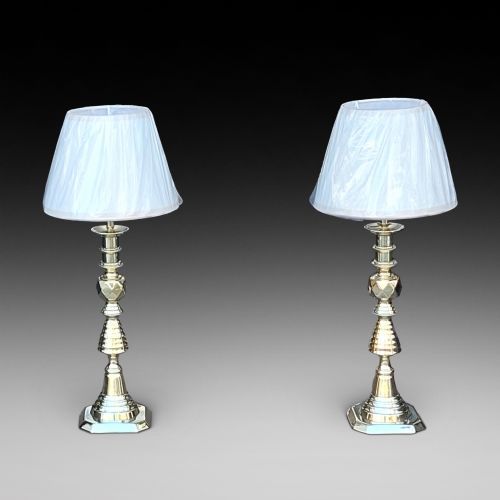
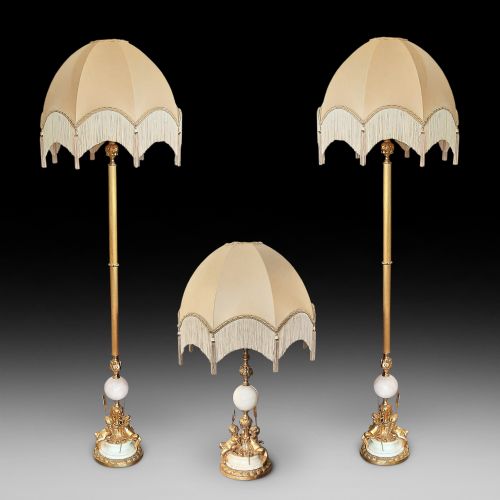
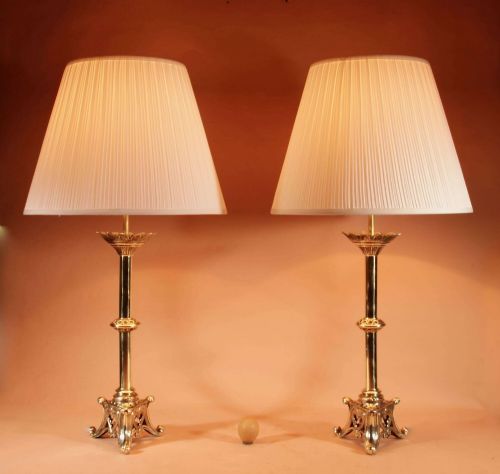
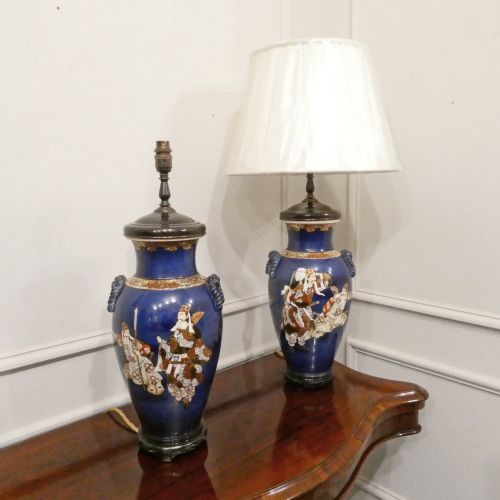
When you search for pair of vintage lamps, you step into a varied selection of paired lighting spanning brass columns, carved wood, and glass.
Pair of Vintage Lamps
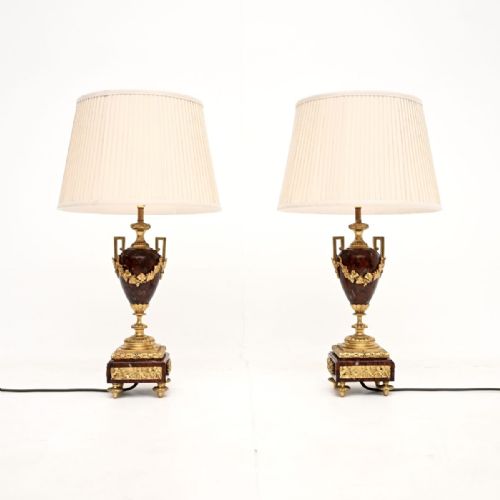
A pair of vintage lamps brings symmetrical illumination and balanced design to a room, appearing in forms from table lamps and wall lights to converted candlesticks and hurricane lamps. The selection spans decades from the Victorian and Edwardian eras through the Art Deco period and the mid-century, incorporating styles such as Neoclassical, Regency, and Arts and Crafts.
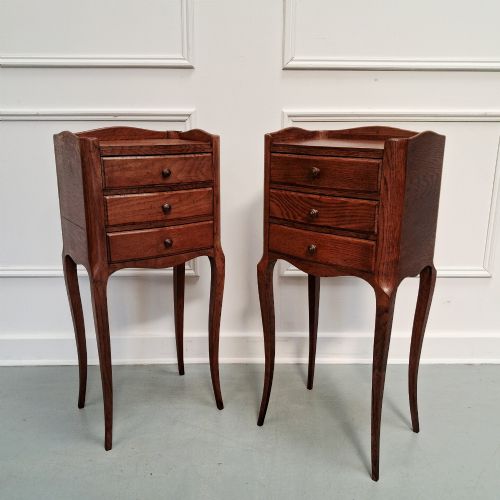
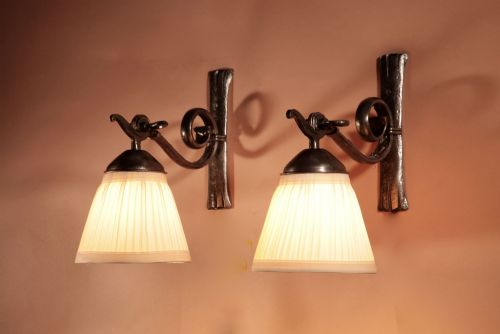
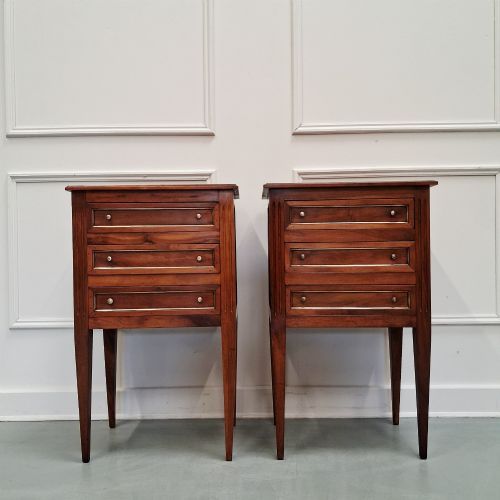
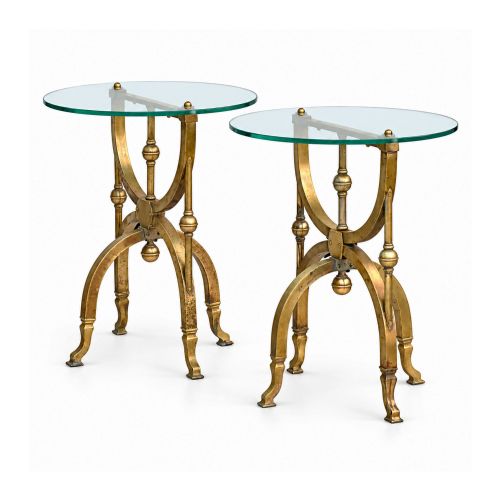
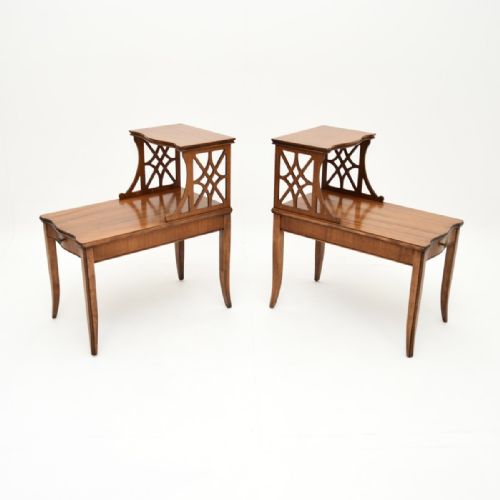
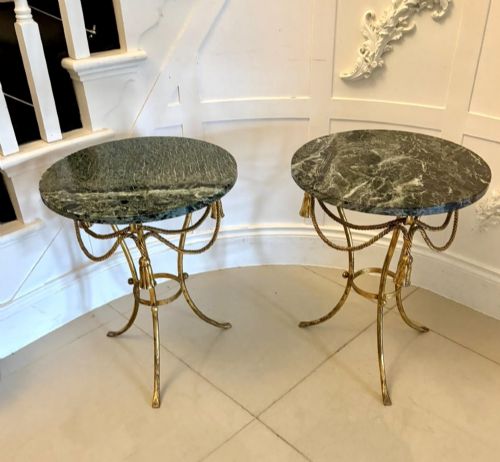
Buyers encounter table lamps mounted on brass, bronze, and marble alongside wall lights in chrome, silver giltwood, and wrought iron. Alongside dedicated lighting, the options include paired lamp tables, bedside cabinets, and side tables designed to support lighting or serve dual purposes in domestic spaces.
Origins stretch across Britain, France, Japan, and Kashmir, reflecting international tastes in metalwork, carved timber, and painted finishes. These pieces accommodate varied interiors, pairing functional illumination with decorative presence.
How they were made
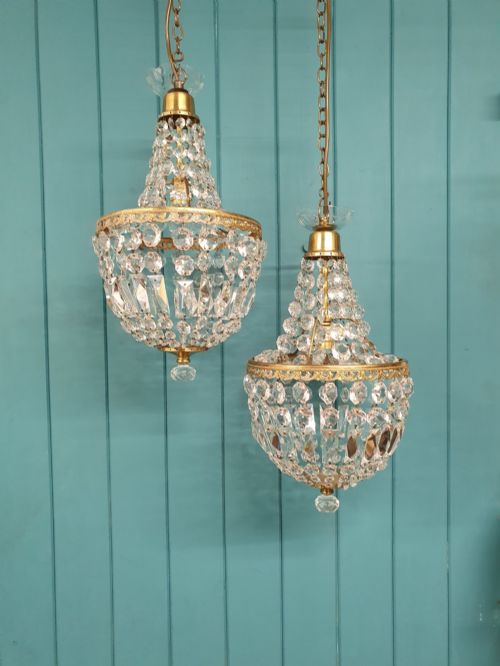
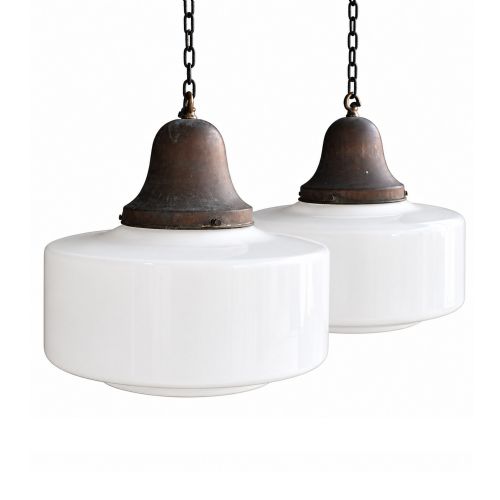
Construction relies on traditional metalworking techniques, utilising cast and gilded brass, bronze, copper, and chrome to form structural columns, figural mounts, and wall brackets. Artisans combined these metals with glass elements, including opaline shades, cut crystal, and amber glass.
Woodworking traditions are equally prominent, employing mahogany, walnut, oak, yew, and silver giltwood shaped into turned bases, pedestals, and cabinetry with marquetry inlay. Surface treatments range from hand-painting and lacquering in Chinoiserie styles to wax polishing on timber surfaces.
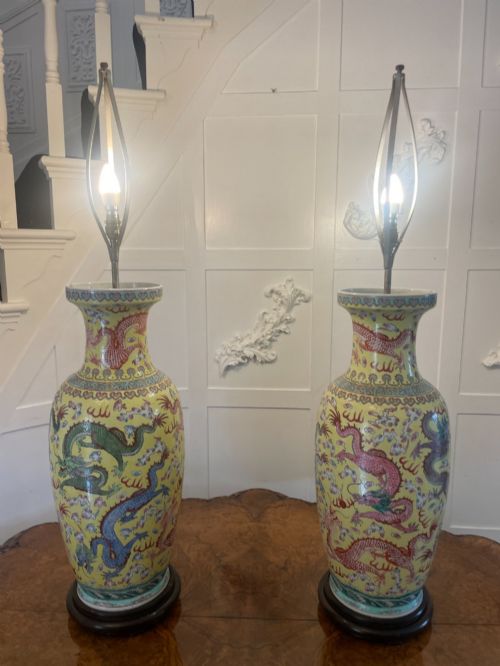
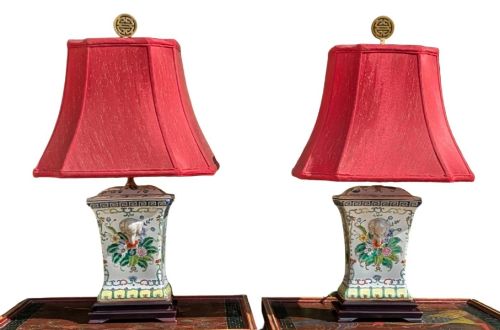
Many lighting items incorporate converted objects, transforming antique candlesticks, vases such as Rose Medallion porcelain, and sphinx figures into wired lamps.
Materials span brass, mahogany, walnut, glass, marble, and wrought iron across pieces dating from the eighteenth century to the mid-twentieth century.
What varies in quality
Quality rests in the crispness of the casting and the fidelity of the period style, separating standard production from finer decorative pieces. Metalwork shows distinction where chasing, gilding, and mounts exhibit precise detail rather than soft definition.
Material selection and joinery dictate the standing of wooden pieces and bases, where dense timbers like mahogany and walnut with marquetry or brass galleries display superior cabinet-making. Original pairing and matching patination across both items determine whether a set maintains visual harmony.
W.A.S. Benson·E Rousseau
The Pair of Vintage Lamps Glossary
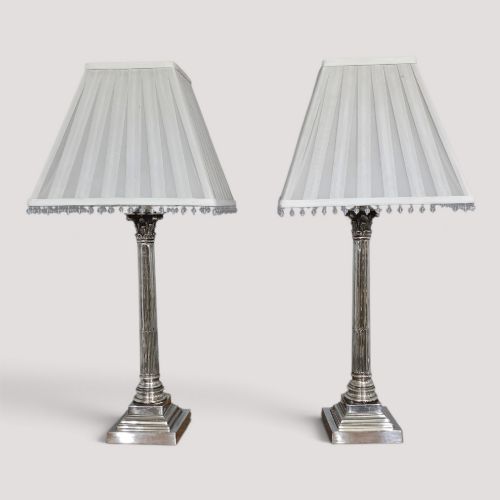
- Corinthian column
- A classical column form featuring ornate acanthus leaf capitals, frequently utilised in brass and silver-plated table lamps from the nineteenth century onwards.
- Champlevé
- An enamelling technique where trenches are carved into a metal surface and filled with vitreous enamel before firing, often seen on French brass bases.
- Opaline glass
- An opaque or semi-translucent glass, popular in Victorian and Edwardian lighting for soft light diffusion in shades and lamp bodies.
- Giltwood
- Timber treated with a thin layer of gold leaf or gold paint, providing decorative surface sheen on wall lights and carved bases.
- Marquetry
- The art of applying pieces of veneer to a structure to form decorative patterns, frequently observed on bedside tables and lamp chests.
Pair of Vintage Lamps: Frequently Asked Questions
How do I style a pair of vintage lamps in a modern room?
Place them symmetrically on matching side tables or a sideboard to anchor a living space or bedroom with balanced proportions.
Their mixed materials, such as brass, glass, and wood, complement contemporary interiors by introducing historic character and texture.
Were these lamps originally electrified?
Many items began life as oil lamps, gas wall lights, candlesticks, or decorative vases before undergoing later conversion to electricity.
This adaptation preserves the decorative body of the antique while updating the fitting for modern domestic use.
How do I tell Edwardian lamps from Victorian ones?
Victorian lighting tends to feature heavier, ornate brasswork and rich ornamentation like Corinthian detailing or figural bronze elements.
Edwardian examples often lean towards lighter proportions, simpler brass forms, or early electrical integration.
Can I use bedside tables as lamp tables?
Bedside cabinets and chests in mahogany, walnut, or yew serve as stable surfaces for table lamps while offering functional storage drawers.
Their compact proportions suit placement beside beds or in smaller reception rooms.