




Pair of Upholstered Stools
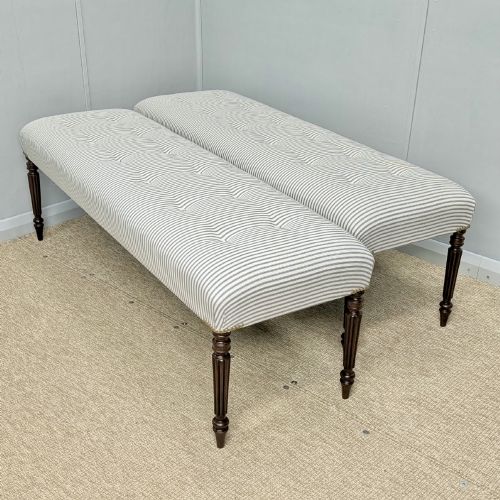
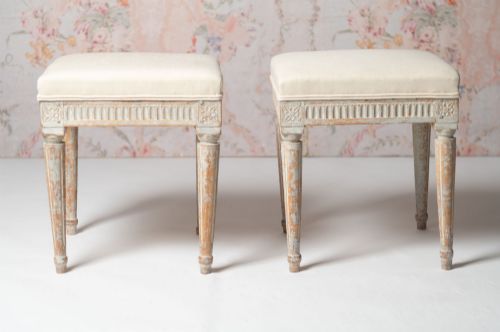
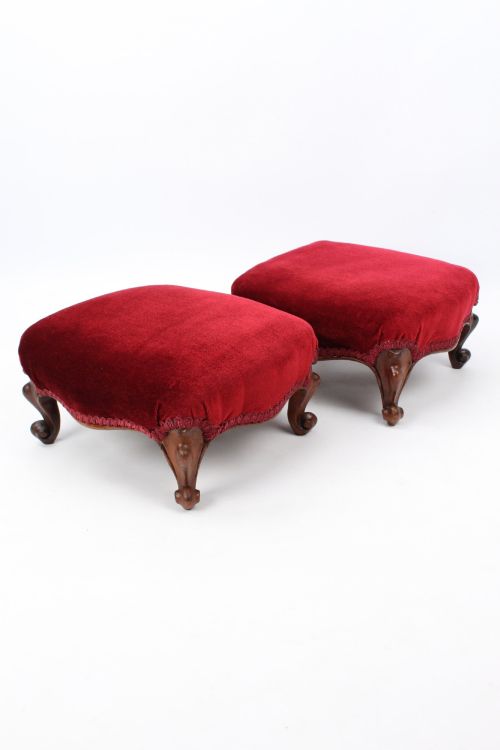
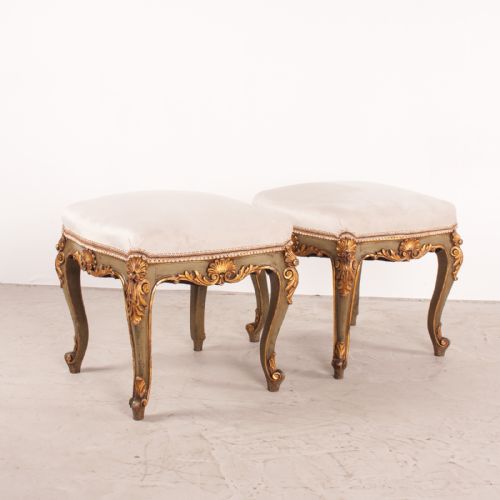
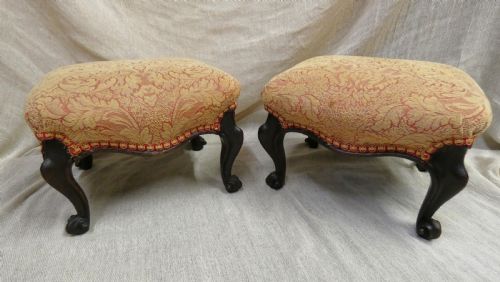
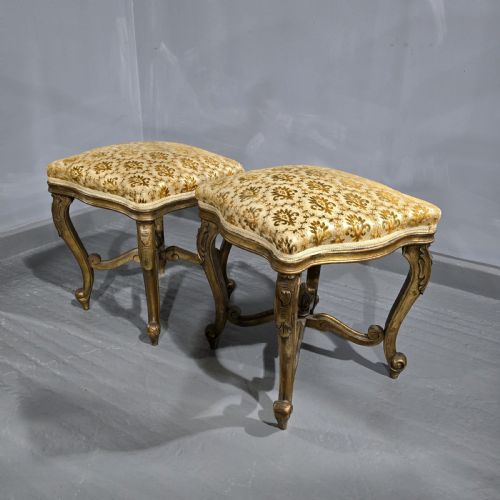
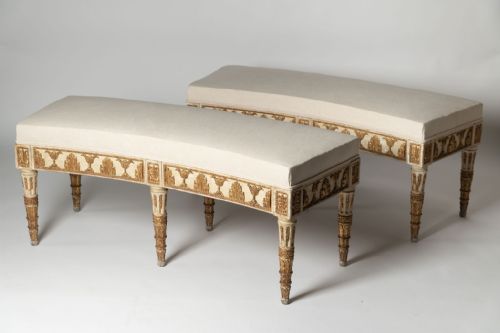
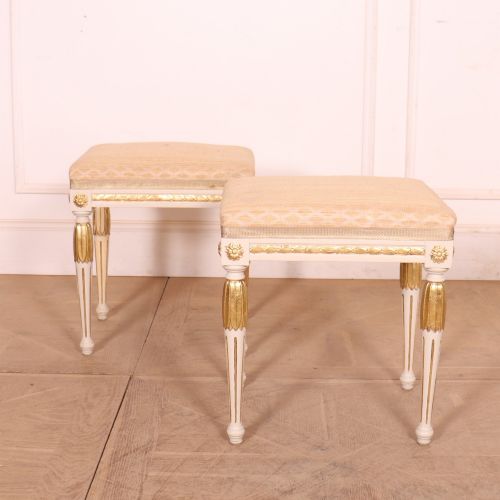
These pair of upholstered stools range from compact footstools to long benches, offering both decorative presence and practical seating.
Pair of Upholstered Stools
A pair of upholstered stools encompasses everything from modest footstools and window seats to long benches and bar stools. Buyers searching for a pair of upholstered stools will encounter forms originating across the eighteenth, nineteenth, and early twentieth centuries.
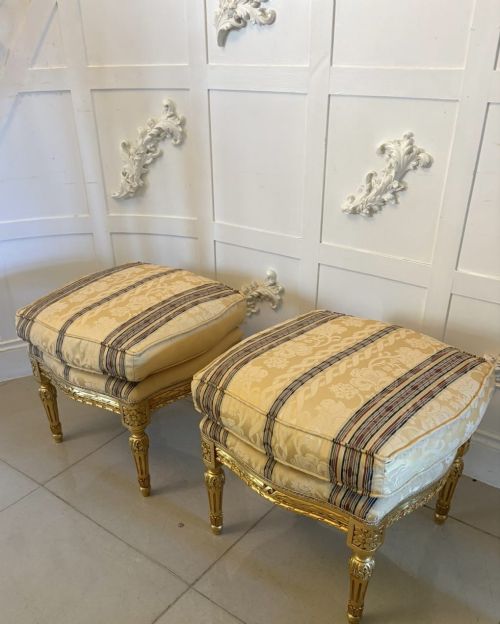
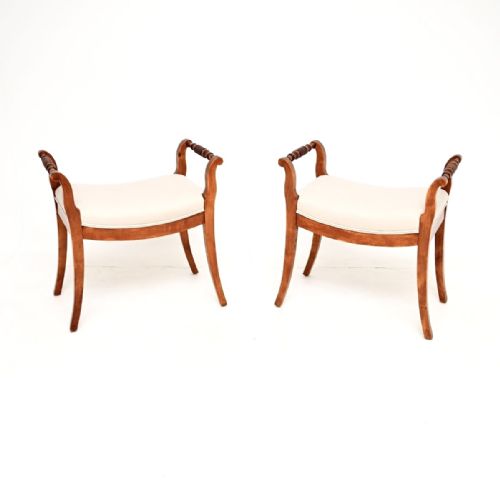
The selection includes specific regional expressions such as Swedish Biedermeier satin birch pieces, Gustavian examples, French painted frames, and Moorish octagonal designs. British nineteenth-century Victorian mahogany and rosewood footstools appear frequently alongside Georgian style items.
Makers such as James Shoolbred contribute to the variety, while forms range from small buttoned items to large walnut seating with leather or textile covers.
Materials and construction methods
Frames rely on solid timbers including mahogany, walnut, rosewood, satin birch, and painted or gilded wood. Cabinetmakers shaped these into carved, turned, or fluted legs, as well as distinct 'X' frames.
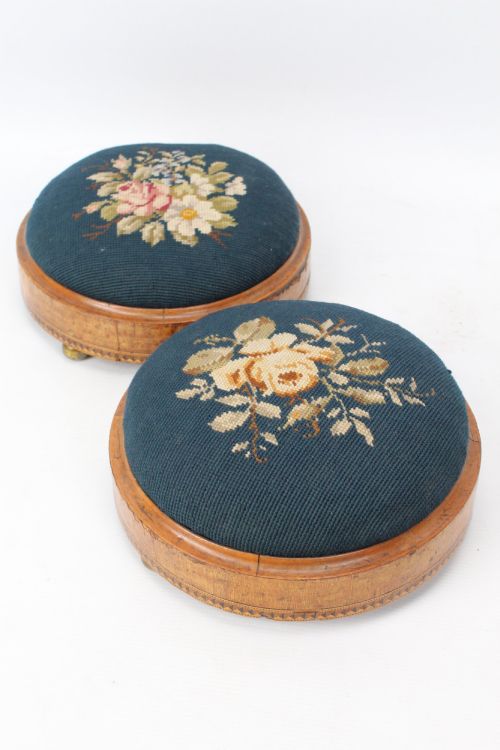
Upholstery techniques involve traditional stuffing secured beneath diverse coverings. Textiles span contemporary ticking, Kilim seat covers, needlepoint, velvet, and buttoned leather secured with brass studs.
Pair of Upholstered Stools Retail Price Guide 2026
Typical asking prices for pair of upholstered stools among the pieces listed under this phrase on Sellingantiques today, from the lower quarter to the upper quarter. They describe what is for sale here now, not the wider market.
Upholstery materials range from plain ticking and needlepoint to buttoned leather with brass studs.
Distinctions in craftsmanship
Quality rests in the crispness of timber carving, the integrity of the frame joinery, and the harmony of the matched pair. Superior examples display refined proportions and carefully executed details such as fluting or giltwood decoration.
The sophistication of the upholstery work and the preservation of original materials elevate certain pieces above standard utilitarian seating. The alignment of wood grain and the weight of the timber further distinguish finer examples.
James Shoolbred
The Pair of Upholstered Stools Glossary
- Tunbridge Ware
- Small wooden objects decorated with mosaic woodwork patterns made from tiny wood blocks. This meticulous technique creates intricate geometric designs on Victorian items.
- Giltwood
- Timber coated with a thin layer of gold leaf or powder. This finish provides a bright decorative surface on ornamental frames.
- Biedermeier
- A Central European style characterised by utilitarian comfort and clean lines. It utilises blonde timbers like satin birch without excessive ornamentation.
- Kilim
- A flatwoven textile originating from the Near East and Central Asia. These durable rugs and covers provide patterned surfaces for seating.
Pair of Upholstered Stools: Frequently Asked Questions
What periods do these stools cover?
The pieces span from the seventeenth century through the Georgian and Regency eras into the Victorian period and the twentieth century.
Craftsmanship and materials shift across these eras, moving from carved rosewood and mahogany to painted finishes and Art Deco bar stools.
How were window seats used historically?
Window seats were placed in deep window recesses to provide comfortable spots for reading or looking outside.
They often matched the room's overarching furniture style, functioning as both decorative upholstery displays and practical low benches.
How do I identify a Regency stool?
Regency pieces often feature classical influences, such as mahogany frames with fluted legs or distinctive 'X' shaped supports.
These designs reflect early nineteenth-century aesthetics, prioritising architectural lines and durable leather or fabric upholstery.
What are Kilim seat covers?
Kilim seat covers utilise flatwoven Middle Eastern textiles featuring traditional geometric patterns and rich colours.
They were frequently applied to nineteenth-century frames like Moorish octagonal stools to add texture and global character.