




Pair of Tall Candlesticks
When you want a pair of tall candlesticks, brass, carved wood, and silver plate offer domestic and ecclesiastical presence across centuries of lighting design.
Pair of Tall Candlesticks
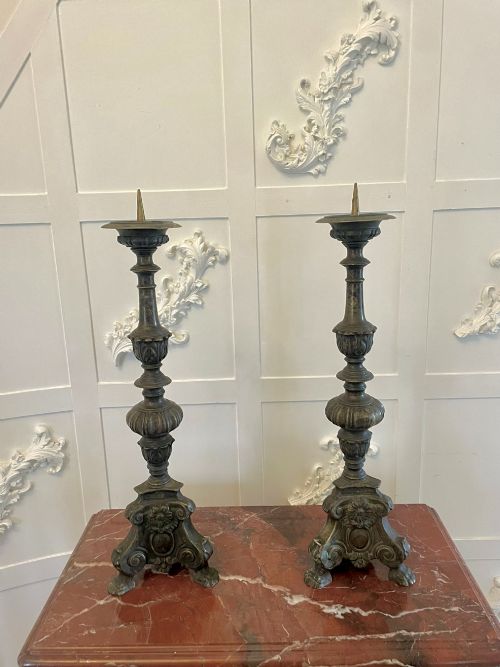
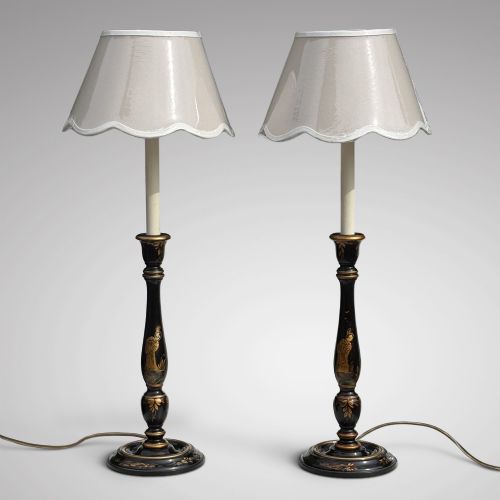
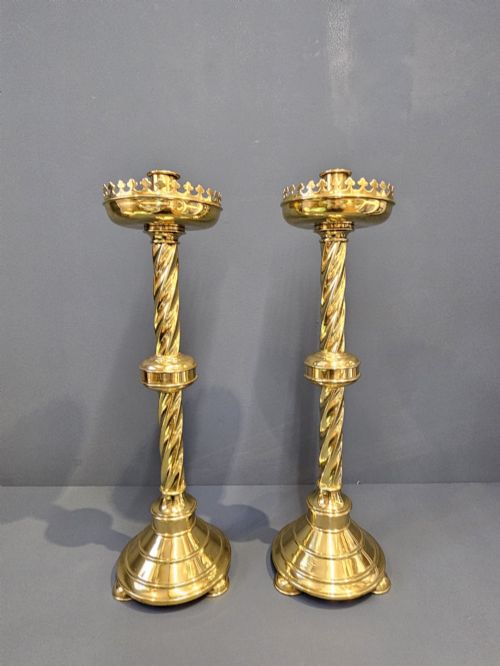
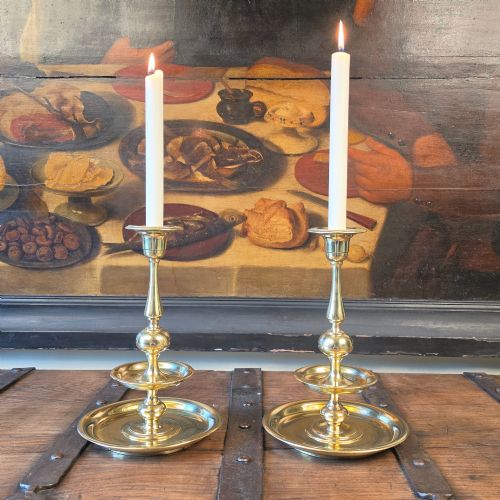
A pair of tall candlesticks provides vertical lighting and architectural balance for a mantelpiece, table, or altar. These objects range from domestic Georgian column designs to substantial Victorian church candlesticks fitted with spikes.
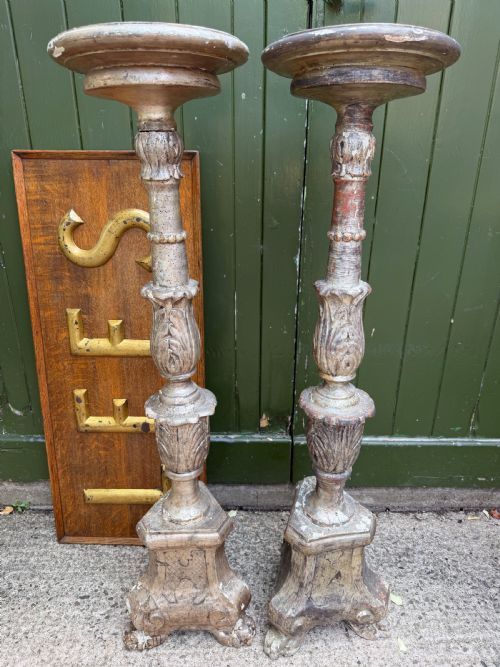
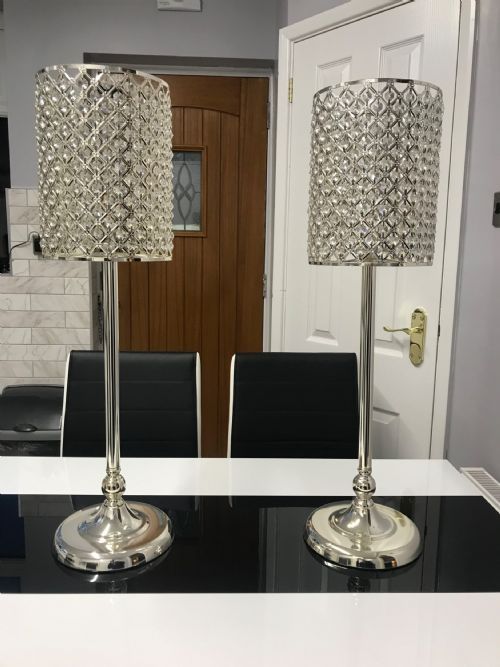
Brass dominates the selection, though carved wood, bronze, and silver-plated metals appear frequently across the periods. Pieces span Georgian, Victorian, and Edwardian eras, incorporating stylistic influences from Italian Baroque to Gothic Revival.
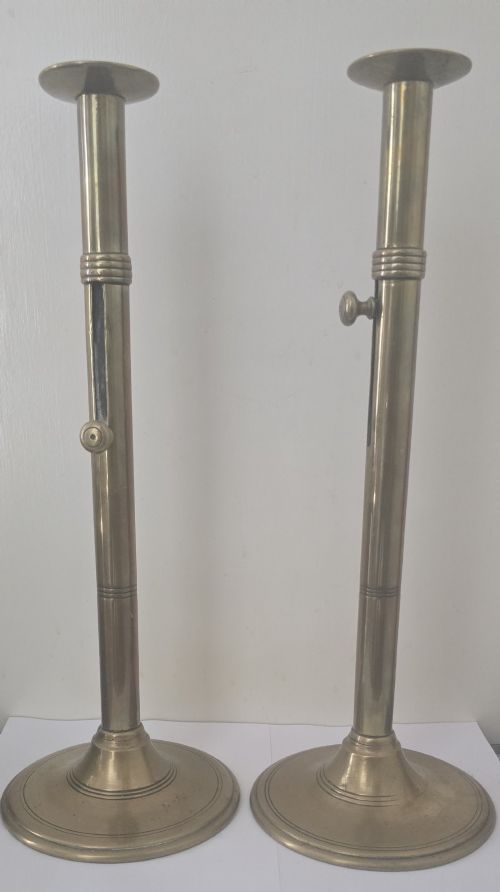
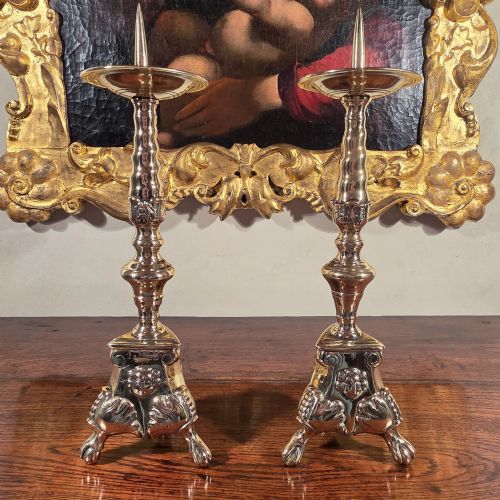
Tall formats frequently include barley twist shafts, column orders, and pricket configurations designed to hold large wax tapers. Many examples retain functional details like side ejectors or seamed construction from manufacturing.
How they were made
Metal examples utilise casting, seaming, and turning techniques to shape brass, bronze, and copper into rigid columns or twisted stems. Early pieces often show visible seams from sheet metal construction before casting methods became standard.
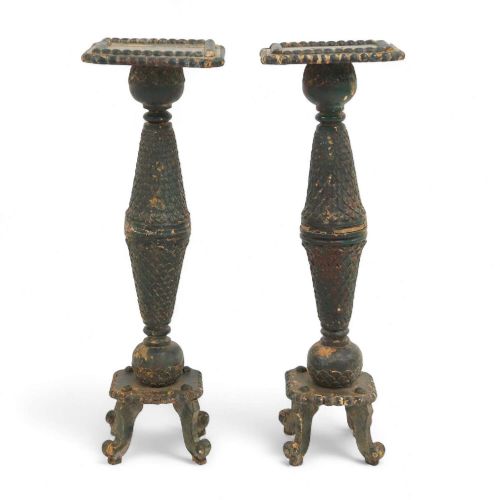
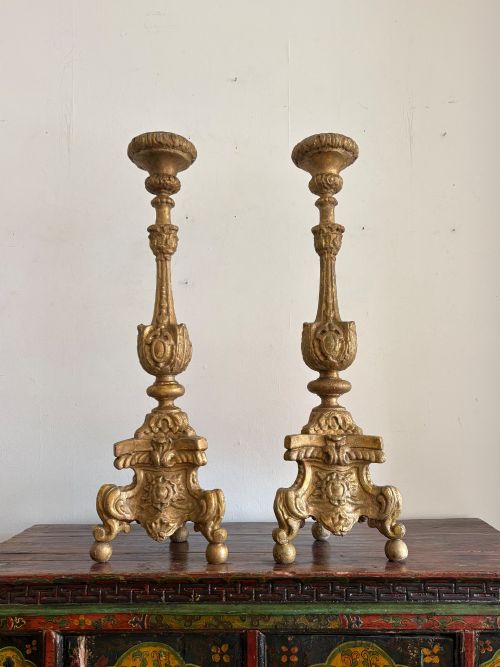
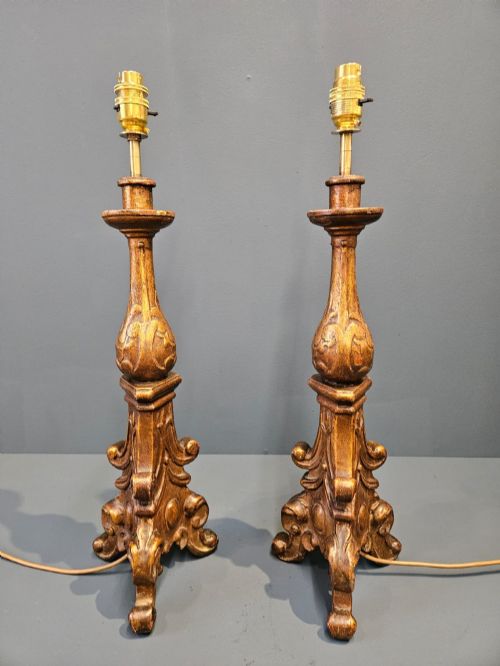
Wooden candlesticks rely on hand-turning on a lathe or intricate carving, frequently finished with gesso, silver leaf, or original paint. Altar pieces from the eighteenth century demonstrate dense timber carving finished in gilt or silver.
Side ejector mechanisms on Georgian brass candlesticks were clever little levers designed to pop out stubborn leftover wax stubs.
What varies in quality
Quality rests in the crispness of the casting detail, the weight of the metal, and the integrity of the surface finish. Heavy, solid cast components outclass thin sheet metal pressings by retaining structural stability over decades of use.
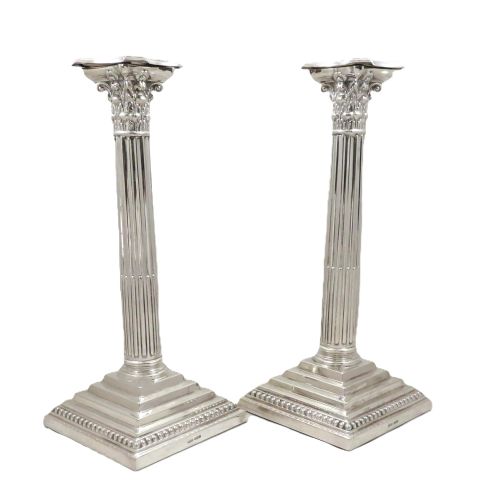
Proportion and execution define the hierarchy, seen in the clean fluting of Corinthian capitals or the deep relief of carved wooden acanthus leaves. Original surfaces - such as untouched patinated brass or authentic paint - elevate a pair above stripped or heavily polished alternatives.
Birmingham Guild of Handicraft·James Clews·William Hutton
The Pair of Tall Candlesticks Glossary
- Pricket
- A sharp metal spike on a candlestick designed to impale the base of a candle rather than receive it within a socket.
- Torchiere
- A tall ornamental stand or candlestick originally intended to carry a torch or heavy candle.
- Barley twist
- A spiral column design resembling a twisted loaf of bread, popular in seventeenth and nineteenth-century woodwork and metalwork.
- Corinthian column
- A classical architectural order featuring an ornate capital decorated with acanthus leaves, frequently adapted for candle columns.
- Gesso
- A plaster-like mixture applied to wood surfaces as a base for paint, gilding, or silver leaf.
Pair of Tall Candlesticks: Frequently Asked Questions
What is a pricket candlestick?
A pricket candlestick uses an upright metal spike to secure a candle instead of a hollow socket. This form appears frequently on larger ecclesiastical and altar lighting.
Such pieces require candles with a small indentation at the base to sit flat on the spike plate.
How do I clean antique brass?
Antique brass tolerates gentle dusting with a soft cloth to preserve the surface history and accumulated oxidation. Aggressive chemical polishing strips the patinated layers built up over centuries.
Leaving the natural surface intact maintains the visual depth expected in older metalwork.
Are these tall candlesticks safe for modern candles?
Most antique sockets and prickets accommodate standard taper diameters with minimal adjustment. Wider church prickets need careful placement to ensure the wax stays balanced on the spike.
Using drip protectors prevents hot wax from marking polished wooden furniture or table surfaces.
How do I date a pair of brass candlesticks?
Dating relies on construction methods, such as visible seams on early pieces versus solid casting from the Victorian era onward. Base shapes, ejector mechanisms, and stylistic clues like neoclassical columns offer further period context.
Comparing the weight and tooling marks against documented examples clarifies the manufacturing decade.