



Pair of Spaniels
A proper pair of spaniels brings instant character to a mantelpiece, offering the traditional symmetry that Victorian hearths demanded.
Pair of Spaniels
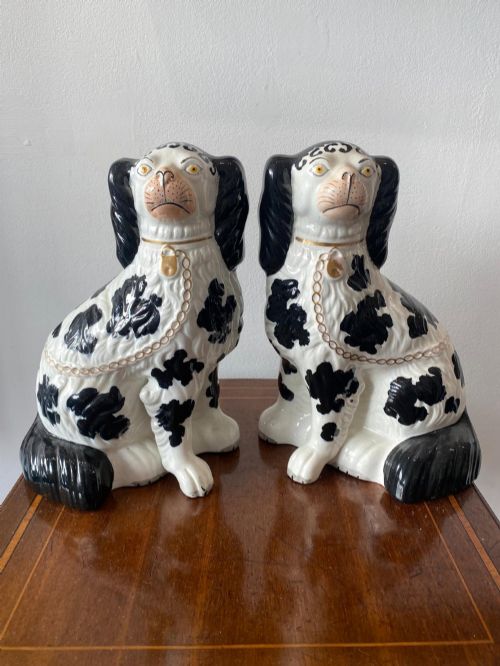
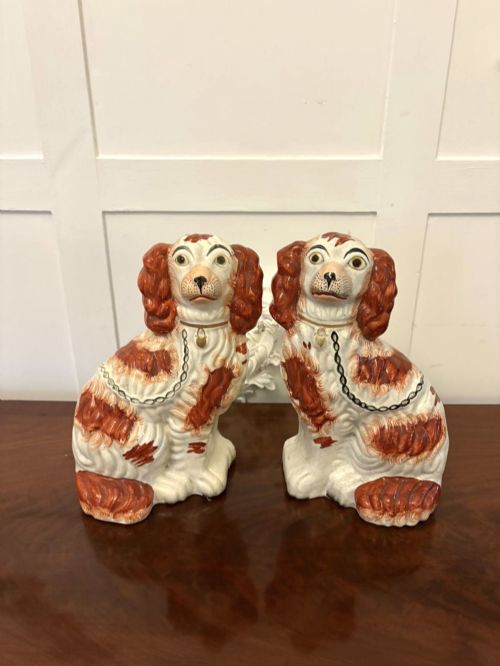
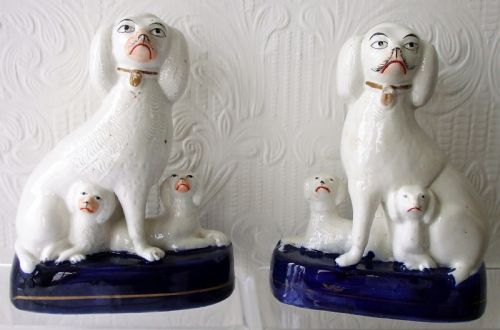
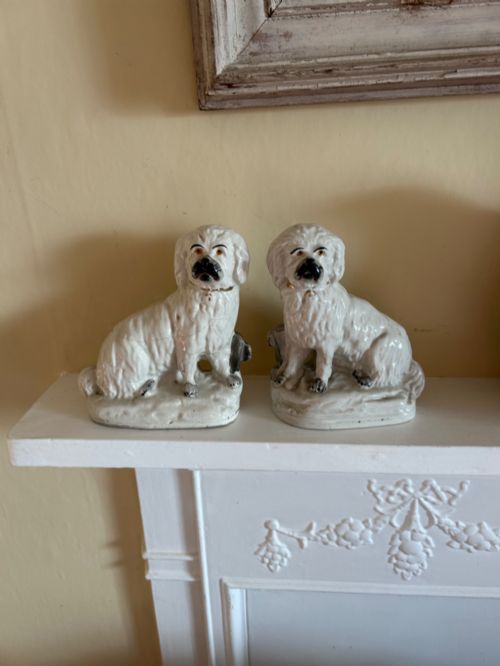
When you search for a pair of spaniels, you encounter ceramic figures shaped as seated dogs, most frequently originating from nineteenth-century Staffordshire potteries. These mantel ornaments were traditionally placed facing inward toward each other on either end of a fireplace.
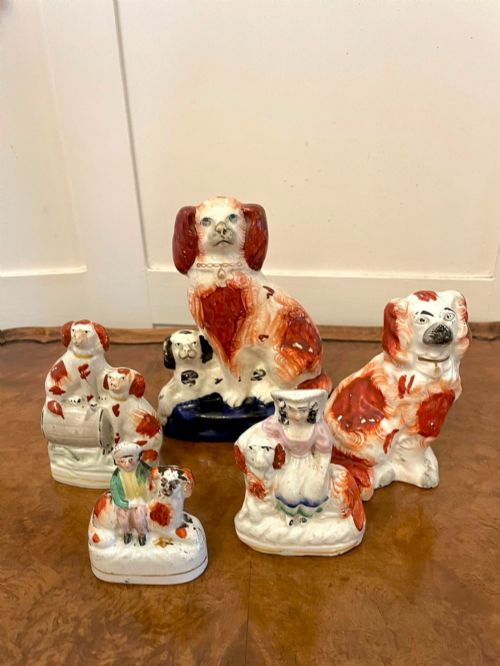
The selections span various forms including standard comforter spaniels, quill holders, and spill vases. Victorian and Edwardian examples dominate the offerings, often rendered in earthenware with hand-painted markings.
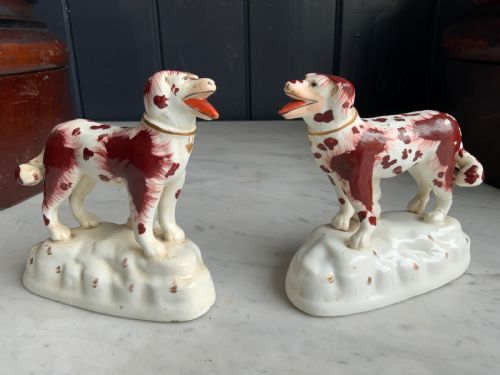
Beyond standard spaniels, the groupings encompass related Staffordshire poodles, Maltese terriers, and even plaster doorstops from later twentieth-century production. Each variation maintains the paired symmetry required for traditional mantel display.
Materials and construction
Potters shaped these earthenware figures using clay moulds before applying a smooth ceramic glaze to seal the body. Many pieces then received detailed work in enamel paint and gilt highlights.
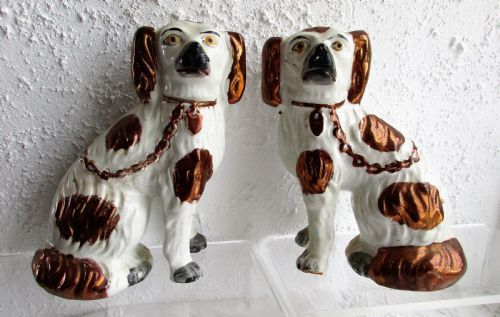
Surface decoration relies heavily on underglaze colours, copper lustre finishes, and occasionally glass eyes inserted after firing. Certain variants include applied clay encrusting to represent texture on cushions or coats.
Pair of Spaniels Retail Price Guide 2026
Typical asking prices for pair of spaniels among the pieces listed under this phrase on Sellingantiques today, from the lower quarter to the upper quarter. They describe what is for sale here now, not the wider market.
Listings span from Regency and Victorian eras through to the Edwardian period and nineteen-forties.
Assessing quality and execution
Finer examples demonstrate superior control in the moulding and painting, yielding crisp facial expressions rather than crude brushwork. The precision of the enamel work and the vibrancy of the copper lustre or gilt details distinguish the better items.
Royal Doulton·Beswick·Staffordshire
The Pair of Spaniels Glossary
- Comforter spaniels
- Staffordshire ceramic figures designed to sit upon a mantelpiece. They typically depict seated dogs with gold chains and lockets.
- Spill vase
- A hollow ceramic holder attached to a figure. These items kept wooden spill matches ready for lighting candles and pipes near the hearth.
- Copper lustre
- A metallic glaze technique producing a reflective, copper-hued sheen. Potters applied this over the ceramic body before firing to create rich surface tones.
- Earthenware
- A porous pottery body fired at lower temperatures. It serves as the primary base material for nineteenth-century Staffordshire figures.
- Enamel paint
- Coloured decoration applied over the fired glaze. This material allows for fine details on the eyes, muzzles, and coats of the figures.
Pair of Spaniels: Frequently Asked Questions
Where did people display a pair of spaniels?
Owners traditionally positioned them at either end of a fireplace mantelpiece. They faced inward toward the centre of the hearth to watch over the room.
Secondary placements included side tables, chests of drawers, and window ledges where symmetrical arrangement remained popular in Victorian homes.
How can I date my pair of spaniels?
Dating relies on examining the clay body, glaze characteristics, and painting style. Nineteenth-century examples often feature simple earthenware bases with hand-painted enamel details.
Later twentieth-century versions from makers like Beswick or Royal Doulton exhibit refined moulding and standardised factory markings beneath the glaze.
Did these dogs represent a specific breed?
The figures primarily represent King Charles Spaniels and Cavalier King Charles Spaniels, which were favoured pets of the Victorian aristocracy.
Potters also produced related canine subjects, including poodles with pups, Maltese terriers, and cocker spaniels, reflecting broader Victorian affection for domestic animals.