


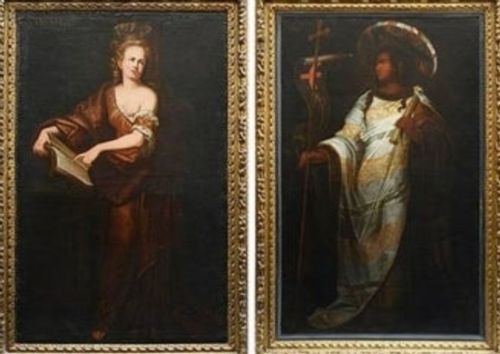
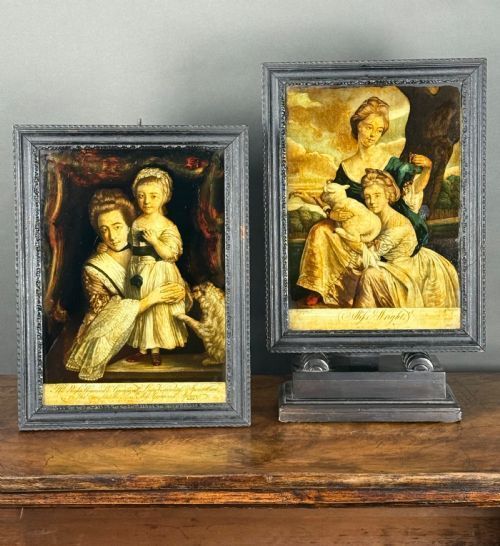
Pair of Portrait Paintings
When you search for a pair of portrait paintings, you uncover matched likenesses that capture historical figures, family companions, and character studies across multiple centuries.
Pair of Portrait Paintings
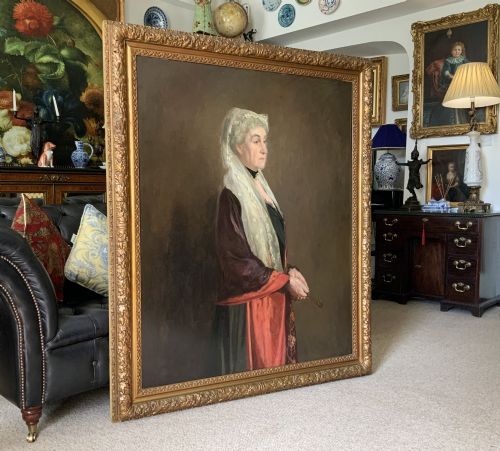
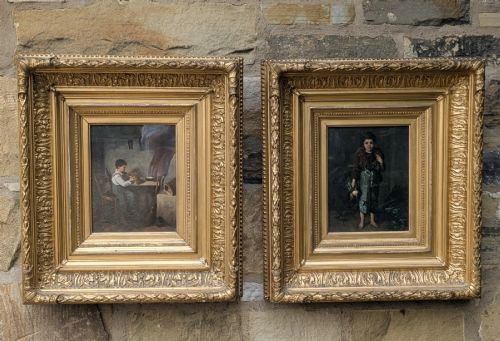
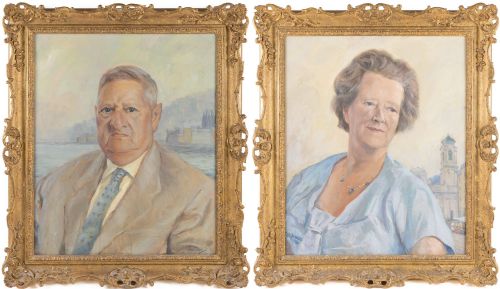
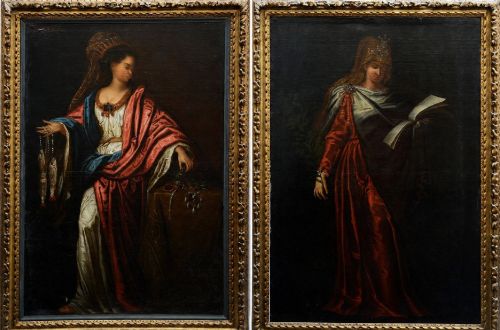
A pair of portrait paintings comprises two complementary artworks depicting subjects meant to be displayed together, often representing husbands and wives, historical figures, or companion character studies. These works span from the 17th century through the mid 20th century, covering Georgian, Victorian, Regency, and Edwardian eras alongside various international schools.
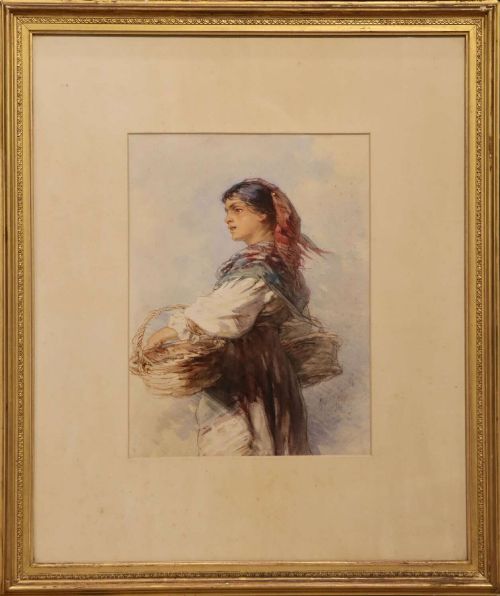
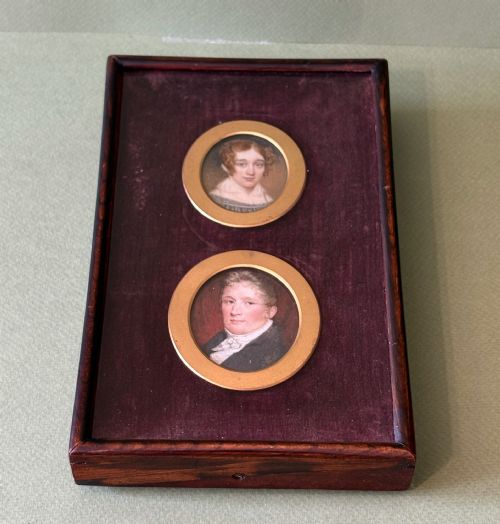
The format encompasses various scales and mediums, ranging from monumental oil canvases and framed panels to delicate watercolour paintings, pastel portraits, and miniature works. Subjects vary from British folk art and Dutch nobility to Chinese ancestral scrolls and Italian peasant figures, reflecting diverse cultural traditions.
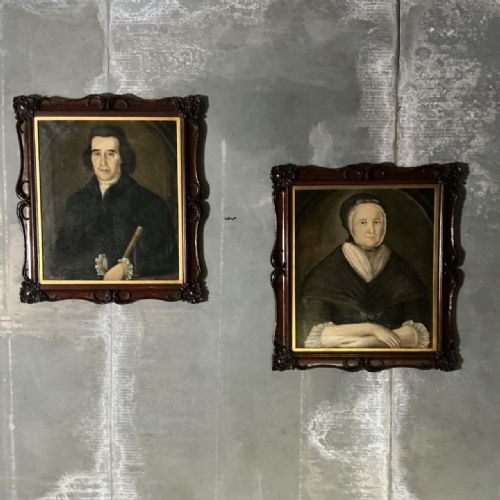
Most examples found here originate from the 18th and 19th centuries, executed in oil on canvas, wood, or paper, often retaining their period frames such as giltwood or carved wood settings.
Materials and execution
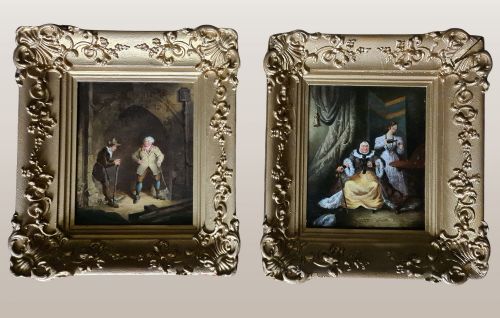
Artists primarily utilised oil paint applied to canvas, wood panels, or board, while others worked in watercolour, pastel, gouache, or enamel on copper and porcelain plaques. Canvas supports were often stretched over wooden frames, occasionally accompanied by pith paper or silk in East Asian examples.
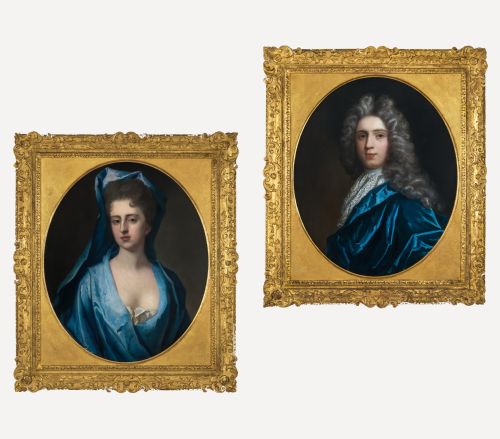
Framing forms an integral part of the physical object, utilising giltwood, carved wood, or glass-fronted wooden frames that frequently date to the same period as the paintings themselves. Gold leaf and decorative mouldings complete the presentation of many 18th and 19th-century works.
The inventory includes British, Dutch, French, German, American, and Chinese schools, encompassing folk art, miniatures, and ancestral scrolls.
Distinctions in craftsmanship
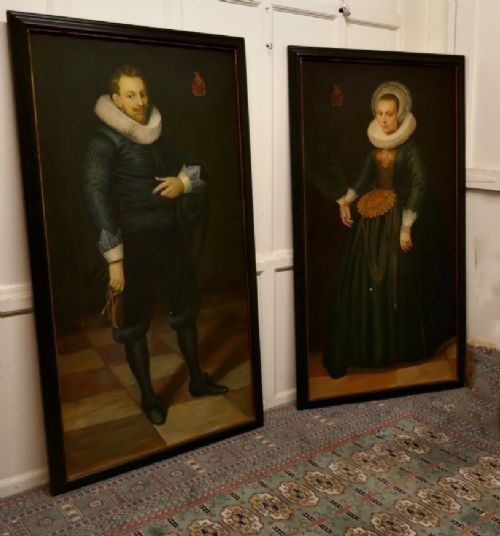
The sophistication of brushwork and anatomical precision set superior works apart, particularly in the rendering of facial expressions, hands, and intricate textiles such as ruff collars. Master artists captured psychological depth and lifelike presence, whereas simpler folk art versions relied on stylised, direct representations.
The preservation of the original surface, pigment stability, and the survival of matching period frames heavily influence the integrity of a pair. Complete sets retaining their original backing and framing provide a unified historical document superior to assembled matches.
JAMES SHARPLES·Emily Eyres·Michael Dahl·Thomas Murray·CHARLES-ANTOINE COYPEL·Theodore Jensen·Gilbert Jackson
The Pair of Portrait Paintings Glossary
- Companion portraits
- Two separate paintings created as a matching set, usually depicting a husband and wife or related subjects to hang side by side. They share compositional elements, scale, and framing.
- Portrait miniature
- A small-scale painting executed with meticulous detail on ivory, vellum, card, or copper, designed for intimate viewing or portable display. These often employ watercolour or enamel techniques.
- Reverse glass mezzotint
- A print technique where the image is transferred to glass and hand-coloured from the reverse side before being framed. This method creates a luminous, glossy finish popular in the 18th century.
- Ancestral scroll
- A traditional East Asian hanging scroll depicting deceased family members or nobility for veneration. These works utilise ink and colour on silk or paper supports.
- Giltwood frame
- A wooden picture frame coated in a thin layer of gold leaf or gesso and gold paint. Period frames often feature hand-carved ornamentation specific to the manufacturing era.
Pair of Portrait Paintings: Frequently Asked Questions
What is a pair of portrait paintings?
A pair of portrait paintings consists of two distinct artworks created as a matching set, commonly depicting a married couple, siblings, or balanced subjects meant to be displayed together.
These pieces maintain matching dimensions, styles, and framing to create a balanced visual symmetry on the wall.
How were these companion portraits displayed?
Historical interiors typically featured companion portraits hung side by side in formal reception rooms, parlours, or galleries to establish lineage and domestic harmony.
The matching frames ensured the two subjects maintained visual equilibrium within the domestic arrangement.
How can I identify the period of a portrait?
Dating relies heavily on clothing styles, hairstyles, collar types such as ruffs, and the physical construction of the canvas support and frame.
Written inscriptions on the reverse, artist signatures, and historical records further clarify the exact decade of creation.
What materials are common in antique portraits?
Oil paint on stretched canvas or wood panel remains the most frequent medium, though works on paper, card, and pith also appear across different schools.
Frames are typically constructed from wood, decorated with gesso, and finished with gold leaf or period gilding.