
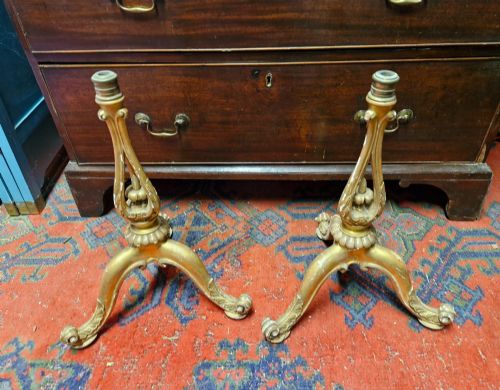
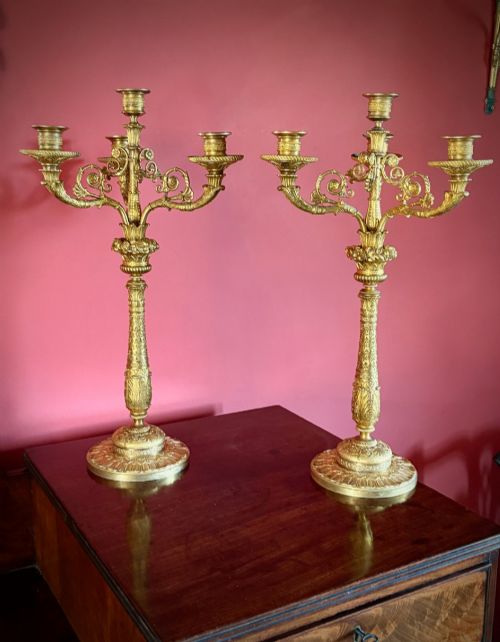
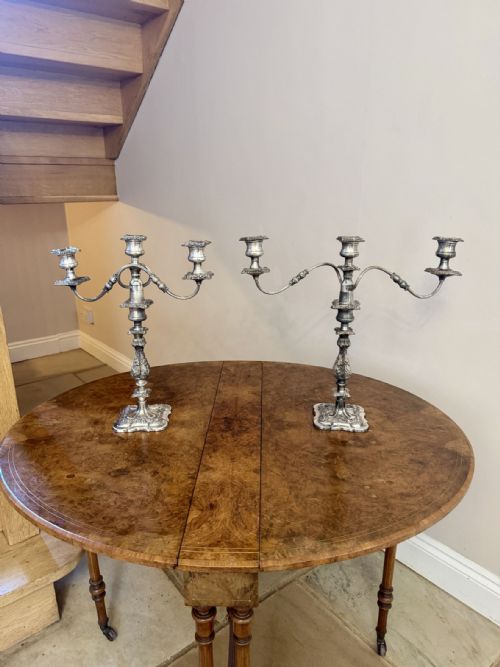
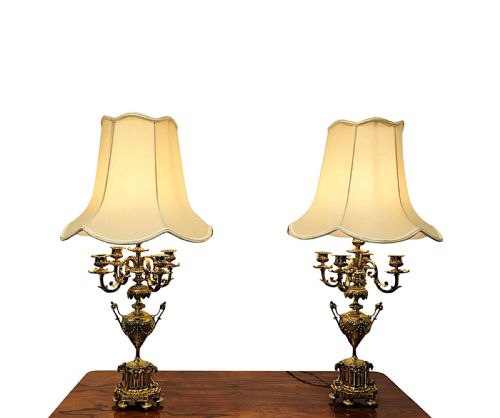
Pair of Ornate Candlesticks
These heavy, decorative domestic lights bring formal presence to a room, ranging from simple brass shafts to multi-armed gilt bronze table pieces.
Pair of Ornate Candlesticks
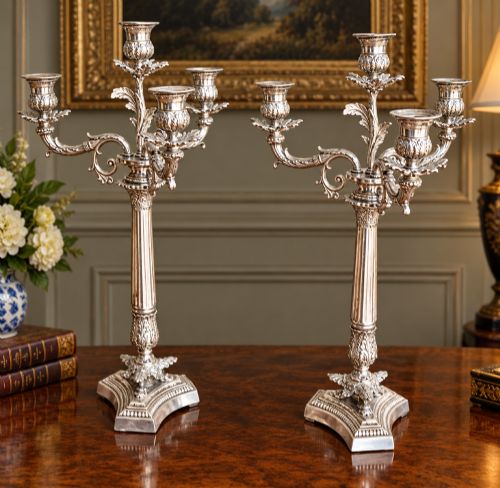
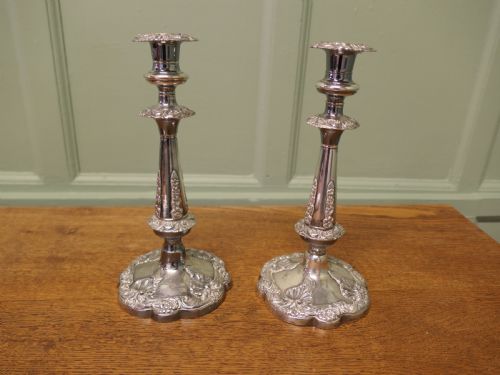
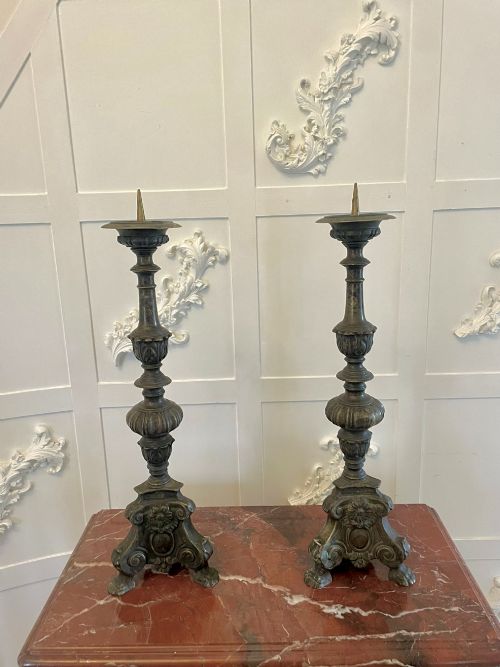
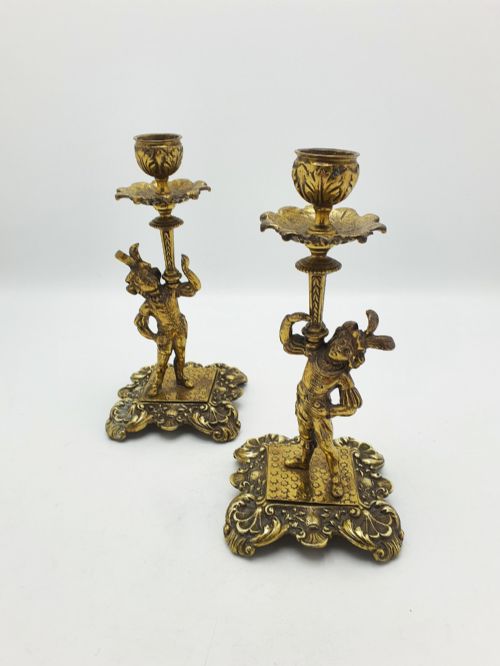
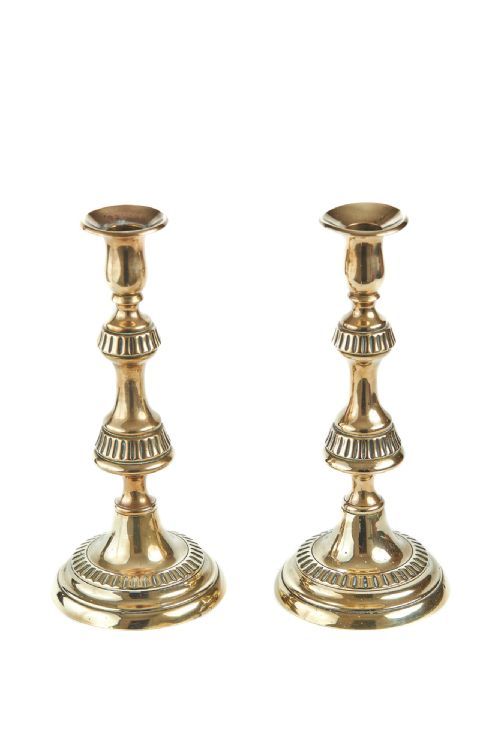
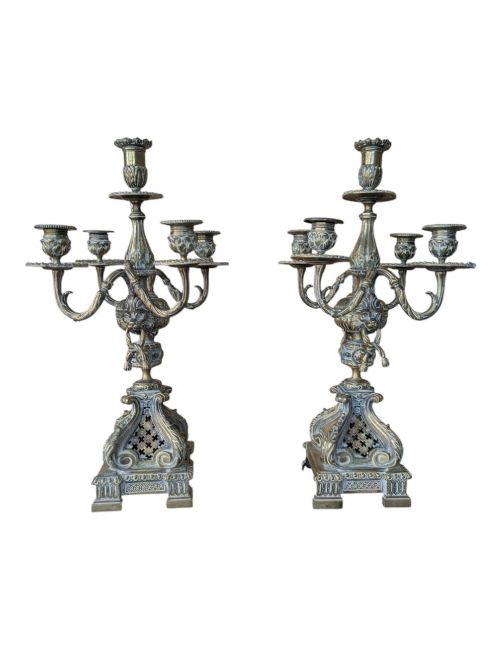
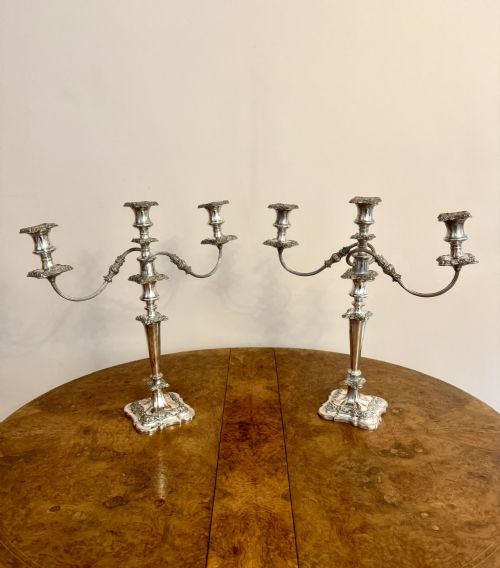
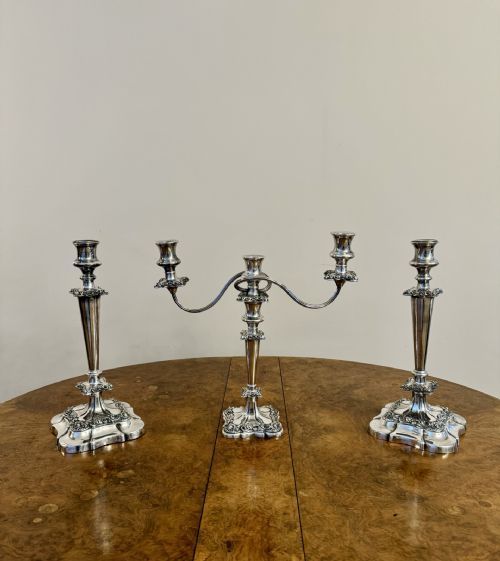
A pair of ornate candlesticks forms a matching set of domestic lighting accessories designed to hold wax candles safely on tables, sideboards, and mantelpieces. These items span the nineteenth century and the early twentieth century, taking the form of traditional single-socket candlesticks, multi-branched candelabras, and architectural pricket styles.
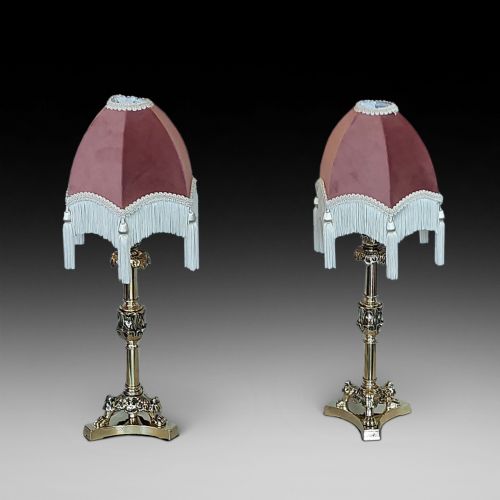
The objects frequently appear in Victorian and Regency guises, drawing heavily upon French Rococo, Neoclassical, and Empire aesthetic traditions. Alongside standard candle-holders, buyers regularly encounter pieces adapted into table lamps or mounted upon marble and onyx plinths.
Originating largely from British, French, and Italian workshops, these items utilise elaborate casting, chasing, and plating techniques to achieve highly decorative silhouettes. The selection unites standard table lights with larger torchere pedestals and figural bases.
How They Were Made
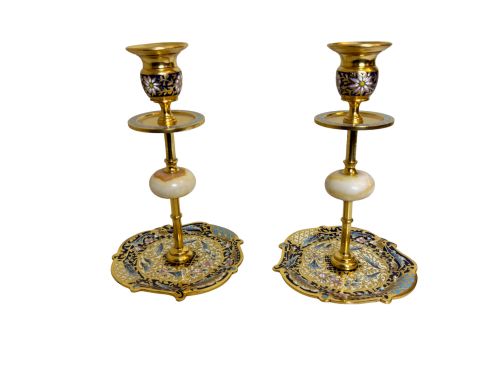
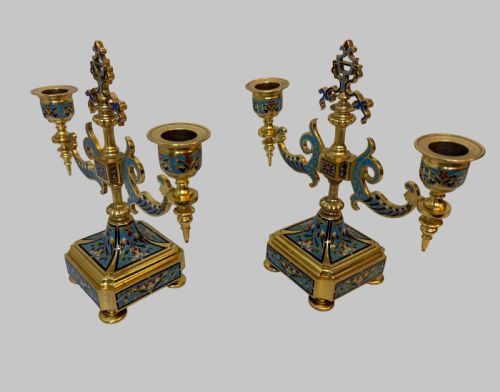
Makers utilised cast brass, bronze, and gilt ormolu as the structural core for these objects, frequently finishing the metal surfaces with silver plate or Old Sheffield plating. Many pieces incorporate decorative insets such as champlevé enamel, along with bases carved from sienna marble, onyx, or giltwood.
Casting and chasing allowed craftsmen to produce intricate figural motifs, tripod supports, and multi-arm candelabra branches with distinct textural depth. Subsequent finishing involved hand-polishing, gilding, and silver-plating to enhance the visual weight of the metal.
Several pairs have spent lifetimes shedding wax in French chateaux before finding their way onto modern mantelpieces.
What Varies in Quality
Quality rests upon the crispness of the casting and the depth of the chased detail across the metalwork, where superior examples exhibit sharp relief and defined edges rather than softened contours. The choice of materials also dictates standing, with solid bronze, heavy cast brass, and mercury-gilded ormolu sitting above standard plated alternatives.
The presence of integrated decorative elements like genuine marble plinths, champlevé enamel, or figural components separates standard production items from more ambitious decorative works. Original matched components and intact surface plating likewise elevate the standard of individual surviving pairs.
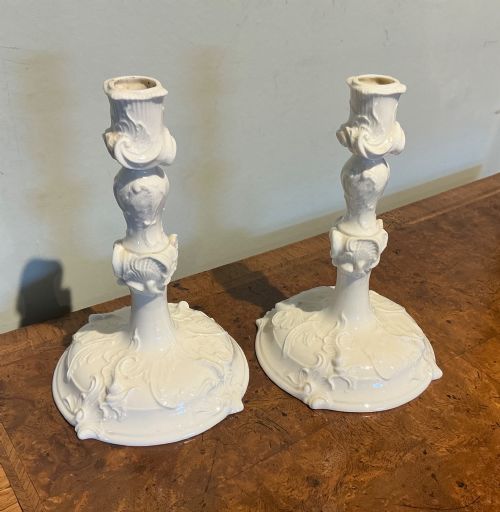
Nymphenburg
The Pair of Ornate Candlesticks Glossary
- Ormolu
- Finely ground high-carat gold applied to a bronze base using a mercury amalgamation technique. The method yields a distinct warm golden lustre that resists tarnishing over decades.
- Pricket
- A sharp metal spike set in the drip pan to impale and secure a large wax candle. This medieval form reappears in nineteenth-century ecclesiastical and decorative revival pieces.
- Champlevé
- An enamel technique where troughs are dug into a metal surface and filled with vitreous powder before firing. The resulting coloured patterns contrast sharply with the surrounding gilt bronze.
- Sheffield Plate
- An early composite material created by fusing a thin sheet of silver onto a thicker copper base under high heat. Edges often reveal the underlying copper layer through natural wear.
- Torchere
- A tall stand or ornamental candlestick originally designed to carry a torch or heavy candle. These architectural pieces frequently serve as decorative pedestals in larger rooms.
Pair of Ornate Candlesticks: Frequently Asked Questions
How do I identify French Empire style?
French Empire pieces rely on strict symmetry, classical architectural motifs, and military symbols drawn from antiquity. They often feature dark patinated bronze paired with bright ormolu mounts.
Marble plinths and strict geometric lines further signal this early nineteenth-century aesthetic.
Were these originally used for dining?
Large multi-arm candelabras served as grand centrepieces on dining tables and sideboards to provide illumination during evening meals. Taller torchere pedestals stood upon the floor or heavy furniture.
Smaller single sticks were carried from room to room or placed upon bedroom mantelpieces.
Can converted lamps be restored?
Many nineteenth-century candelabras were later drilled and wired to function as electric table lamps. Restoring them depends on whether the original wiring channel preserves the internal metal threading.
Some collectors choose to remove modern fittings to return the pieces to their original candle-holding state.
What distinguishes Victorian from Regency pieces?
Regency items generally favour clean Neoclassical lines, restrained classical drapery, and sparse ornamentation in brass or bronze. Victorian examples embrace heavier, more exuberant revival styles including Rococo flourishes and figural casts.
Silver plating and mixed materials like onyx become much more common by the mid-Victorian era.