

Pair of Mantel Vases
A pair of mantel vases brings symmetry and balance to a fireplace, offering twin points of decorative focus created in porcelain, bronze, and glass.
Pair of Mantel Vases
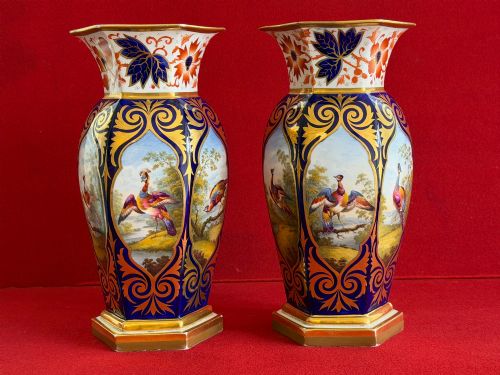
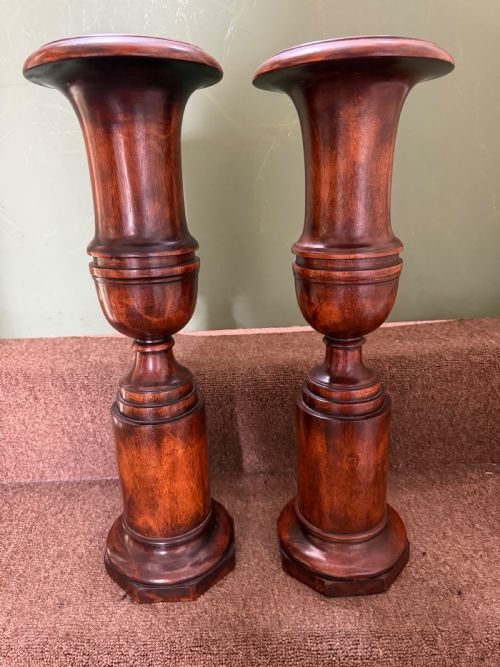
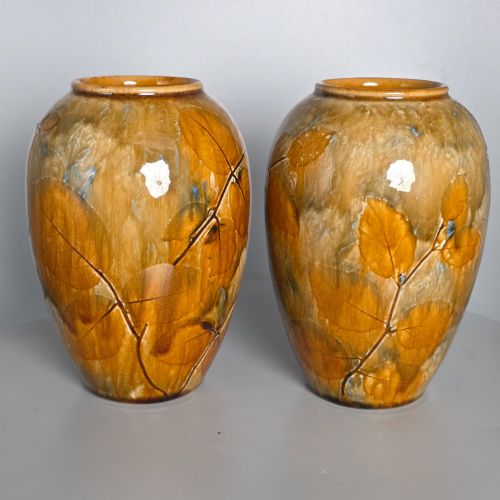
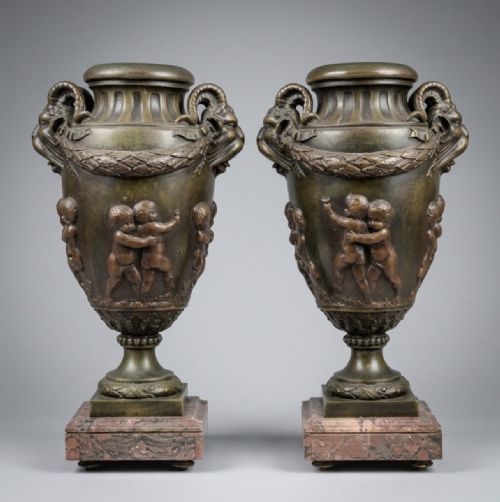
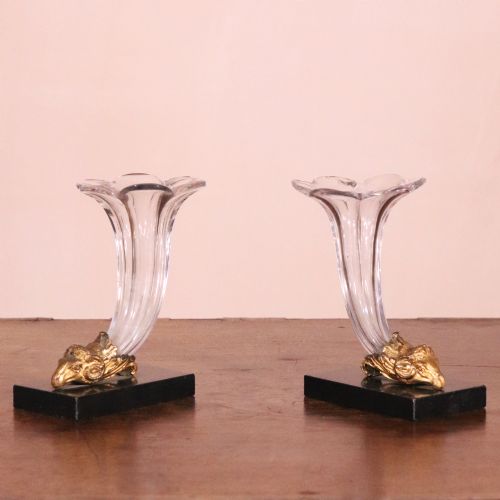
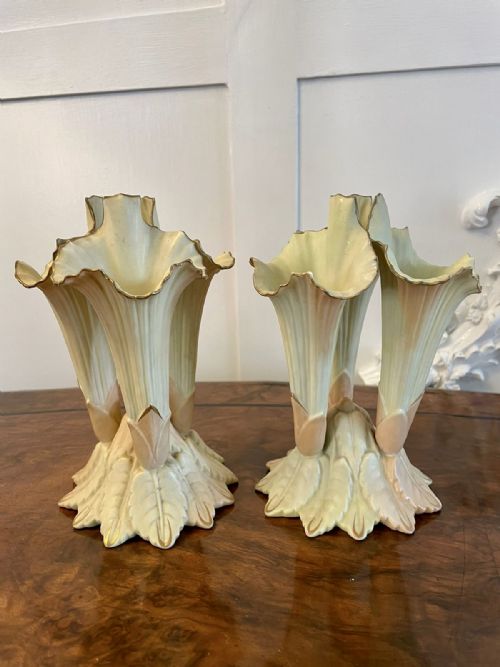
A pair of mantel vases comprises two matching vessels designed specifically to stand upon a chimney piece, mantel shelf, or console table. These items appear across the nineteenth and early twentieth centuries in porcelain, earthenware, glass, and bronze, often taking the form of spill vases, urns, or table lustres.
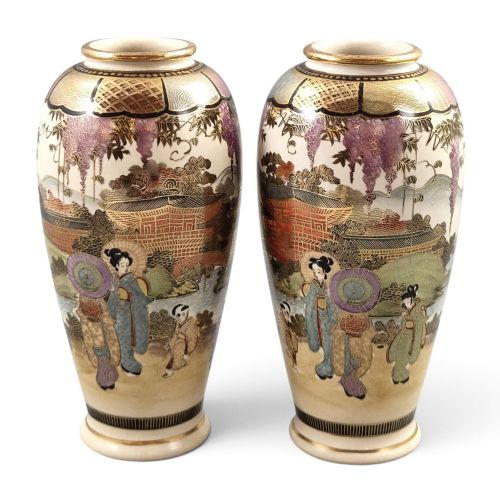
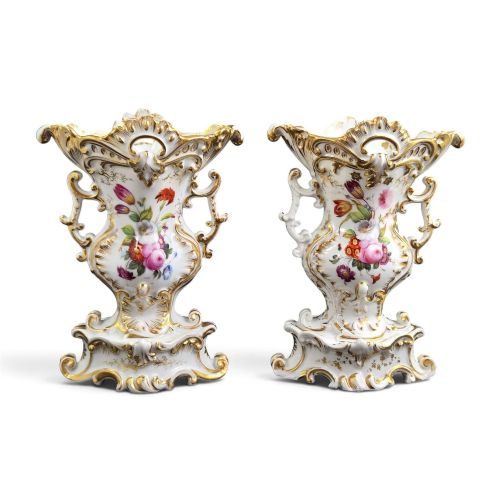
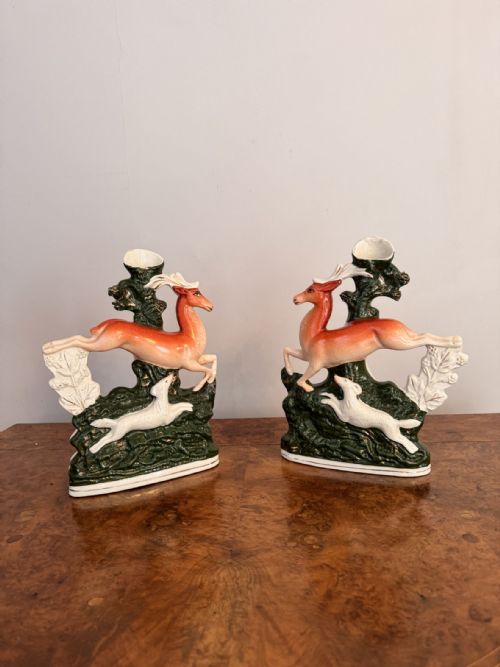
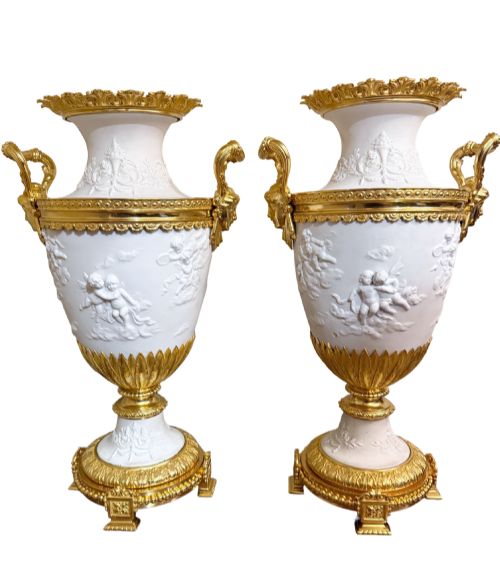
The selection ranges from Staffordshire earthenware figures and English porcelain to French gilt bronze mounted onyx and Japanese Satsuma ware. Neoclassical, Art Nouveau, and Victorian designs dominate the offerings, spanning the Georgian, Victorian, Edwardian, and Meiji periods.
How they were made
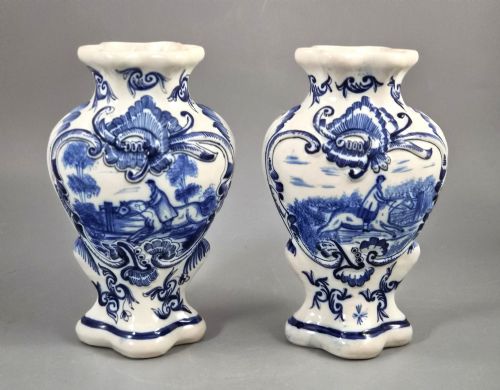
Makers shaped porcelain and ceramic bodies using throwing and casting techniques before applying hand-painted enamels, gilding, and copper-plate printing. Earthenware examples such as Staffordshire spill vases utilised local clays finished with coloured glazes.
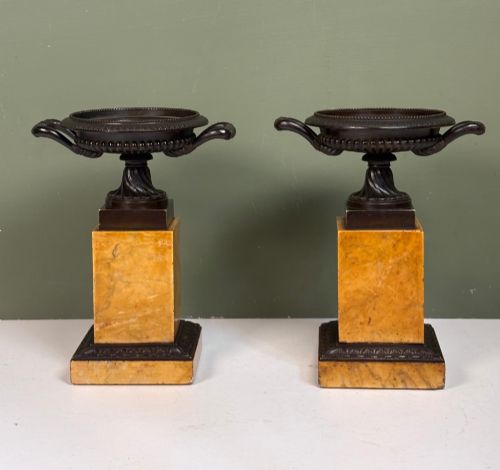
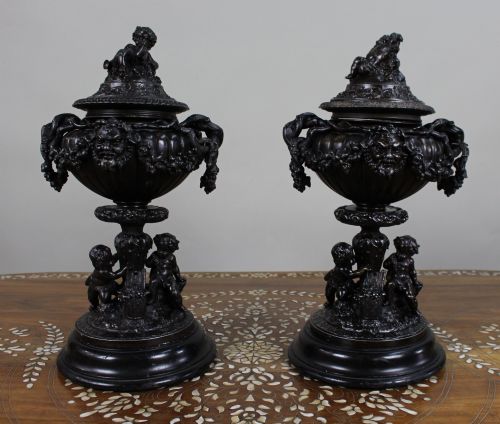
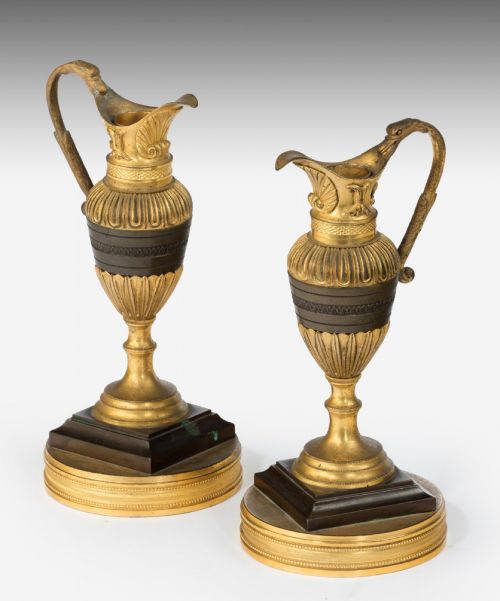
Metal vessels combine bronze, spelter, and brass cast with decorative elements like bacchic masks, handles, and putti, frequently mounted onto marble or onyx bases. Glass pieces employ coloured or cased glass bodies, sometimes hung with crystal prisms in the case of table lustres.
Materials range from delicate glass and porcelain to heavy bronze, spelter, and marble.
What varies in quality
Quality rests upon the crispness of the casting in metalwork and the precision of hand-painting on porcelain and earthenware. Superior pieces display finely detailed chasing on bronze mounts and delicate, well-fired ceramic glazes without surface blurring.
The reputation of the maker and the factory finish dictate the standing of individual examples, from standard commercial Staffordshire figures to high-end Sevres, Worcester, and Japanese Meiji productions.
Flight Barr and Barr·Royal Doulton·Jacob Petit·Fourmaintraux Courquin·Locke and Co·Boch Freres·Samson Paris·Royal Worcester
The Pair of Mantel Vases Glossary
- Spill vase
- A small receptacle designed to hold wooden spills used for lighting candles or fires. These vessels are typically made of ceramic or porcelain.
- Table lustre
- A decorative glass or porcelain vase hung with cut crystal glass prisms around the rim. They catch and reflect the light from candles or lamps.
- Champleve
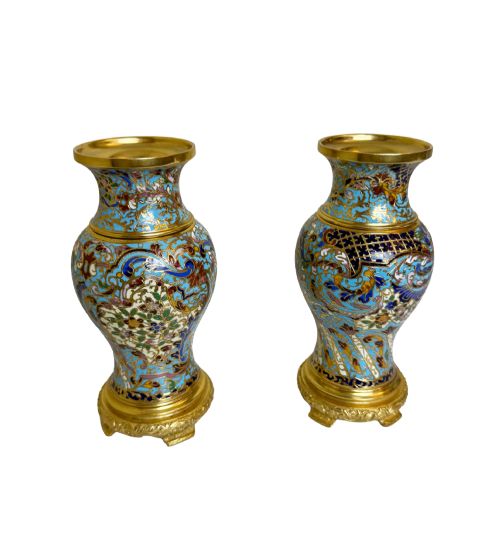
- An enamelling technique where troughs are carved into a metal surface and filled with vitreous enamel powder before firing. The technique produces colourful patterns bordered by metal lines.
- Ormolu
- Gilding technique using ground gold suspended in mercury applied to bronze. The mercury is driven off by heat, leaving a rich gold coating on the bronze mount.
- Campana urn
- A bell-shaped vessel with a flared rim and footed base, derived from classical antiquity. Grand Tour examples in bronze and marble replicate Roman models.
Pair of Mantel Vases: Frequently Asked Questions
Where should I place mantel vases?
These matched vessels sit comfortably upon a fireplace mantelpiece, framing a central mirror or clock to create visual symmetry.
They also work well placed at either end of a long sideboard, console table, or bookcase top where balance is required.
Were these vases used for flowers?
Many ceramic and glass pairs functioned as ornamental garnitures rather than holding water for fresh blooms. Spill vases specifically held thin wooden tapers used to carry flames from hearth to candle.
Larger urns and decorative vases served purely to display craftsmanship and enrich interior decoration during the nineteenth century.
How do I care for antique glass lustres?
Dust glass and crystal prisms gently with a soft dry cloth to avoid scratching the surface or disturbing the hanging wires. Remove the crystal drops carefully for washing in warm soapy water if deep cleaning is necessary.
Keep bronze and gilt metal elements free from moisture and avoid using abrasive polishes that damage the original gilding.
How do I distinguish Victorian from Regency styles?
Regency designs lean heavily towards strict Neoclassical lines, drawing inspiration directly from ancient Greek and Roman forms with restrained ornament. Victorian pieces often embrace bolder polychrome decoration, ornate naturalistic motifs, and heavier proportions.
Examining the materials, mounting techniques, and factory marks helps confirm the period of manufacture.