




Pair of Lustre Vases
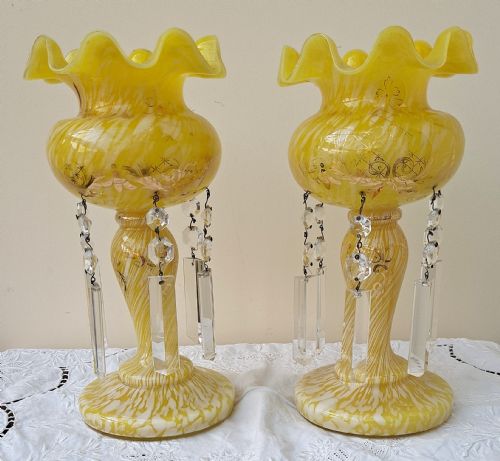
These pair of lustre vases bring brilliant colour and flashing crystal drops to a mantelpiece, offering the decorative flair that Victorian and later interiors demand.
Pair of Lustre Vases
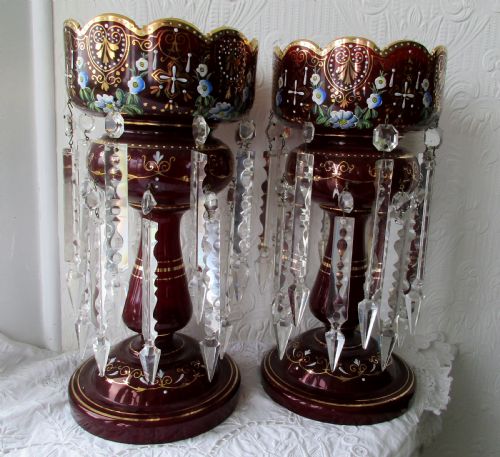
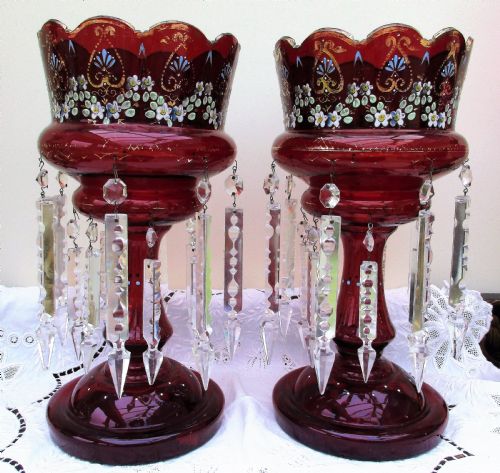
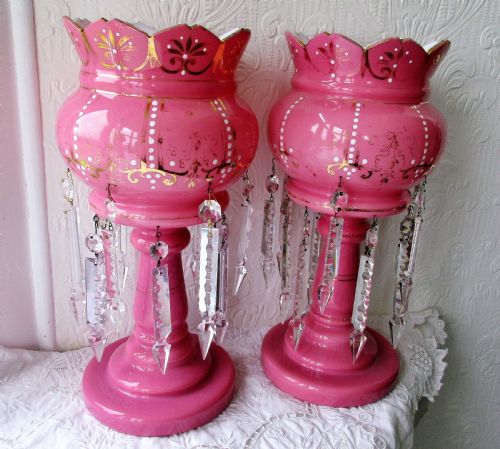
A pair of lustre vases unites glass or ceramic bodies with suspended crystal prisms, designed to sit upon mantelpieces and tables. Most examples appearing here date from the nineteenth century, showcasing rich coloured glass and ornate hanging drops.
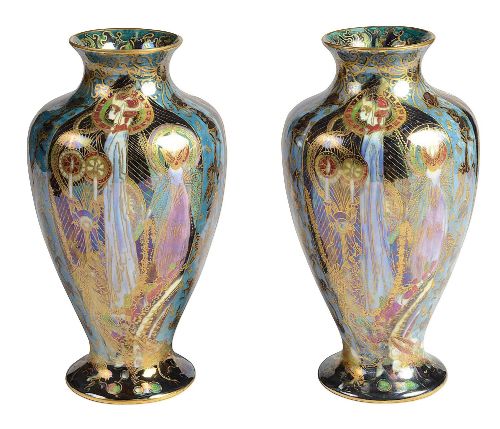
Makers utilised vibrant hues such as ruby, green, pink, and yellow, often combining flash glass techniques with hand-painted or gilt decoration. Forms range from traditional Victorian mantel lustres to later Art Deco baluster shapes.
Originating across England, France, and Bohemia, these decorative vessels reflect shifting tastes from mid-Victorian opulence to early twentieth-century design. Collectors encounter various configurations of spear and pendant drops surrounding central stems.
Materials and construction methods
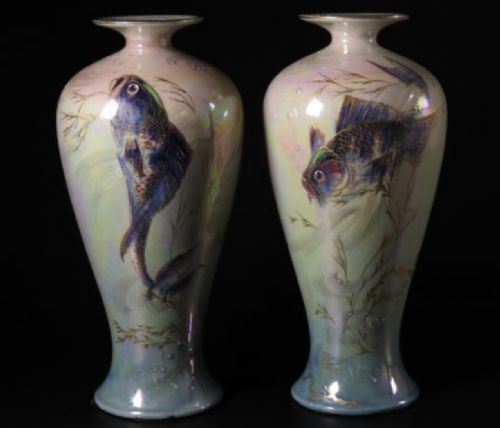
Glassmakers created coloured bodies through layered flash techniques, cutting through outer layers to reveal contrasting under-layers in crystal and ruby glass. Ceramic workshops shaped fine earthenware bodies before applying iridescent lustre glazes and detailed designs.
Prisms and drops were cut from lead crystal or clear glass, then hung from collars using wire or metal loops. Artisans added surface enrichment through gold leaf, enamel painting, and gilt detailing to catch ambient light.
Pair of Lustre Vases Retail Price Guide 2026
Typical asking prices for pair of lustre vases among the pieces listed under this phrase on Sellingantiques today, from the lower quarter to the upper quarter. They describe what is for sale here now, not the wider market.
Factors that distinguish individual examples
Quality rests upon the depth of the glass colour, the precision of the cut crystal drops, and the intricacy of the enamel or gilt painting. Intact sets retain their complete matching array of suspended prisms without replacement drops.
Artistic execution dictates distinction, separating standard moulded glass from finely painted works by notable designers and potteries. The crispness of the gilding and the clarity of the flash glass overlay reveal the skill behind the manufacture.
Wedgwood·Daisy Makeig Jones·Shelley·Walter Slater·Charlotte Rhead
The Pair of Lustre Vases Glossary
- Lustre
- A vase or mantel ornament featuring hanging glass prisms designed to reflect light. These pieces gained immense popularity during the Victorian era for domestic display.
- Flash glass
- Glass formed of two or more distinct layers of different colours fused together. Artisans then cut through the outer layer to expose the contrasting base colour beneath.
- Mantel lustre
- A specific form of decorative vase made to stand upon a fireplace mantelpiece. They typically incorporate a central stem surrounded by a ring of hanging crystal drops.
- Baluster
- A moulded vase shape characterised by a rounded lower body tapering to a narrow neck. This architectural silhouette appears frequently in twentieth-century ceramic designs.
- Overlay glass
- A technique involving multiple fused layers of coloured and clear glass. Cutting away portions of the top layer creates intricate patterns and window effects.
Pair of Lustre Vases: Frequently Asked Questions
What are lustre vases used for?
These vessels served primarily as decorative ornaments on mantelpieces and tables rather than functional flower holders. Their suspended crystal drops caught the flicker of candlelight and gaslight in period rooms.
Today, collectors display them on mantelpieces and sideboards to introduce nineteenth-century and early twentieth-century character into interiors.
How do I date a pair of lustres?
Dating relies on observing the glass colours, manufacturing techniques, and decorative styles. Nineteenth-century examples often feature ruby or green flash glass with heavy crystal drops.
Later pieces from the twentieth century introduce distinct ceramic bodies, geometric Art Deco patterns, and different glaze formulations.
Are the hanging crystal drops original?
Many surviving examples have lost or replaced drops over decades of handling and cleaning. Inspecting the attachment loops and the matching cut of the glass helps determine originality.
Matching colour, wear patterns, and glass consistency across the prisms indicate whether the set remains together in its original form.
Where were these glass pieces made?
Production centres spanned England, France, and Bohemia during the nineteenth and early twentieth centuries. English and Bohemian glassmakers specialised in ruby and coloured flash glass.
French makers produced delicate opaline variations, while later English potteries introduced specialised earthenware lustre designs.