





Pair of Lion Statues
These pair of lion statues bring centuries of classical and Eastern guardianship into homes and gardens through bronze, stone, and ceramic forms.
Pair of Lion Statues
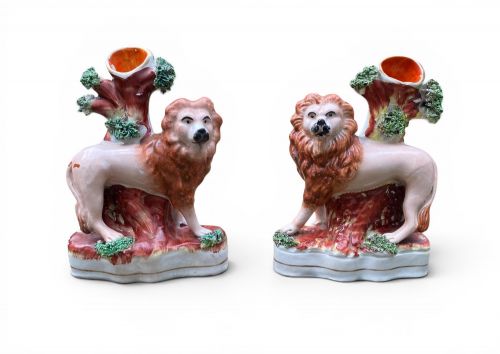
When you search for a pair of lion statues, you encounter guardian figures, classical models, and domestic ornaments stretching from the nineteenth century into the mid-twentieth century. The selection spans grand Italian marble garden protectors, French bronze Grand Tour castings, and Staffordshire pottery spill vases designed for the mantelpiece.
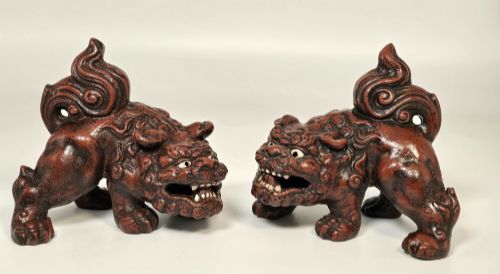
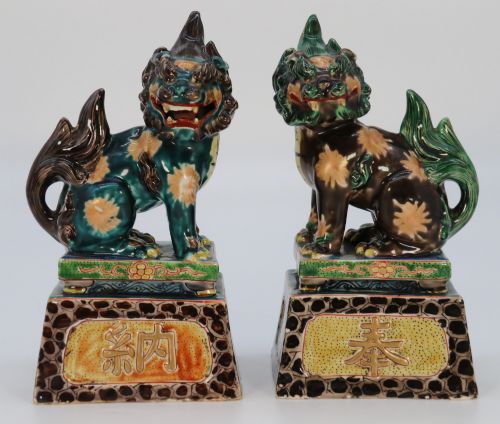
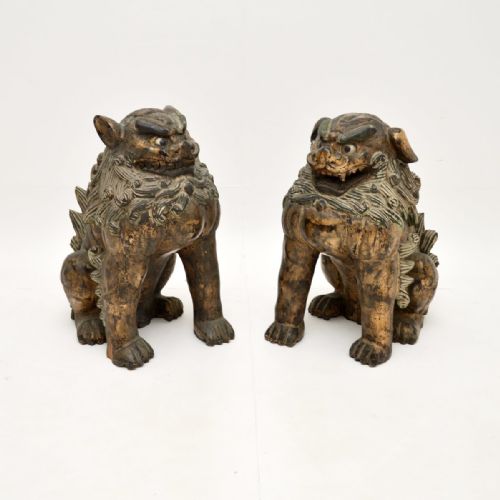
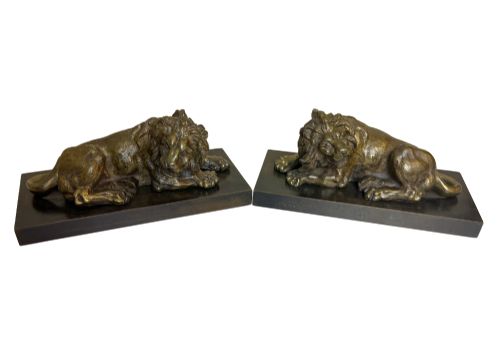
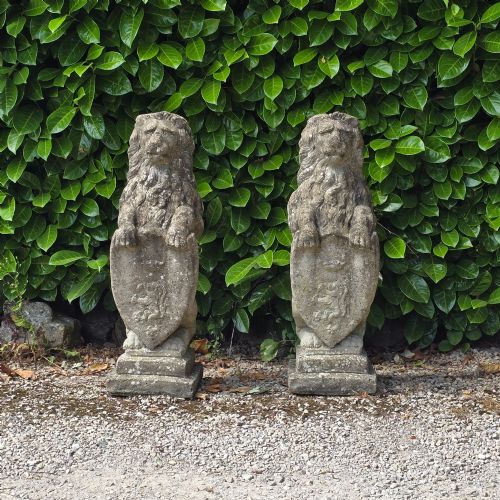
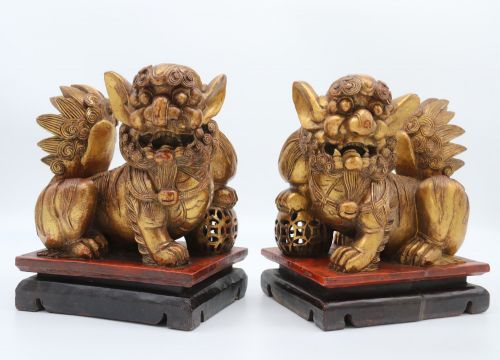
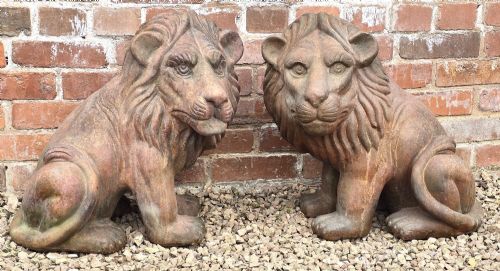
The domestic versions often appear as carved wood bookends, alabaster sculptures, or cold-painted bronzes, whilst outdoor spaces receive weathering stone, terracotta, and cast iron guardians. Chinese Foo Dogs and Buddhist lion dogs sit alongside Western Medici and Canova models, reflecting diverse cultural interpretations of these symbolic beasts.
Victorian examples mingle with earlier Neoclassical inspirations and later twentieth-century garden statuary, providing options for both interior display and exterior gate posts. You meet recumbent, standing, and seated postures across materials that range from jade marble and soapstone to earthenware and glaze.
How they were made
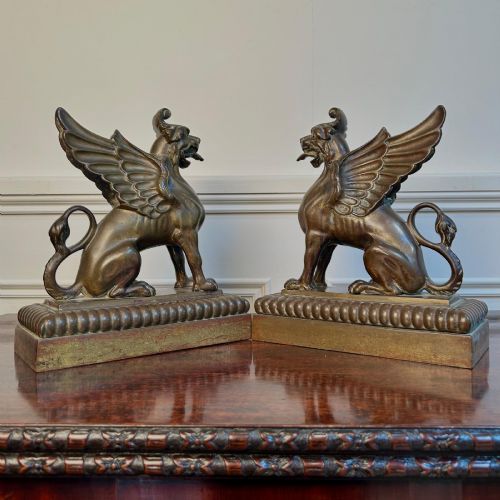
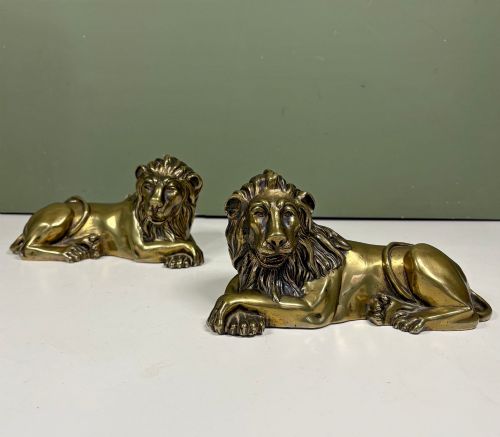
Metal versions utilise casting techniques, seen in French bronze, brass, and cast iron figures finished with cold painting, black paint, or patination. Sculptors carved other examples directly from marble, serpentine, alabaster, stone, and various woods, achieving detailed mane and muscular definition.
Ceramic and pottery iterations involve earthenware, terracotta, and porcelain bodies finished with glazes, lacquer, or polychrome paint. Makers such as Lancaster and Sons of Hanley shaped pottery variants, whilst others sculpted terracotta and reconstituted stone for large garden installations.
Pair of Lion Statues Retail Price Guide 2026
Typical asking prices for pair of lion statues among the pieces listed under this phrase on Sellingantiques today, from the lower quarter to the upper quarter. They describe what is for sale here now, not the wider market.
Materials represented include bronze, terracotta, marble, alabaster, stone, earthenware, ceramic, and cast iron.
What varies in quality
Material integrity and surface treatment dictate longevity and aesthetic depth, whether through the natural figuring of marble and serpentine or the careful application of cold paint and glaze. Scale and balance also determine success, as massive garden figures require harmonious proportions to hold their architectural presence.
Lancaster and Sons of Hanley·Bergman
The Pair of Lion Statues Glossary
- Canova Lions
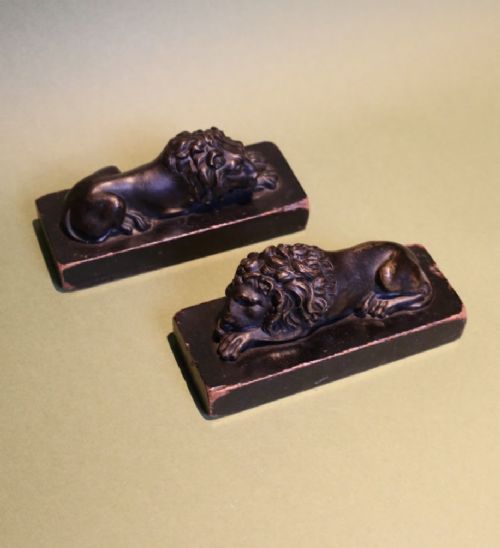
- Sculptural models of lions designed by Antonio Canova for the tomb of Pope Clement XIII in Rome, frequently reproduced during the Grand Tour period. These reclining figures became staple subjects for nineteenth-century bronze and marble casters.
- Foo Dog
- A Western colloquial term for Chinese guardian lions, also known as Shiwan Buddhistic lion dogs or dogs of Foo. They traditionally stand outside imperial structures and temples to provide protection.
- Grand Tour
- A cultural journey undertaken by wealthy young Europeans in the eighteenth and nineteenth centuries to study classical art. Travellers collected small bronzes and stone models, including miniature lions, as souvenirs.
- Medici Lions
- A pair of marble lion sculptures, one antique and the other sixteenth-century, guarding the Loggia dei Lanzi in Florence. Replicas in bronze, stone, and terracotta became popular across European gardens.
- Spill Vase
- A hollow ceramic or pottery vessel designed to hold taper spills for lighting fires and candles. Victorian examples often incorporated figural subjects like lions at the base.
- Serpentine
- A group of green silicate minerals often used for ornamental carving and decorative objects. Its mottled appearance resembles snake skin, giving the stone its name.
Pair of Lion Statues: Frequently Asked Questions
Where should I place garden lions?
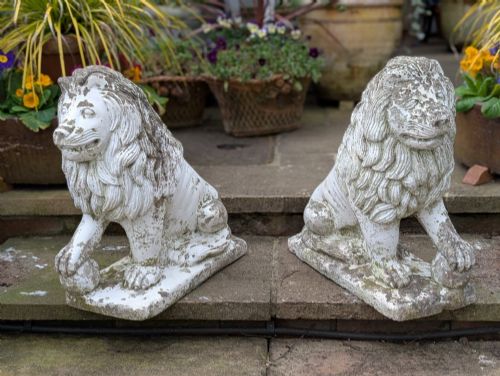
Garden lions traditionally flank gates, entranceways, porch steps, or garden paths to act as symbolic guardians. Stone, terracotta, and cast iron versions withstand outdoor weathering when positioned securely on flat footings or plinths.
Smaller seated or recumbent figures suit patio walls and low brick piers, where their scale remains proportionate to surrounding planting.
How do I care for bronze lions?
Bronze statues require occasional dusting with a soft cloth and the periodic application of microcrystalline wax to protect the patination. Avoid harsh chemical cleaners or abrasive materials that could strip the surface finish.
Indoor bronzes need protection from direct moisture, whilst outdoor pieces benefit from sheltered placement during extreme winter conditions.
What is the difference between Canova and Medici lions?
Canova lions are based on Antonio Canova's neoclassical reclining lions designed for papal tombs in Rome. Medici lions are standing or crouching replicas of the Renaissance marble figures guarding the Loggia dei Lanzi in Florence.
Canova versions emphasise a calm, recumbent repose, whereas Medici lions often project a more alert and commanding posture with one paw resting on a sphere.