

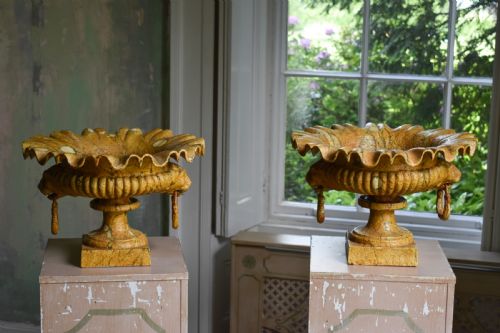


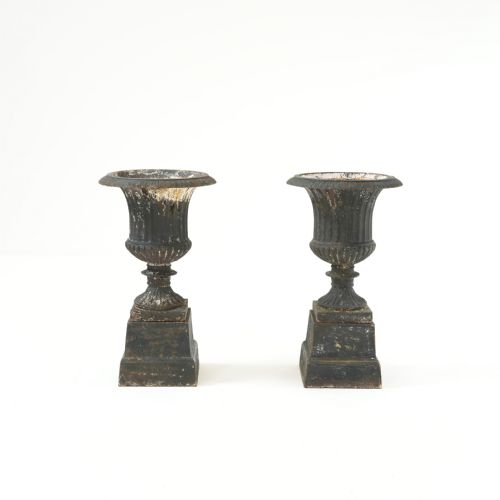


Pair of Iron Pedestals
A pair of iron pedestals brings classical proportion and enduring structure to garden and conservatory alike.
Pair of Iron Pedestals
A pair of iron pedestals provides sturdy support for decorative urns, planters, and sculptural displays across garden terraces and interior rooms. These matching supports elevate botanical arrangements to create visual symmetry in both formal landscapes and garden conservatories.
The versions most commonly met on this page span the nineteenth and early twentieth centuries, drawing heavily upon Victorian, Regency, and neoclassical design vocabularies. Such pieces frequently incorporate robust metal columns or square plinths designed to bear heavy stone and iron vessels.
Originating from British foundries and continental workshops, these heavy metal stands served both functional and decorative roles in estate gardens and domestic interiors. Their enduring form reflects centuries of appreciation for classical garden architecture.
Materials and construction methods
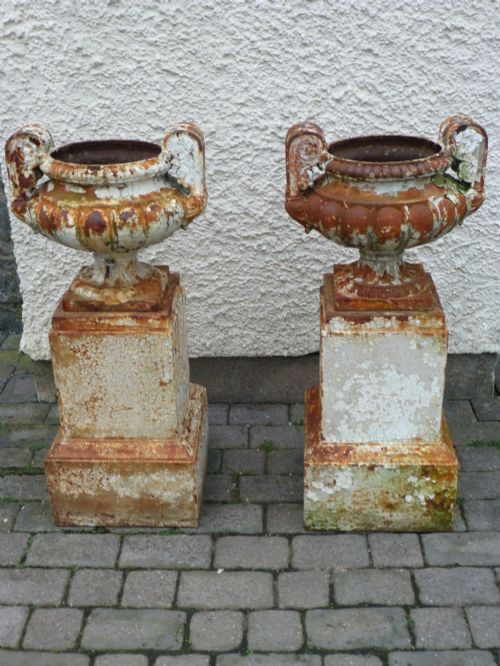
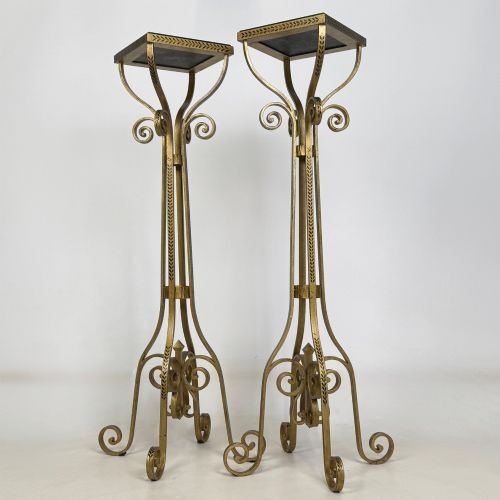
Cast iron forms the primary structural substance, shaped through traditional foundry methods that allowed for intricate mouldings and substantial load-bearing capacity. Wrought iron and gilded iron also appear in select designs, offering alternative surface textures and structural flexibility.
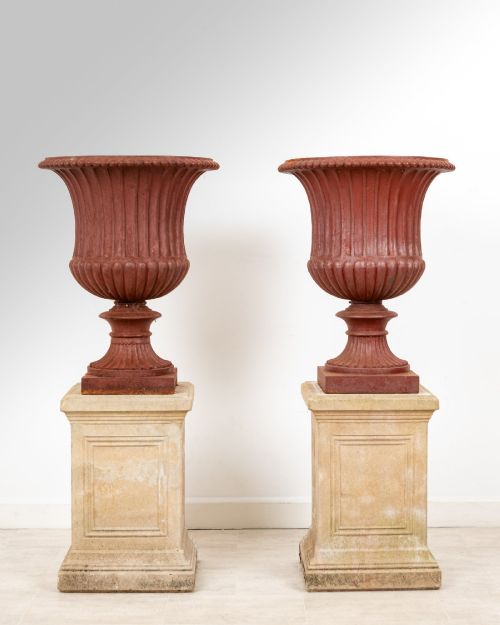
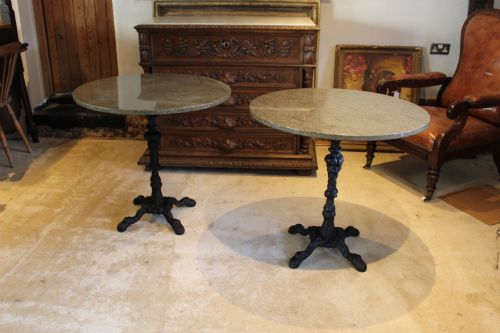
Many examples incorporate complementary materials such as marble, granite, or stone for top surfaces and matching plinths, combining heavy metals with dense natural minerals. Protective layers of paint historically applied to the iron surfaces helped withstand outdoor weathering.
Foundry techniques of the nineteenth century permitted mass production of standardised classical motifs while retaining crisp botanical and architectural detailing across matching pairs.
Listings span periods from the Georgian era through the 1930s, featuring cast iron, wrought iron, stone, and marble.
Distinctions in craftsmanship and design
The definition and depth of cast ornamentation separate standard commercial production from superior foundry work. Crisp botanical relief, sharp architectural moulding, and clean casting seams indicate careful pattern-making and skilled metal pouring.
The integrity of the matching pair depends upon proportional balance and identical scaling between both supports, ensuring true symmetry when displayed together. Heavier metal gauge and substantial weight denote superior material substance rather than hollow or thin-walled casting.
The presence of original foundry marks or documented provenance adds historical weight, while surface patination resulting from decades of outdoor exposure distinguishes aged character from recent treatment.
Falkirk Carron foundry·Coalbrookdale
The Pair of Iron Pedestals Glossary
- Campana urn
- A bell-shaped vessel with a flared rim, frequently mounted upon a column or plinth to form a classical garden focal point. This specific silhouette derives from ancient Roman bronze and marble wine vessels.
- Plinth
- A heavy rectangular or square base block that elevates an urn, column, or statue above ground level. It provides both architectural stability and visual weight to the composition.
- Torchere
- A tall stand or pedestal originally designed to hold a candle, lamp, or torch. Later nineteenth-century examples often functioned as decorative plant stands.
- Neoclassical
- An artistic and architectural style drawing inspiration from the classical art and culture of ancient Greece and Rome. It emphasises symmetry, straight lines, and classical motifs such as acanthus leaves and egg-and-dart moulding.
- Patina
- The surface texture and coloration developed by metal, stone, or paint over decades of exposure to the elements and handling. It serves as a visual indicator of age and environmental interaction.
Pair of Iron Pedestals: Frequently Asked Questions
Where should iron pedestals be placed?
These supports suit formal garden terraces, conservatory entryways, and large interior hallways where matching architectural symmetry enhances the space.
Their robust construction allows for outdoor placement on paved surfaces, though monitoring the ground beneath prevents uneven settling over time.
How do I care for cast iron?
Maintaining cast iron involves checking protective painted or sealed surfaces regularly to prevent moisture penetration and subsequent oxidation.
Applying appropriate metal preservatives during dry seasonal periods preserves the structural integrity of the material without obscuring surface character.
Can these stands support heavy stone urns?
Most nineteenth-century cast iron pedestals and columns were engineered specifically to bear the substantial weight of dense stone planters and lead or iron urns.
Verifying that the top mounting surface makes full contact with the base of the vessel ensures stable weight distribution.
How do I tell Victorian pieces apart?
Victorian examples often display heavier casting, deeper relief ornamentation, and distinct classical revival motifs influenced by industrial manufacturing capabilities of the period.
Later twentieth-century iterations tend toward cleaner lines or simplified profiles associated with art deco and early modern design movements.