



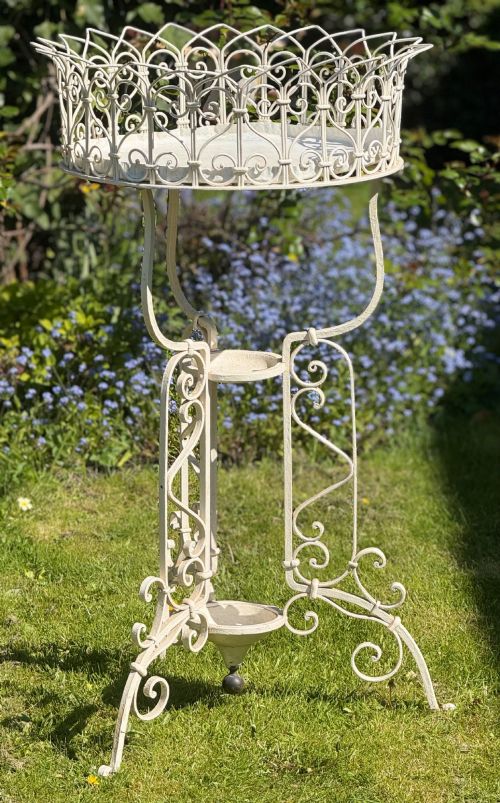


White Cast Iron Pedestals
White cast iron pedestals encompass sturdy garden urns, plant stands and bistro tables rooted in nineteenth-century foundry traditions.
White Cast Iron Pedestals
When you search for white cast iron pedestals, you encounter robust garden urns, plant stands, and occasional cafe tables spanning the Victorian and Regency eras. These pieces typically combine metal supports with marble tops or painted finishes designed for garden and conservatory settings.
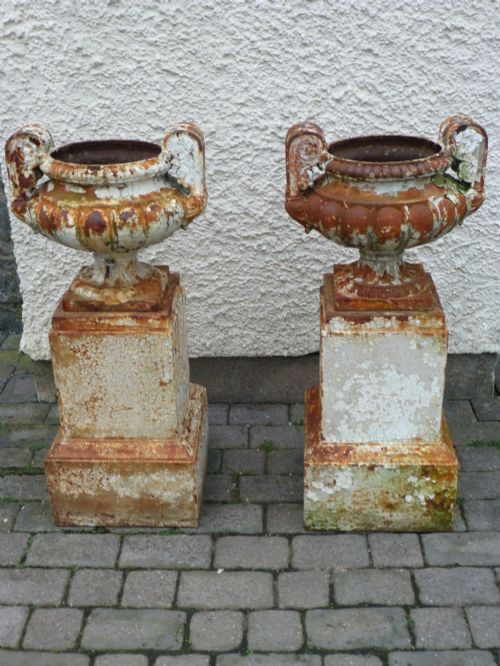
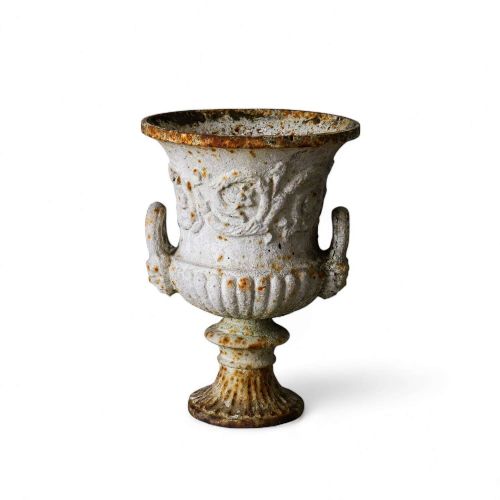
The versions most frequently met on this page include nineteenth-century garden urns on matching plinths and classical revival plant stands. Makers often employed heavy metal casting techniques to create durable architectural ornaments featuring acanthus leaves, shell motifs, and gadrooned bodies.
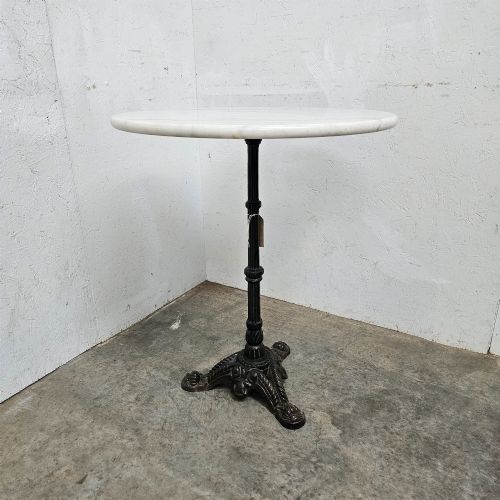
Beyond standard garden planters, the selection incorporates French bistro tables that pair cast or wrought iron frames with white marble surfaces. These diverse forms share a heavy structural foundation suited to both outdoor landscaping and interior display.
How they were made
Foundries manufactured these pieces by pouring molten iron into sand moulds, capturing intricate decorative details such as acanthus leaves and fluted columns. The resulting heavy metal framework received protective coats of paint to withstand exterior conditions.
Many associated tables and stands integrated white marble tops fitted directly onto the iron bases. Wrought iron elements occasionally appeared alongside cast components in specific French cafe tables and garden jardiniere stands.
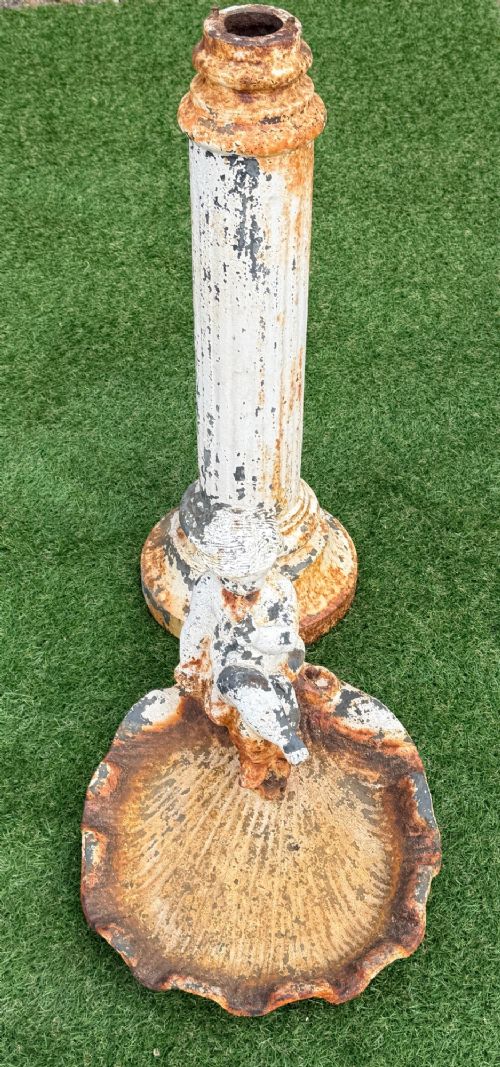
A jovial stone cherub permanently guards a cast iron bird bath, overseeing centuries of garden gossip.
What varies in quality
The crispness of the casting defines the upper tier of these pieces, where foundry work preserves sharp relief in foliage and classical motifs rather than soft outlines. Maker attribution to notable foundries elevates a piece through superior historical provenance.
Structural integrity and original matching components distinguish finer examples from assembled sets. Urns that retain their original cast iron plinths demonstrate higher quality than composite items brought together later.
Falkirk Carron Foundry·Coalbrookdale·Andrew Handyside
The White Cast Iron Pedestals Glossary
- Campana Urn
- A bell-shaped garden vessel with an everted rim and a pedestal base. This classic form frequently appears in nineteenth-century garden ornament design.
- Gadrooned
- Decorated with a series of convex curves or flutes moulded in a parallel sequence. This ornamental detail often encircles the body of nineteenth-century cast iron urns.
- Jardiniere
- An ornamental pot or stand designed to hold plants or flowers. These items appear in cast iron and wrought iron configurations for conservatory or garden use.
- Plinth
- A heavy rectangular or square base supporting a column, urn, or statue. Original cast iron plinths provide stable elevation for garden planters.
- Acanthus Leaf
- A classic sculptural motif modelled after the Mediterranean plant of the same name. Foundries frequently cast these foliage patterns onto nineteenth-century urns and pedestals.
White Cast Iron Pedestals: Frequently Asked Questions
Are these pedestals suitable for outdoor use year round?
Cast iron construction allows these urns and stands to withstand exterior garden environments successfully throughout the seasons. Painted finishes provide an initial barrier against weathering, though maintenance depends on local climate conditions.
Positioning pieces on stable stone or gravel prevents moisture retention at the base. Regular inspection of the painted surface helps preserve the metal beneath.
How do I distinguish a Victorian urn from a Regency one?
Regency examples often display precise neoclassical restraint and specific foundry marks associated with early nineteenth-century production. Victorian pieces frequently embrace heavier classical revival ornamentation, including elaborate acanthus and shell motifs.
Examining the proportion and casting depth offers further clues to the manufacturing period. Foundry traditions shifted noticeably between these two eras, influencing decorative details.
Can marble top bistro tables stay outside?
French cafe and bistro tables featuring marble tops and iron bases function well in sheltered outdoor spots or conservatories. Extreme winter frost can affect marble and painted iron joints, making indoor winter storage advisable.
Periodic sealing of the marble surface protects against staining from garden debris or moisture. The iron frames benefit from basic cleaning and touch-up painting when necessary.
Do urns usually come with their matching plinths?
Some nineteenth-century garden urns retain their original cast iron plinths, while others stand independently on columns or steps. Finding a matched pair with original bases is less common than discovering single vessels.
When plinths accompany urns, they share the same casting style and weathering characteristics. Checking how securely the vessel rests on the base reveals whether they were cast as a unified set.