



Pair of Genre Paintings
A pair of genre paintings brings the daily life, domestic interiors, and social scenes of past centuries directly onto a wall.
Pair of Genre Paintings
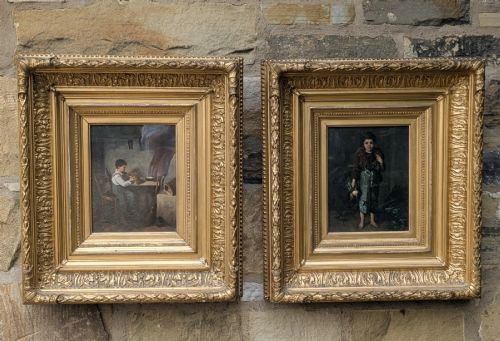
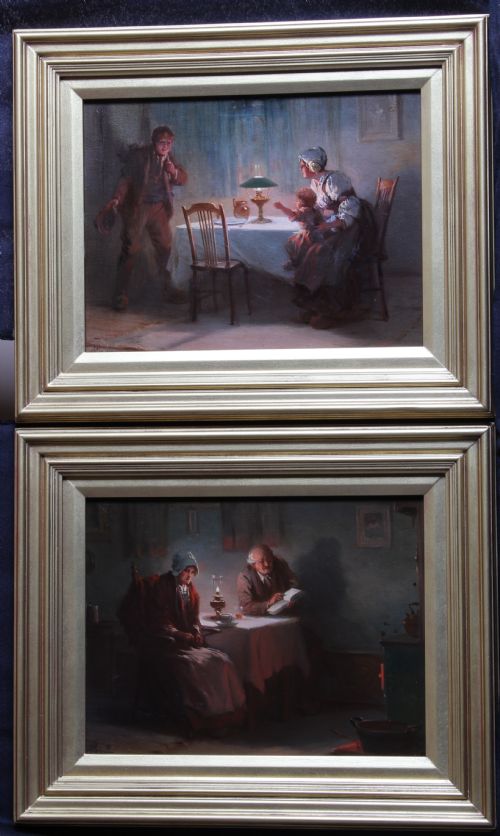
When you search for a pair of genre paintings, you encounter matched artworks depicting everyday scenes, domestic interiors, and human figures rather than formal portraits or sweeping landscapes. The examples available span the nineteenth century and the early twentieth century, taking the form of oil paintings, watercolours, and crystoleoms.
Most entries originate from European makers and artists, covering Victorian, continental, Irish, and Japanese styles. Common subjects range from quiet tea times and fireside moments to peasant scenes, elderly couples, and rural life.
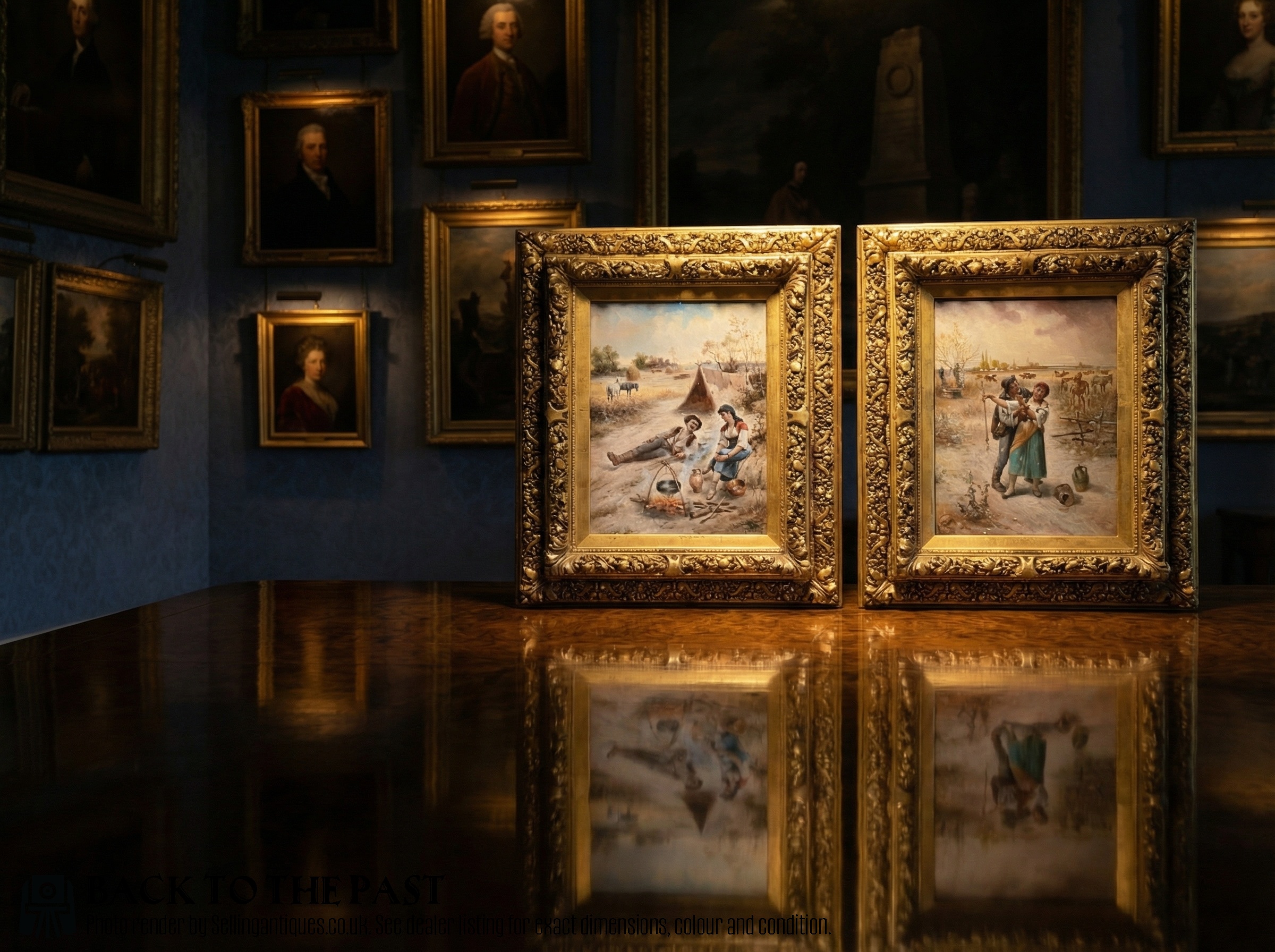
The format typically consists of two companion pieces designed to be hung side by side, sharing a common artist, period, or thematic narrative. They reflect the nineteenth-century taste for narrative art that told a relatable human story within domestic spaces.
How they were made
The works rely primarily on oil paint applied to canvas, wood panels, boards, or tin sheets, capturing fine detail in interior lighting and costume. Alternatively, artists utilised watercolour on paper to achieve lighter, more translucent compositions.
Support materials include gilt wood frames and glass coverings, particularly for watercolours and crystoleoms, which protect the delicate surfaces from environmental damage.
Techniques range from the careful brushwork of nineteenth-century realism to Japanese watercolour methods, showing the diverse production techniques employed across different regional workshops.
Listings feature works spanning the nineteenth century and the early twentieth century, utilising oil paint, watercolour, and tin.
What varies in quality
Quality rests upon the skill of the artist in handling light, facial expression, and narrative detail within the scene. Named artists with recorded exhibition histories or distinct regional provenance elevate the standing of the work.
The condition of the pigment and the integrity of the original support, whether canvas, panel, or paper, determine how well the artwork survives. Surviving companion frames in gilt wood also contribute to the completeness and visual harmony of the matched pair.
Alexander Rosell·Ferruccio Vitale·Hermann Armin Kern·R. Palnay·Robert Richard Scanlan·Federico Andreotti·Joseph Emmanuel Weiser·Leon Girardet·Frank Dadd
The Pair of Genre Paintings Glossary
- Genre painting
- Artwork depicting scenes from ordinary life, typically involving people in domestic, rural, or social settings. These works focus on narrative and human activity rather than grand historical events.
- Crystoleom
- A Victorian method of applying an albumen photograph to glass, hand-painting it in oils or watercolours, and then making the paper transparent. This technique creates a luminous, highly detailed finished image popular in the nineteenth century.
- Gilt wood
- Wood that has been treated with a thin layer of gold leaf or metallic gilding. It frequently forms the ornate frame surrounding historical paintings.
- Panel painting
- A painting executed on a flat piece of wood rather than stretched canvas. Panels provide a rigid support that prevents the cracking often seen in aged fabric.
- Watercolour
- Paint consisting of pigment suspended in a water-soluble vehicle, usually applied to paper. It allows for transparent washes and delicate colour blending.
Pair of Genre Paintings: Frequently Asked Questions
What is a genre painting?
A genre painting depicts scenes from everyday life, such as domestic interiors, market scenes, or social gatherings. Rather than focusing on portraits or landscapes, it captures ordinary people engaged in routine activities.
These artworks provide a window into the social habits, dress, and domestic arrangements of past eras. When found as a pair, they often tell a connected visual story or present contrasting daily moments.
How do I hang a pair of paintings?
A pair of companion paintings works best when hung side by side at eye level, maintaining a consistent gap between them that matches their visual weight. They require balanced lighting to ensure both canvases or watercolours receive equal attention.
Keeping them away from direct sunlight protects the pigments and the underlying canvas or paper from fading. Matching frames help unify the display on the wall.
How do I identify the period?
Identifying the period involves examining the framing materials, the type of support used for the pigment, and any signature or stylistic clues. Nineteenth-century works frequently employ canvas, wood panels, or heavy gilt frames.
Subject matter and clothing styles also offer clear indicators of whether a piece originates from the Victorian era or the early twentieth century. Signatures can often be traced to specific recorded artists working within those decades.