


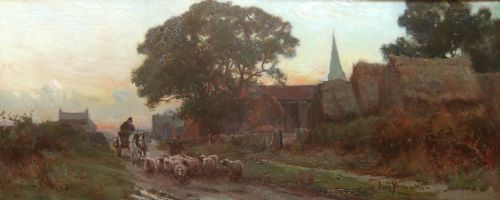

Framed Rustic Landscape Art
These framed rustic landscape art pieces bring pastoral scenes and rural charm into rooms through oils, watercolours and framed dioramas.
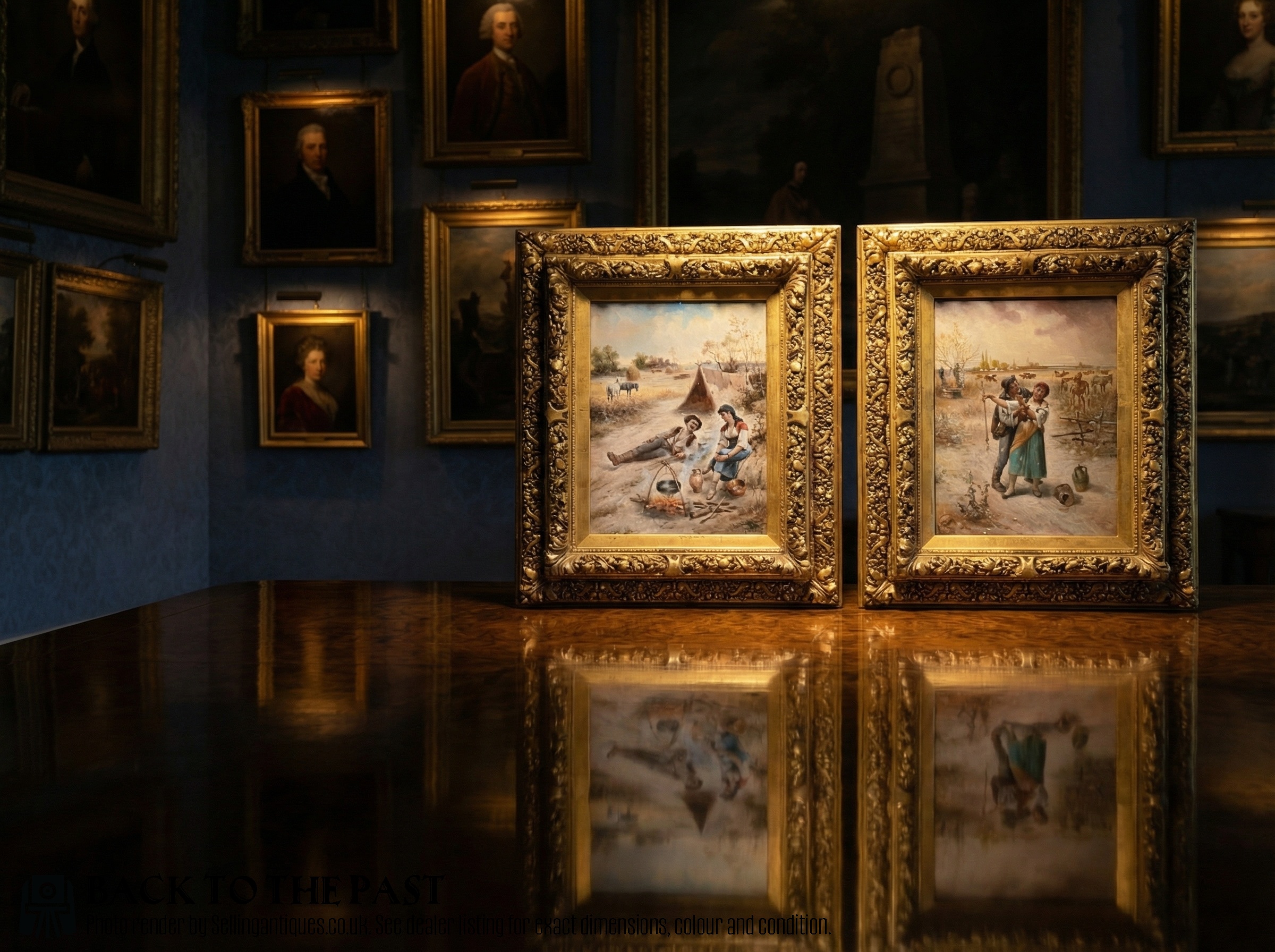
Framed Rustic Landscape Art
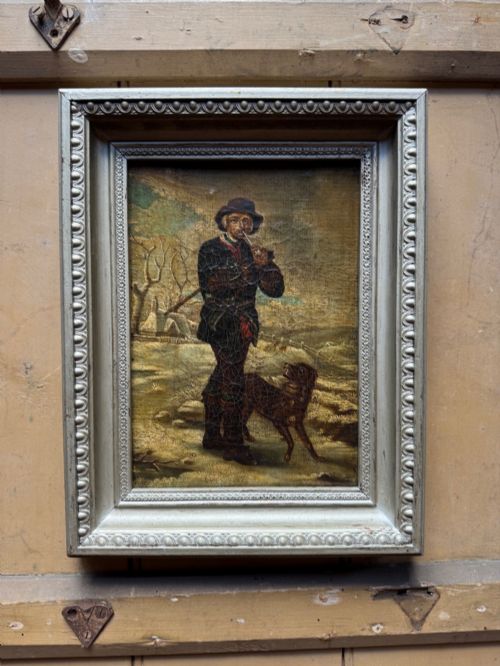
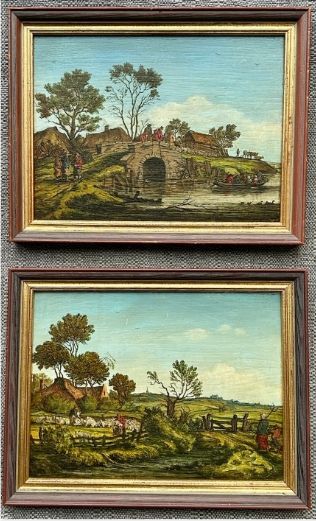
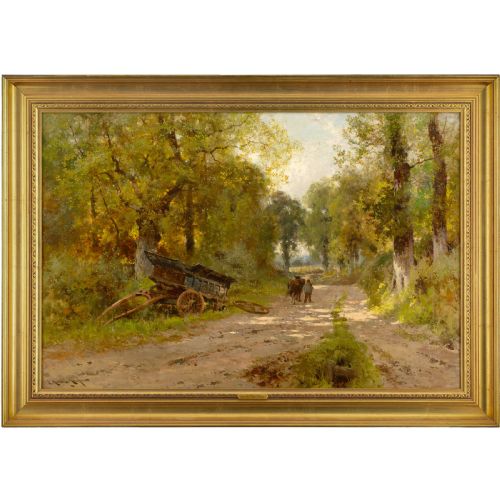
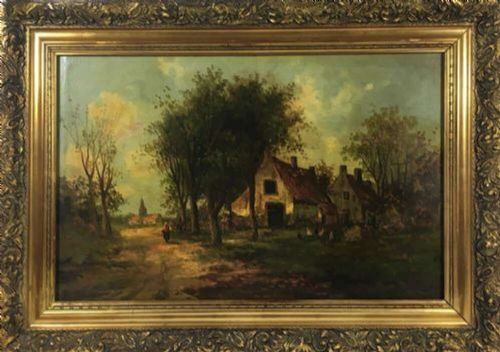
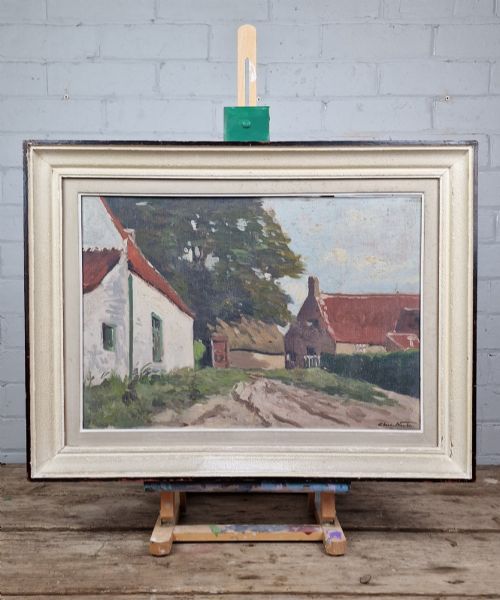
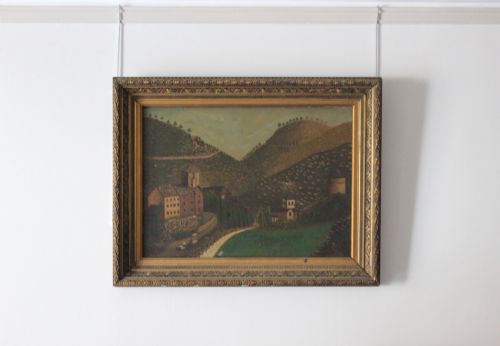
Framed rustic landscape art encompasses rural scenes, farmyards, cottages and pastoral views executed across the nineteenth and twentieth centuries. Buyers seeking framed rustic landscape art encounter works ranging from primitive village panels to accomplished oil paintings on canvas and wood.
Materials and Techniques
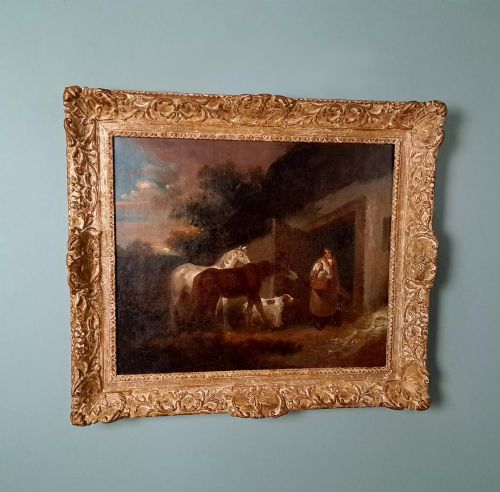
The physical construction of these works often involves canvas laid onto board or oil applied directly to panel supports. Framing methods reflect the period, with ornate gilt and gesso surrounds complementing the rustic subject matter.
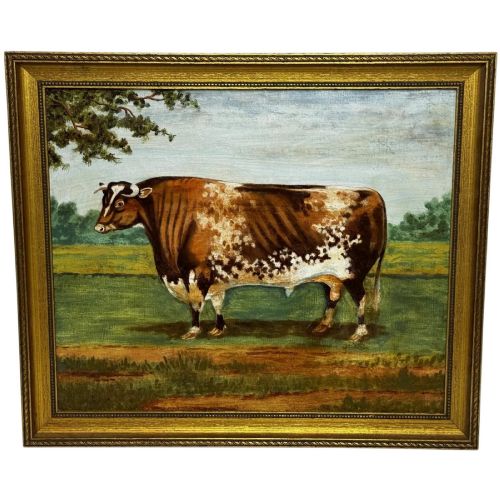
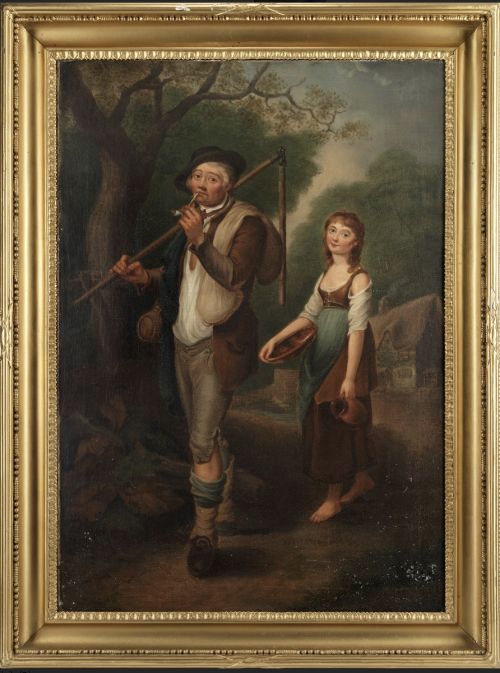
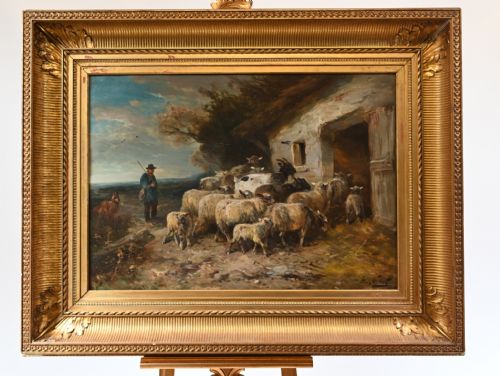
A rustic landscape can transport a modern city dweller straight to a nineteenth-century farmyard populated by prized shorthorn bulls and thirsty farmers.
Assessing Quality and Execution
Quality in these rural works rests upon the artist's ability to handle light, atmosphere and anatomical proportion within pastoral settings. Superior examples display confident brushwork and depth, whereas simpler pieces rely on primitive charm.
The relationship between the artwork and its frame also determines overall merit, as period giltwood or gesso surrounds enhance the visual impact of the landscape. Condition of the painted surface and originality of the panel or canvas further distinguish individual pieces.
W Klombeck·John Horace Hooper·William Joseph Shayer Senior·Thomas Barker of Bath·Charles Houben·Miles Birkett Foster·Henry Schouten·George Morland·Charles Edward Wilson·Owen Bowen·John Constable·John Bell·W.E. Evans·Philipp Peter Roos·Henry E Hobson·Henry John Yeend King·Andre de Moller·John Atkinson·Charles Vickers·R. Palnay·J Barclay·John Wright Oakes·Ralph Dorrance·John Henry Dell·Paul Jones
The Framed Rustic Landscape Art Glossary
- Oil on Canvas
- A painting medium where pigments bound in drying oil are applied to stretched fabric. This technique allowed artists to build rich textures across nineteenth-century landscapes.
- Giltwood
- Wood that has been coated with a thin layer of gold leaf or gilt powder. It frequently surrounds pastoral oil paintings to provide a reflective border.
- Gesso
- A paint mixture consisting of a binder mixed with chalk, gypsum or pigment. It served as a smooth preparation base for wooden panels and gilded frames.
- Shadow Box Art
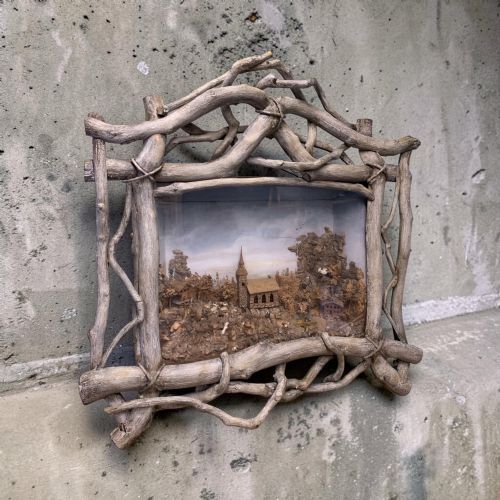
- A enclosing glass-fronted picture frame that allows the display of objects in three dimensions. Examples include dioramas incorporating natural materials like twigs.
- Watercolour
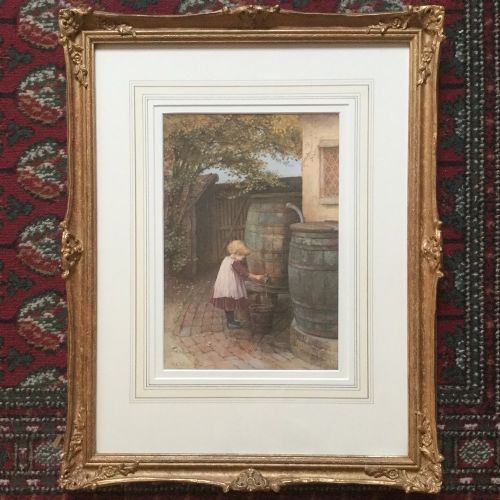
- Paints made of pigments suspended in a water-based solution applied to paper. It was commonly utilised for lighter, translucent rural studies.
Framed Rustic Landscape Art: Frequently Asked Questions
What periods do these rustic landscapes cover?
The works span from the Georgian era through Victorian times into the twentieth century. They reflect changing artistic approaches to rural subjects over two centuries.
Earlier pieces often lean towards pastoral realism or primitive styles, while later twentieth-century examples offer simplified interpretations of the countryside.
How were these landscape artworks framed?
Many pieces retain period surrounds made of wood, giltwood and gesso that match the aesthetic of their time. Some unusual items utilise specialised enclosures such as twig frames or shadow boxes.
The framing protects the canvas, board or paper while complementing the rural subject matter within.
What materials are common in these pieces?
Paintings predominantly utilise oil paint or watercolour applied to canvas, paper, wood or oak panels. Structural elements in the frames include carved wood and applied gesso.
Certain unusual examples also incorporate organic materials like cork and twigs within shadow box formats.
Where do these pastoral scenes originate?
The selection includes British and European works, featuring artists and schools from England, Scotland, Belgium and France. Subjects frequently depict local farmyards, livestock and country cottages.
Regional styles emerge through the specific depiction of topography, agricultural practices and rural architecture.