


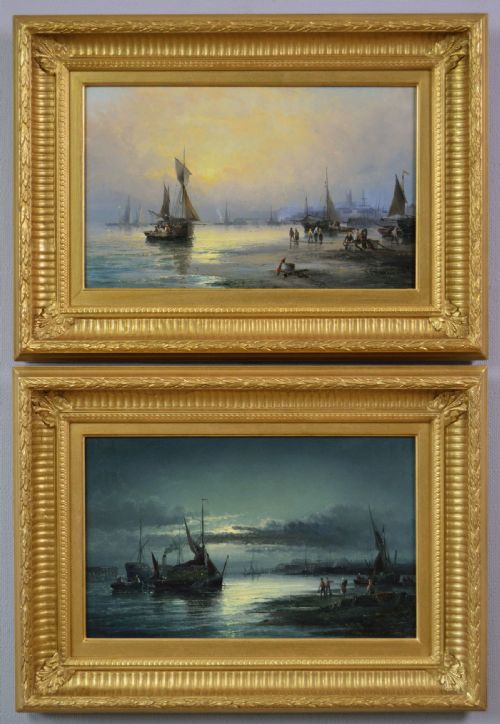

Pair of Framed Seascapes
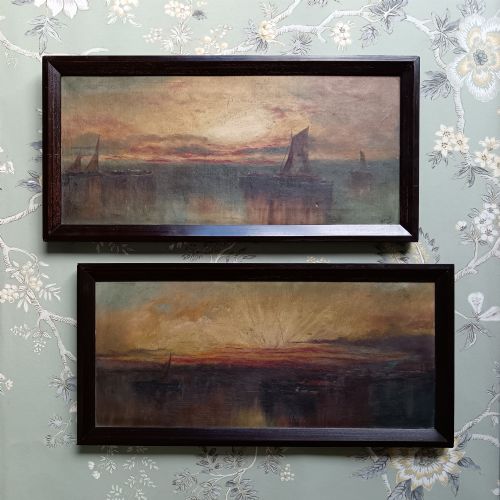
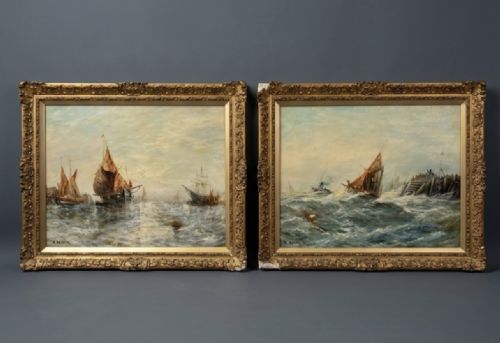
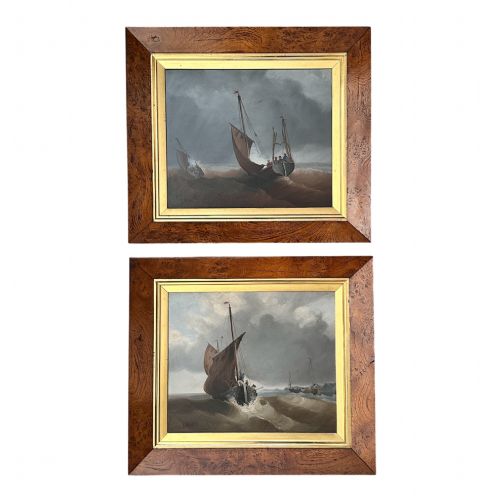
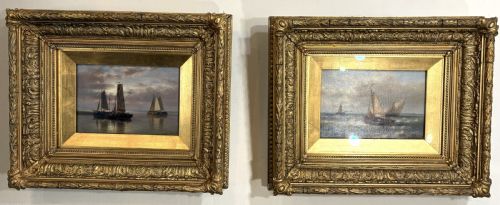
A pair of framed seascapes brings the movement of coastal tides and nineteenth-century shipping directly to your wall.
Pair of Framed Seascapes
A pair of framed seascapes consists of two matching coastal or marine artworks designed to hang together, usually balancing sunrise and sunset, or calm waters and stormy channels. When you search for pair of framed seascapes, you encounter nineteenth-century and Edwardian oils on canvas, board, and watercolour paintings housed in period wooden frames.
The subjects span fishing boats, coastal cliffs, and busy ports like Portsmouth and Scarborough, alongside Dutch shores and the River Thames. Most examples date from the Victorian era into the early twentieth century, capturing maritime life through distinct artistic hands.
How they were made
These works rely on oil paint applied to canvas or board, alongside watercolours on paper, capturing maritime atmosphere through layered pigment and visible brushwork. Artists worked within established academic traditions of marine art to render water, sky, and shipping with atmospheric accuracy.
The enclosing frames combine wood with gesso, gold leaf, and giltwood applications to create ornate mouldings that complement the paintings. Ebonised wood frames also appear, providing a dark, contrasting border around watercolour pieces.
Some nineteenth-century artists captured the Thames so accurately you can practically smell the salt and coal smoke.
What varies in quality
Quality rests upon the artist's ability to render water, light, and maritime architecture with conviction, separating competent decorative works from masterly compositions. Signed works by recognised nineteenth-century painters command attention for their detailed handling of shipping rigging and coastal weather.
The integrity of the original giltwood and gesso frames further influences the overall standard, as matched, period-correct mouldings preserve the unified appearance of the pair. Finer canvases show careful preservation of the paint surface without heavy restoration obscuring the original touch.
B Nash·John Moore of Ipswich·Abraham Hulk I·Gustave De Bréanski·Pieter Cornelis Dommersen·Adrian Van Porten·George Dodgson Callow·Thomas Bush Hardy·Ebeneezer Colls·Hubert Thornley·John James Wilson·Walter Meegan·Thomas Rose Miles·Francis Moltino·Walter Williams
The Pair of Framed Seascapes Glossary
- Giltwood
- Wood carved and coated with gold leaf or a gold-coloured metallic finish. This material creates the bright, reflective borders seen on many traditional marine oil paintings.
- Gesso
- A plaster-like mixture applied to wooden frames before gilding or painting. It provides a smooth surface for intricate moulded details.
- Marine art
- Artwork that depicts or draws its main inspiration from the sea. This genre encompasses coastal scenes, shipping vessels, and naval engagements.
- Oil on canvas
- A painting medium where pigments are bound with drying oils and applied to stretched fabric. It allows for rich colour blending and texture in seascapes.
Pair of Framed Seascapes: Frequently Asked Questions
How do I hang a pair?
Hang the two pictures at eye level with a consistent gap between them to maintain balance on the wall. Matching frames work best when aligned horizontally or vertically depending on the wall space.
Ensure the lighter or calmer scene sits where natural light enhances the painted water, or arrange sunrise and sunset pieces in their chronological order from left to right.
Were these always sold together?
Artists often painted companion pieces intended from the start to be exhibited and sold as a pair. Subjects like sunrise and sunset or contrasting weather conditions naturally complemented one another.
Over time, some pairs remain together through generations of collectors, preserving the original artistic vision of the matched set.
How do I care for oil paintings?
Keep oil paintings away from direct sunlight and dramatic shifts in temperature to protect the canvas and wooden frames. Dust the surface gently with a soft, dry brush without applying pressure.
Avoid using water or cleaning solutions on the paint or giltwood, as moisture damages older gesso and canvas grounds.
What subjects are most common?
Coastal scenes featuring fishing boats, merchant shipping, and dramatic stormy channels dominate nineteenth-century marine works. Harbours, estuaries like the Medway, and chalk cliffs frequently appear across the painted panels.
Views range from British ports to Dutch shores, capturing the daily labour and movement of maritime life.