



Pair of Foo Lions
A pair of foo lions brings guardian energy and sculptural presence into a room, forged in bronze, cast iron, stone, and ceramic.
Pair of Foo Lions
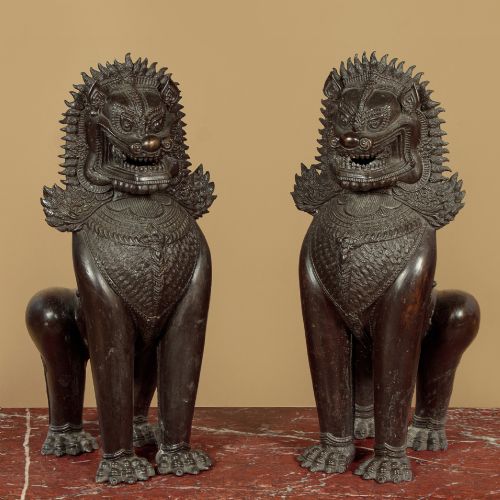
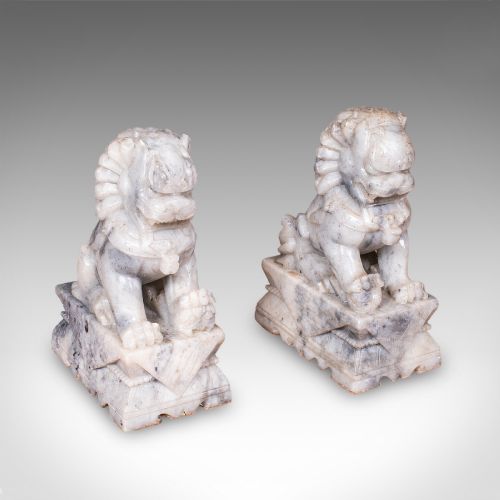
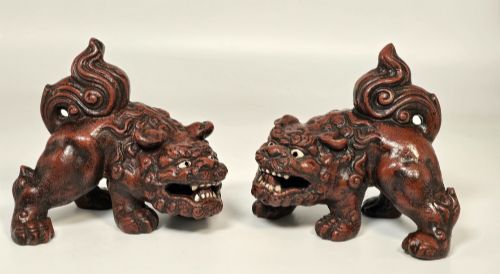
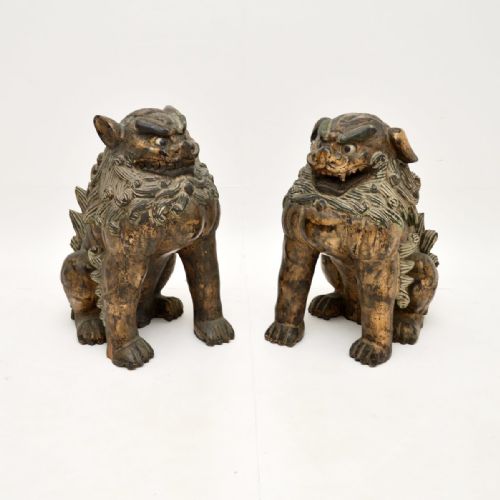
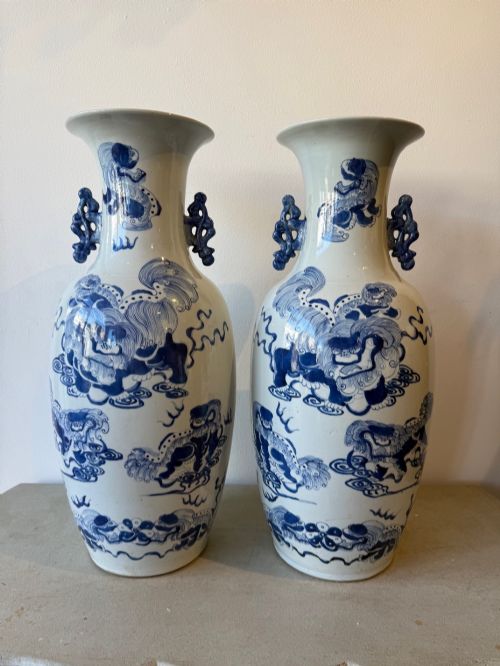
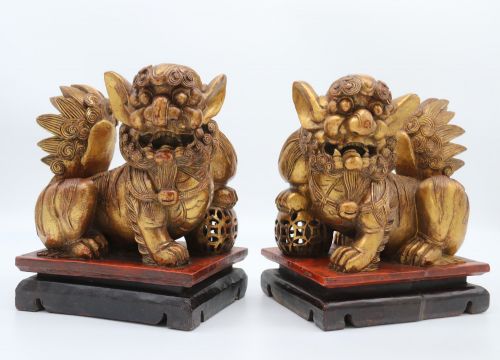
A pair of foo lions represents traditional guardian figures modelled as temple lions, Buddhist lions, or dogs of fo, appearing across various forms on this page. These sculptures function variously as statues, bookends, incense burners, vases, and desk seals rather than purely decorative ornaments.
The versions most commonly met span the nineteenth century through the early twentieth century, incorporating Chinese traditional designs alongside Victorian Chinoiserie and French Chinoiserie interpretations. Makers worked within Qing Dynasty, Chinese Qing style, and Southeast Asian aesthetic frameworks to produce these paired figures.
How they were made
Artisans cast metals such as bronze, brass, and cast iron to form sturdy temple lions, sometimes applying gilt or paint surfaces for added visual weight. These metallic pieces demand precise foundry work to capture the muscular stances and flowing manes characteristic of guardian animals.
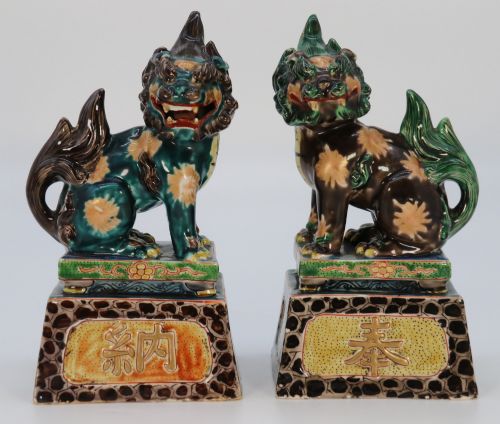
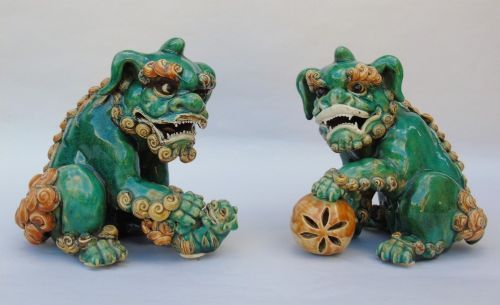
Carvers shaped organic and mineral materials including wood, soapstone, jade marble, and pottery into detailed statuary and functional items like bookends and incense burners. Lacquer finishes and Sancai glazes provided colour and sheen to the carved pottery and wood surfaces.
Pair of Foo Lions Retail Price Guide 2026
Typical asking prices for pair of foo lions among the pieces listed under this phrase on Sellingantiques today, from the lower quarter to the upper quarter. They describe what is for sale here now, not the wider market.
Materials span bronze, brass, ceramic, gilt, soapstone, cast iron, paint, and pottery across nineteenth-century and early twentieth-century pieces.
What varies in quality
Material integrity and surface preservation also divide the range, with intact original gilt, lacquer, and Sancai glazes elevating the visual impact of the sculptures. Lesser examples show flattened contours or heavy overpainting that obscures the underlying material.
The Pair of Foo Lions Glossary
- Foo dog
- A colloquial term for Chinese guardian lions, which are actually stylised representations of lions rather than domestic canines. These figures traditionally guarded imperial palaces and temples.
- Sancai
- A three-colour glaze technique characteristic of Chinese pottery, typically employing brown, green, and cream or yellow tones. This glazing style often produces a mottled, flowing effect across the ceramic surface.
- Chinoiserie
- A European artistic style reflecting Chinese motifs and decorative techniques, popular during the Victorian period and in French design. This style reinterprets Asian forms through a Western aesthetic lens.
- Desk seal
- A carved object used for stamping documents, often featuring a small sculptural lion or Shi Shi figure on top. Soapstone and other dense stones served as common mediums for these functional desk items.
Pair of Foo Lions: Frequently Asked Questions
Where should I place a pair of foo lions?
These guardian figures traditionally flank entryways, mantels, or prominent shelves to anchor a room's composition. Placing them symmetrically enhances their historical function as paired sentinels.
In modern interiors, they work effectively on large desks, bookcases, or side tables where their sculptural weight creates a clear focal point.
How do I identify the material of my pair of foo lions?
Examine the weight, temperature, and surface texture of the pieces to distinguish between cast metals, stone, and pottery. Bronze and cast iron feel cold and heavy, whereas soapstone and jade marble offer a smoother, cooler touch with subtle natural veining.
Ceramic and pottery versions often reveal a porous clay body where glazes have chipped, while carved wood displays distinct grain patterns beneath lacquer or paint.
Are these figures from the Qing Dynasty?
Some pieces reflect the aesthetic of the Qing Dynasty or Chinese Qing style, while others originate from later periods like the early twentieth century or Victorian Chinoiserie workshops in Europe.
Evaluating the manufacturing technique, tool marks, and wear patterns helps determine whether an item belongs to the nineteenth century or a subsequent revival period.
What is the difference between a temple lion and a desk seal?
Temple lions are substantial sculptural figures designed to stand independently as statues or heavy bookends, often measuring large in scale. Desk seals are much smaller objects carved specifically with a flat base for stamping.
While both share the traditional guardian lion iconography, their distinct sizes and base designs reflect completely different intended uses.