
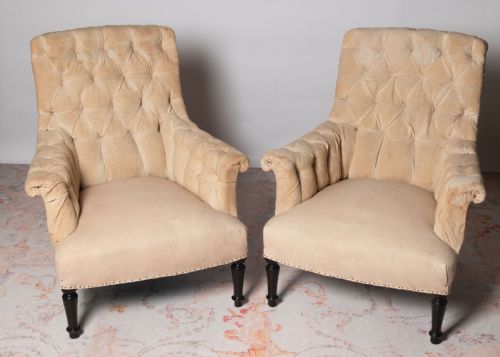
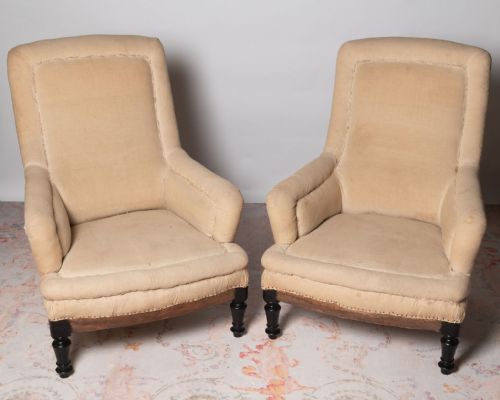
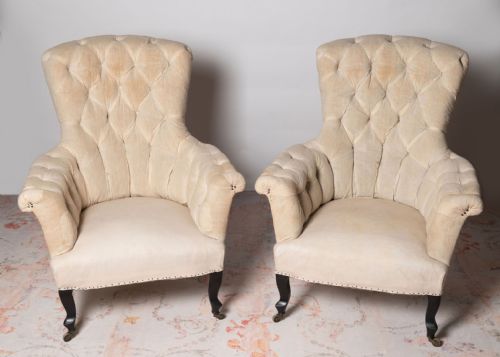
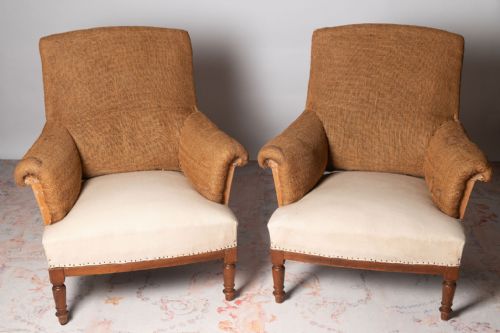
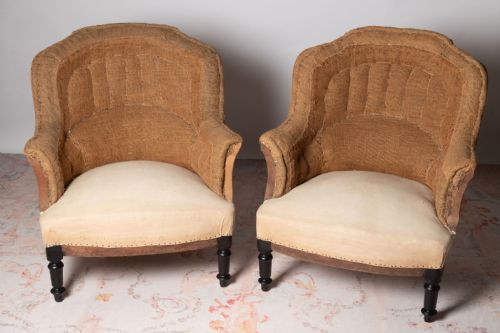
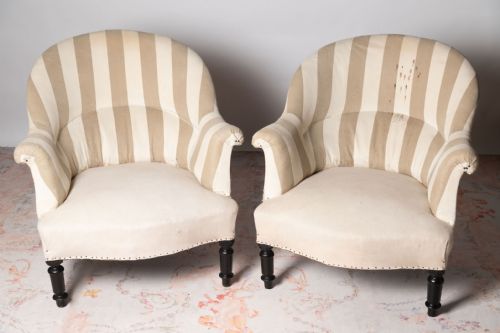
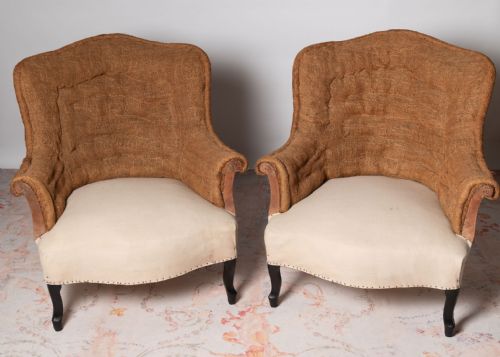
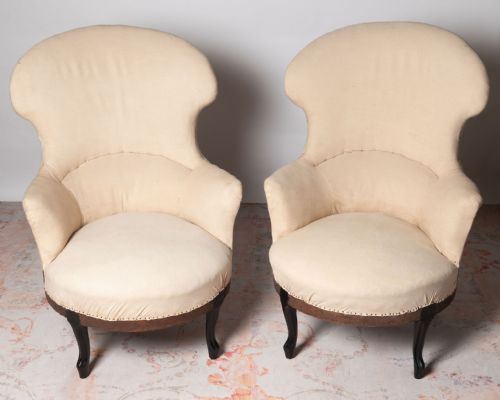
Pair of Crapaud Chairs
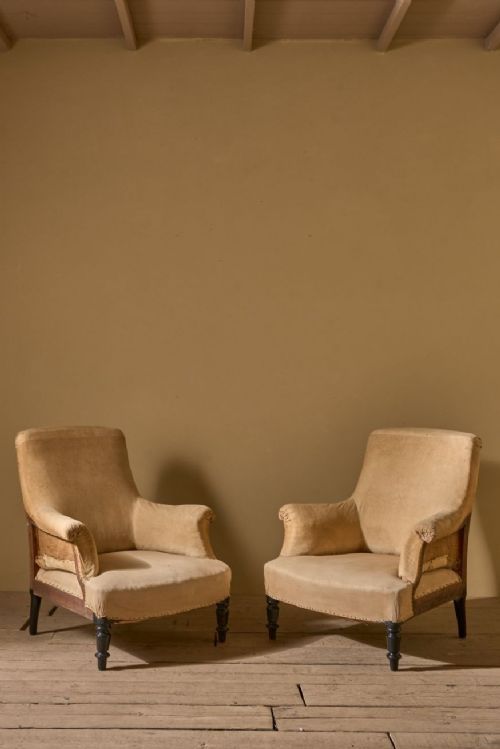
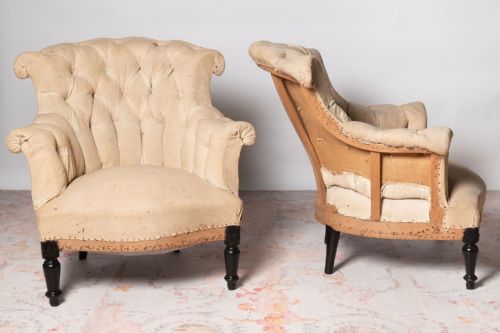
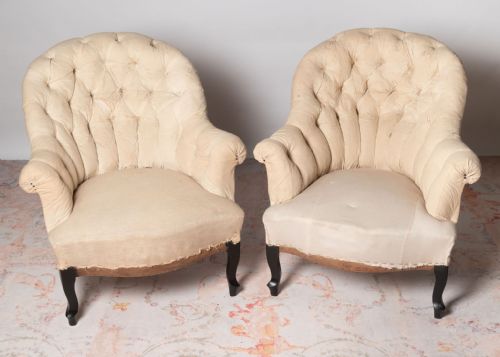
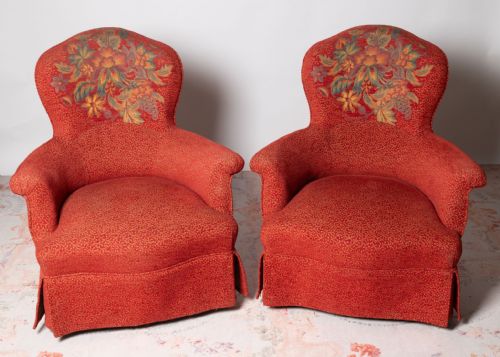
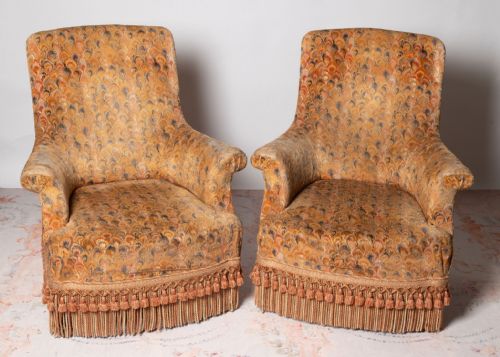
These low, upholstered pair of crapaud chairs offer a distinctively rounded shape and generous padding designed for deep, fireside comfort.
Pair of Crapaud Chairs
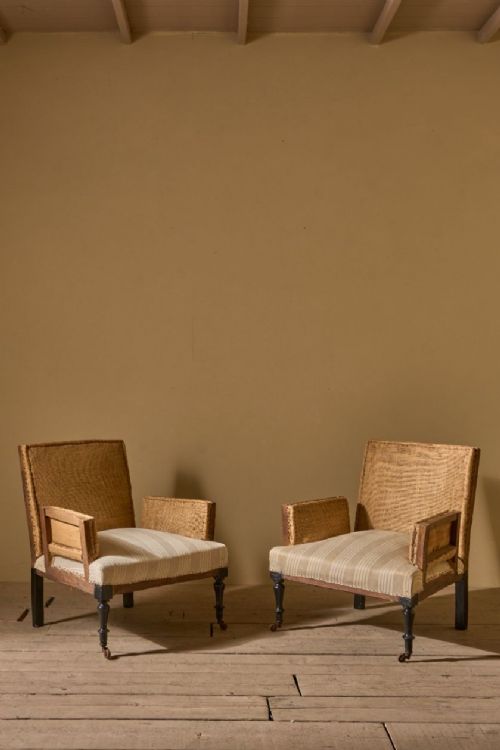
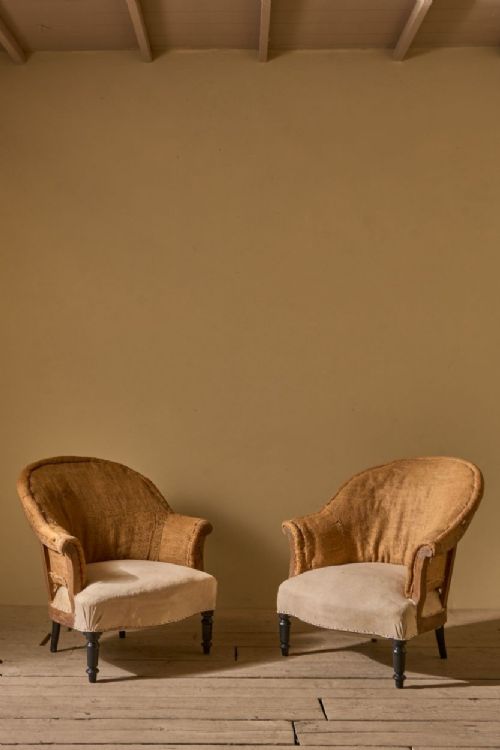
A pair of crapaud chairs brings traditional French seating into a room, often appearing in forms such as tub chairs, square sided armchairs, and boudoir chairs. These low slung armchairs originated in France during the nineteenth century, with Napoleon III examples featuring prominently alongside later pieces from nineteen hundred and nineteen thirty.
The evidence shows these seats arriving in matched pairs rather than single items, making them suitable for placing either side of a fireplace or framing a low table. Their characteristic low profile and heavy padding give them a squat, comfortable appearance that defines the style.
How they were made
Construction relies upon a timber framework, with beech frequently utilised to form the internal structure of the chair. This solid frame supports the deep springing and stuffing required to achieve the characteristic rounded, padded silhouette.
Traditional upholstery materials dictate the inner build, utilising layers of hessian, calico, linen, and cotton beneath the top cover. Brass elements often finish the detailing, while many pieces remain in bare calico or hessian awaiting final top covering.
Named after amphibians due to their squat, low posture, these comfortable seats remain ready to hop into your sitting room.
What varies in quality
The distinction between examples rests primarily in the firmness and integrity of the original frame and internal stuffing. Pieces that retain a sturdy timber structure and correct traditional webbing provide a superior foundation compared to those requiring complete rebuilding.
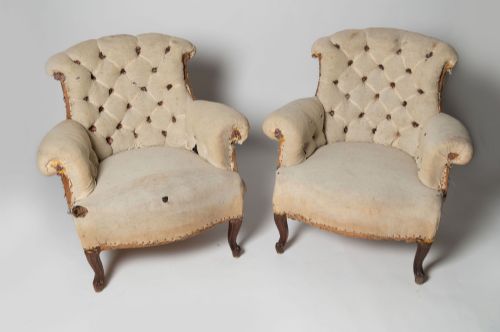
Detailing also dictates the grade, seen in the precision of the buttoning on high curved backs and the crispness of the square or tub shaped profiles. The choice of visible timber components and the quality of underlying natural textiles like linen and cotton further distinguish the build.
The Pair of Crapaud Chairs Glossary
- Crapaud
- French for toad, describing the low, squat, and heavily padded shape of these traditional armchairs. This term defines the entire class of rounded, upholstered seating.
- Tub chair
- An armchair featuring a continuous curved back and arms forming a barrel or tub shape. This form provides enclosed, supportive seating.
- Hessian
- A coarse woven fabric made from jute or hemp, utilised historically as a foundation layer for stuffing and springs. It forms the unseen structural support beneath the top cover.
- Napoleon III
- A nineteenth century French design period encompassing ornate revival styles and comfortable upholstered seating. Pieces from this era often display deep buttoning and square or curved backs.
- Calico
- A plain woven cotton textile used traditionally as an inner lining or base cover before final upholstery. It holds the stuffing securely within the frame.
Pair of Crapaud Chairs: Frequently Asked Questions
What is a crapaud chair?
A crapaud chair is a low, fully upholstered French armchair known for its rounded, padded shape and deep comfort. The name translates from the French word for toad, reflecting the squat, low slung silhouette.
These chairs typically feature completely covered wooden frames with no exposed timber except perhaps the feet or castors. They were designed for intimate conversation and fireside relaxation in nineteenth century interiors.
How were they used originally?
These armchairs served as comfortable, low seating in nineteenth century French drawing rooms, boudoirs, and bedrooms. Their compact height made them ideal for sitting close to coal fires.
They often appeared in matched pairs to create balanced seating arrangements around a hearth or within a formal conversational grouping.
Can I live with chairs needing upholstery?
Many examples survive in bare calico or hessian specifically for the buyer to apply their own chosen fabric. This allows you to match the final textile directly to your interior scheme.
Living with them in this state simply requires appreciating the raw internal construction until a upholsterer applies your preferred linen, cotton, or ticking.