




Pair of Chinese Chairs
When you search for a pair of chinese chairs, you enter a world of structural joinery and traditional seating designed for scholars, officials and households alike.
Pair of Chinese Chairs
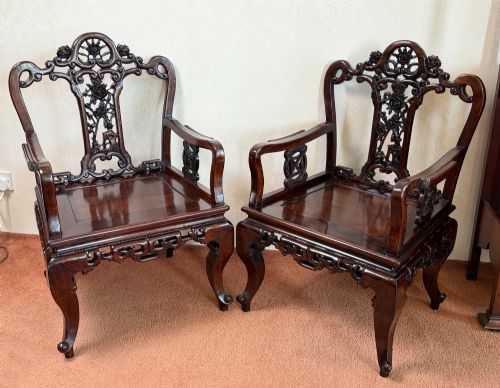
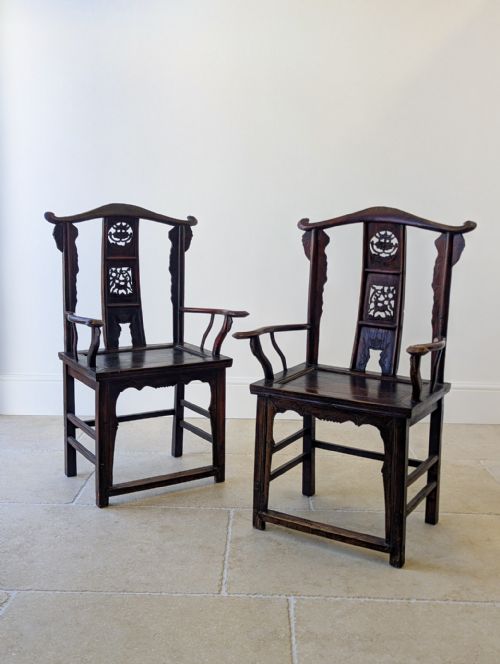
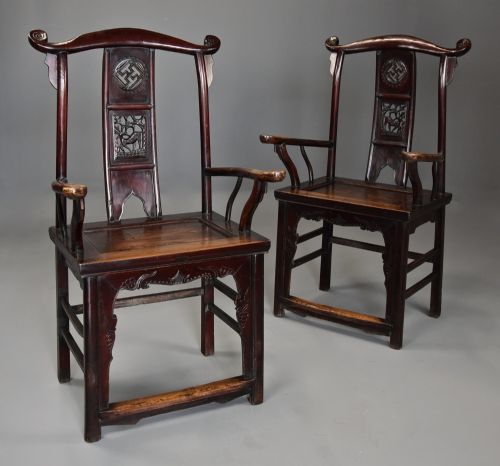
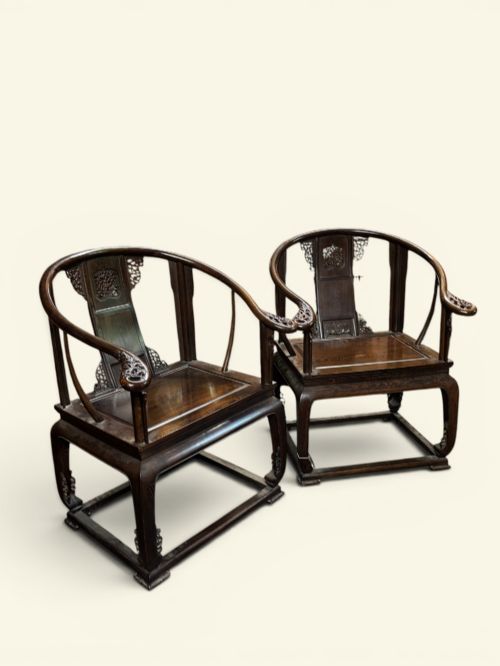
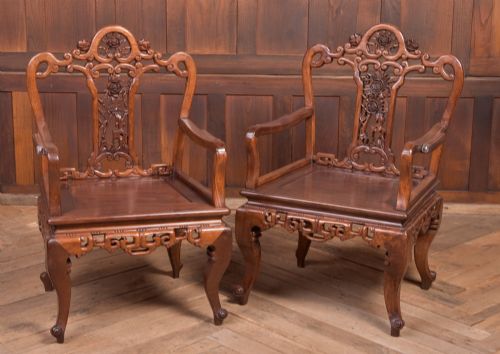
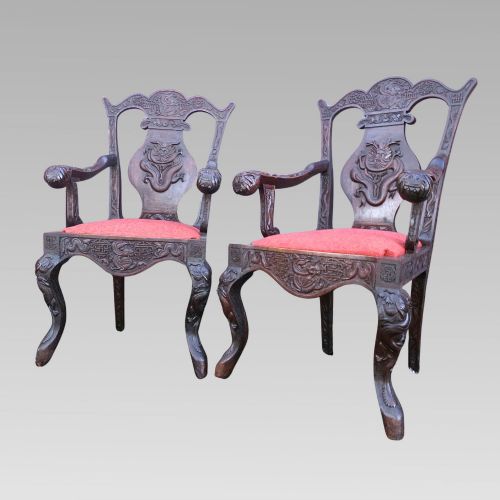
A pair of chinese chairs brings together traditional seating forms such as yoke-back armchairs, horseshoe chairs, throne chairs and low side chairs originating primarily from the nineteenth century and the Qing Dynasty. These seating pairs range from austere elm scholars' chairs to heavily carved hongmu and hardwood dragon armchairs created for formal reception spaces.
Buyers browsing this selection will encounter regional export variations alongside domestic forms, including bamboo models, lacquer finishes and British adaptations in the Chinese Chippendale style. The most frequently seen examples on this page date from the late nineteenth century, utilising native timbers fashioned into matching seating pairs.
Materials and construction
Traditional makers built these seating pairs using dense hardwoods like hongmu and rosewood, alongside domestic timbers such as elm, teak and mahogany. Joinery relied on complex interlocking joints rather than metal fasteners, allowing the timber frames to expand and contract naturally over decades.
Surface treatments range from clear beeswax polishes that highlight the grain of the wood to applications of red lacquer, brass inlay and hand-carved relief panels depicting dragons and foliage.
Some horseshoe chairs are so curved they practically hug you back.
What separates the finest examples
Quality in these seating pairs rests on the crispness of the hand-carved ornamentation and the integrity of the original joinery. Pieces displaying deep, well-defined relief work on the back splats and crest rails show superior hand-craftsmanship compared to later or softer reproductions.
The preservation of original surfaces, such as aged red lacquer or the natural patina of elm and hardwood, elevates an example. Matching pairs that retain their structural symmetry and original canework or seating inserts command greater appreciation than heavily restored variants.
The Pair of Chinese Chairs Glossary
- Hongmu
- A category of dense, heavy Chinese hardwoods often translated as red wood, highly prized for furniture construction. It encompasses several dense timber species used during the Qing Dynasty.
- Yoke-Back
- A chair style featuring a top crestrail that curves upward and outward, resembling an ox yoke. This form provided comfortable head support for scholars and officials.
- Horseshoe-Back
- An armchair design characterised by a continuous curved back and arm rail that sweeps downward in a single fluid arc. It rests upon sturdy corner posts and a central splat.
- Canework
- Woven rattan material utilised for seat inserts in traditional seating. It provides a resilient and breathable surface for daily use.
Pair of Chinese Chairs: Frequently Asked Questions
How do I care for antique hardwood chairs?
Keep wooden seating away from direct heat sources and sudden humidity changes to prevent the timber from splitting. Apply a microcrystalline wax occasionally to protect the natural finish.
Avoid using modern liquid polishes containing silicone, as these can penetrate the grain and degrade the historic patina over time.
Were these chairs used at dining tables?
Traditional Chinese seating was rarely gathered around a dining table in the Western fashion. Instead, chairs were arranged in reception halls, along living room walls, or used individually by scholars for reading and writing.
Armchairs and throne seats often sat in pairs facing outward to receive guests or designate status within the household.
How can I tell a Qing Dynasty chair?
Qing Dynasty seating is typically identified by dense timber construction, traditional mortise and tenon joinery, and specific forms such as yoke-backs or official's hats. Carved motifs often incorporate traditional symbols, dragons, or auspicious foliage.
Examining the wear patterns, tool marks and timber shrinkage helps confirm the age of nineteenth-century pieces.