


Pair of Cherub Statues
These pair of cherub statues bring classical grace and figural movement to a room, cast in bronze or carved from wood across several centuries.
Pair of Cherub Statues
A pair of cherub statues represents winged figures, putti, or angels, frequently cast in bronze or carved from wood. Buyers searching this phrase encounter garden statuary, decorative bookends, doorstops, and sculptural figures.
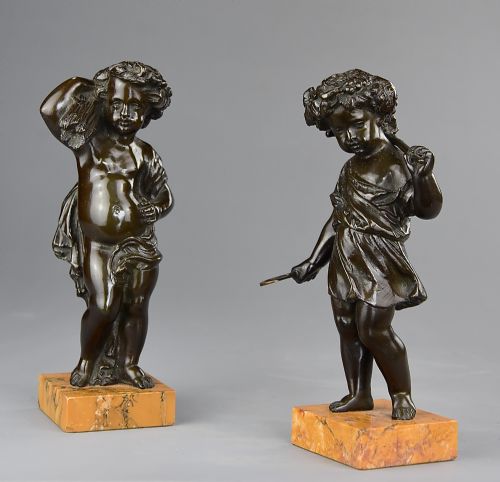
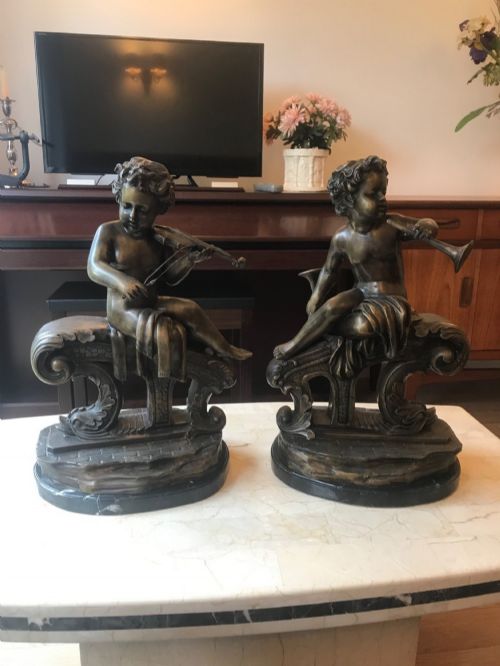
The selections span from the seventeenth century through to the mid-twentieth century, with nineteenth-century bronze examples featuring prominently. These pieces take various forms, including musical figures, allegorical harvesters, and grand tour subjects mounted on marble bases.
Materials and construction
Metalworks rely on bronze casting, sometimes finished with patination or mounted to marble bases. Wood pieces utilise carved oak or gesso, frequently finished with polychrome paint and gold leaf.
Porcelain and lead also appear in the record, representing specific domestic and garden applications from the eighteenth and nineteenth centuries.
Some nineteenth-century bronze children abandon celestial duties entirely to pose with domestic cats and dogs.
Assessing quality and execution
The integrity of the material finish, whether original polychrome paint, surface patination on bronze, or the stability of the underlying marble base, dictates the standing of the work.
Claude Michael Clodion·H. Schubert·Dumond·Charles Cumberworth·Alios Mayer
The Pair of Cherub Statues Glossary
- Putti
- Plumed or unplumed infant figures originating in classical art, often mistaken for cherubs. They populate Renaissance and later revival sculpture.
- Grand tour
- Nineteenth-century travel souvenirs purchased by Europeans, frequently comprising small bronze statuettes of classical subjects. These are typically mounted on polished marble plinths.
- Polychrome
- Painted in several colours. This surface treatment appears frequently on carved wood and gesso figures from earlier periods.
- Gesso
- A plaster-like mixture applied to wood surfaces to prepare them for painting or gilding. It provides a smooth ground for decorative finishes.
Pair of Cherub Statues: Frequently Asked Questions
What is the difference between putti and cherubs?
Putti are secular infant figures derived from classical mythology, whereas cherubs belong to celestial hierarchy with biblical origins. In antique markets, the terms are frequently used interchangeably.
Sculptors of the nineteenth century utilised both motifs for decorative groupings, garden statuary, and architectural fittings without strict adherence to theological definitions.
Where were bronze cherub statues displayed?
Nineteenth-century bronze pieces typically occupied interior spaces, mounted on mantelpieces, desks, or marble plinths. Smaller examples served functional roles as bookends and doorstops.
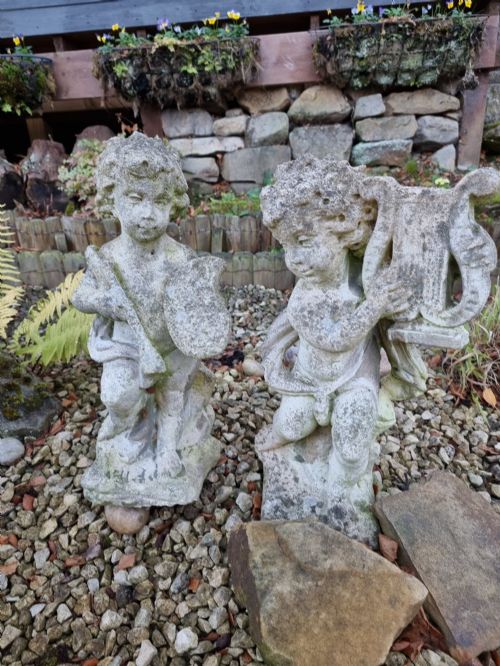
Garden variants and lead figures were cast for outdoor placement, weathering over decades in courtyards and lawns.
How do I date a bronze cherub sculpture?
Dating relies on the quality of the casting, the nature of the patination, and the style of any associated base. Nineteenth-century grand tour pieces often feature specific Italian marble mounts.
Signatures or foundry marks help identify specific workshops, while surface wear and tool marks indicate the underlying manufacturing period.
Are wooden cherubs older than bronze ones?
Carved wood examples in the record extend back to the seventeenth and eighteenth centuries, featuring polychrome paint and gesso finishes. Bronze works become more dominant by the nineteenth century.
Both materials continued to be used across different contexts, with wood favoured for ecclesiastical settings and bronze for domestic display.