


Classical Stone Garden Statues
These classical stone garden statues bring architectural presence to grounds and terraces, offering enduring form carved or cast from stone.
Classical Stone Garden Statues
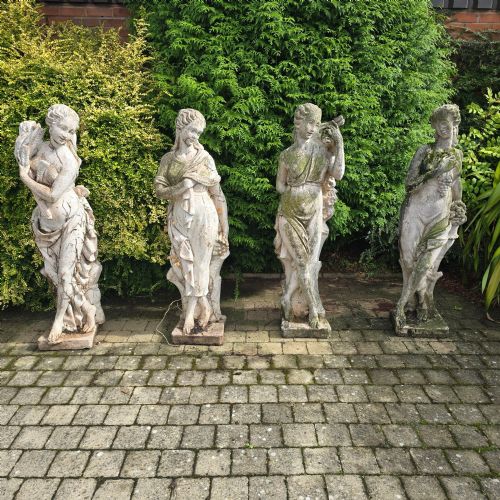
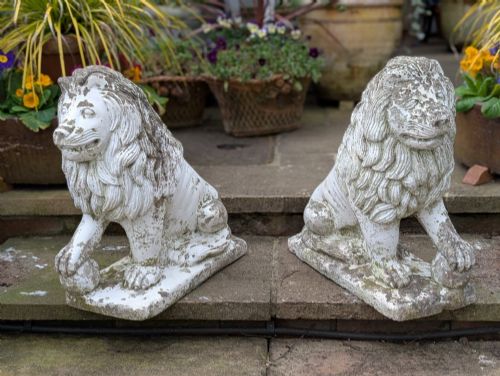
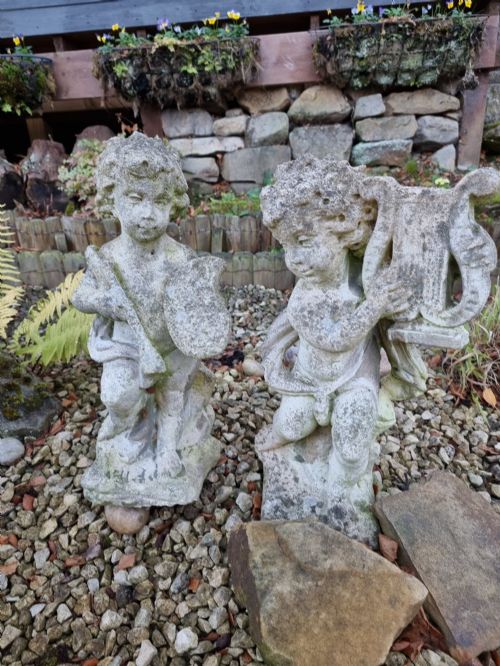
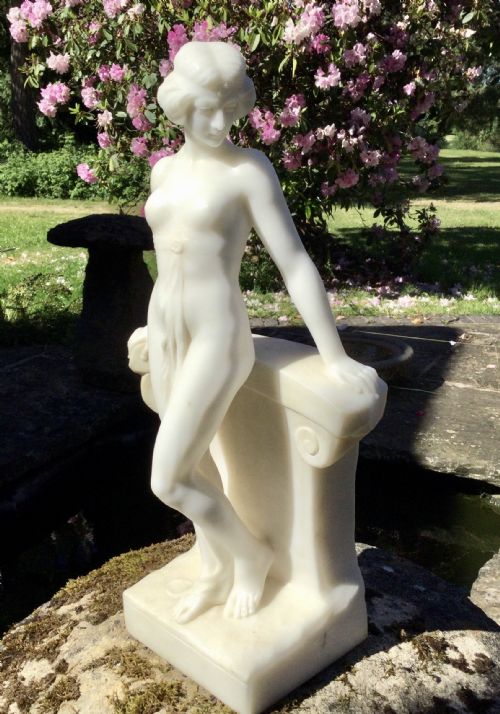
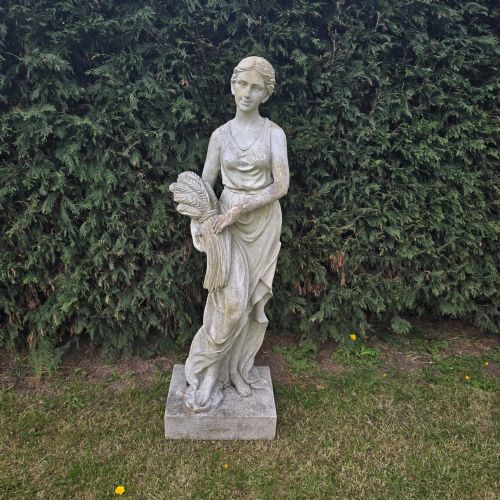
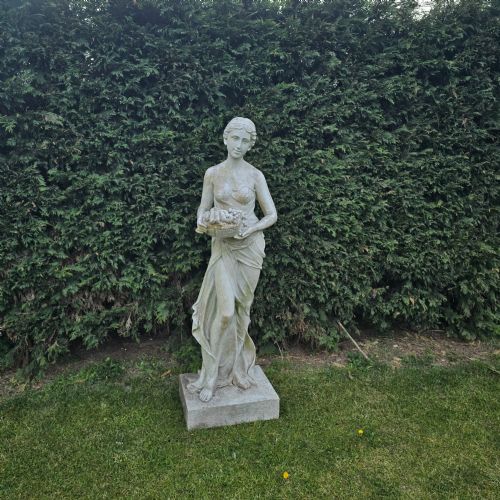
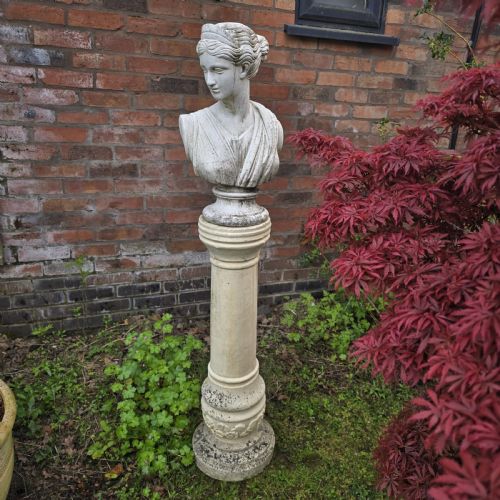
Classical stone garden statues encompass figures, busts, lions and allegorical representations spanning the eighteenth century to the mid-twentieth century. Buyers encounter garden statuary rendered in Neoclassical, Classical Revival and Georgian styles, often depicting mythological figures, lions and seasonal allegories.
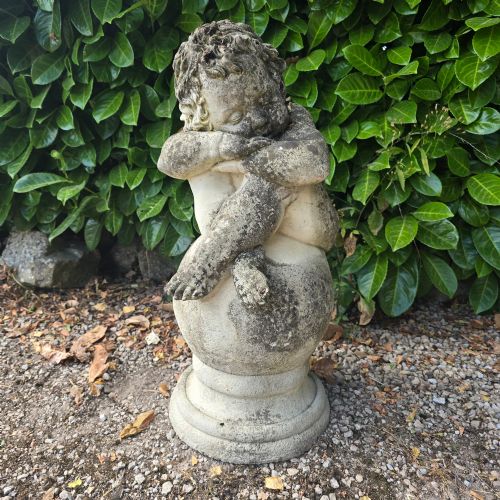
The selection ranges from life-sized figures of summer and autumn to sleeping cherubs, stone busts of Athena and large statues on pedestals. Pieces appear in matched pairs or solitary forms, frequently accompanied by stone plinths.
Originating from English country house traditions, French workshops and Italian marble collections, these sculptures anchor outdoor spaces with traditional classical motifs.
Materials and construction
The pieces utilise varied mineral compositions, appearing as carved solid marble, Carrara marble, reconstituted stone, cast stone and concrete. Carved stone and marble items demonstrate hand chiselling and detailed sculptural reduction.
Moulded pieces employ reconstituted or composite stone and concrete mixes poured into forms, sometimes finished with surface paint to emulate ageing. Cast elements capture fine details in figures and animal guardians.
Materials across these listings span reconstituted stone, cast stone, concrete, marble, white marble and carved stone.
Evaluating quality and age
Quality rests upon the crispness of anatomical carving in marble and the fidelity of surface detail in cast or reconstituted stone. Finer examples display balanced proportions in figures like the Venus de Milo or draped classical ladies, alongside natural weathering patterns.
The integrity of the material and the sophistication of the sculptural form distinguish superior works, whether carved by hand from solid marble or cast with precision during the nineteenth and twentieth centuries.
The Classical Stone Garden Statues Glossary
- Reconstituted stone
- A manufactured material composed of aggregate and binder, moulded into architectural ornaments and garden statues.
- Carrara marble
- A type of white or blue-grey marble quarried in Italy, utilised extensively for fine classical sculpture and busts.
- Plinth
- A heavy base or pedestal supporting a statue, bust or garden ornament, elevating the sculpture above ground level.
- Neoclassical
- A style reviving classical Roman and Greek art forms, prevalent across garden statuary and architectural elements.
Classical Stone Garden Statues: Frequently Asked Questions
How do I clean a stone garden statue?
Brush away loose debris with a soft bristle brush, utilising water and mild detergent if necessary. Avoid harsh pressure washers that can erode aged stone surfaces.
Allow the piece to dry naturally, retaining the natural weathering accrued over decades outdoors.
Can these statues stay outside in winter?
Most reconstituted stone, cast stone and marble garden statues withstand outdoor winter conditions. Ensure they rest on proper drainage rather than sitting directly in standing water.
Cover vulnerable carved marble pieces during severe frost to prevent moisture ingress and surface cracking.
What is the difference between cast stone and carved marble?
Carved marble involves removing material from a solid block by hand using chisels. This process yields unique sculptural details and individual tool marks.
Cast stone is formed by pouring aggregate mixtures into moulds, allowing for consistent production of decorative garden ornaments and statues.
How do I identify the period of a garden statue?
Examine the material composition, surface weathering, and stylistic traits such as Neoclassical drapery or Victorian lion guardianship forms. Nineteenth-century pieces often display distinct patination compared to mid-twentieth-century cast examples.
Check for construction seams that indicate moulded production methods common in twentieth-century concrete and reconstituted stone.