

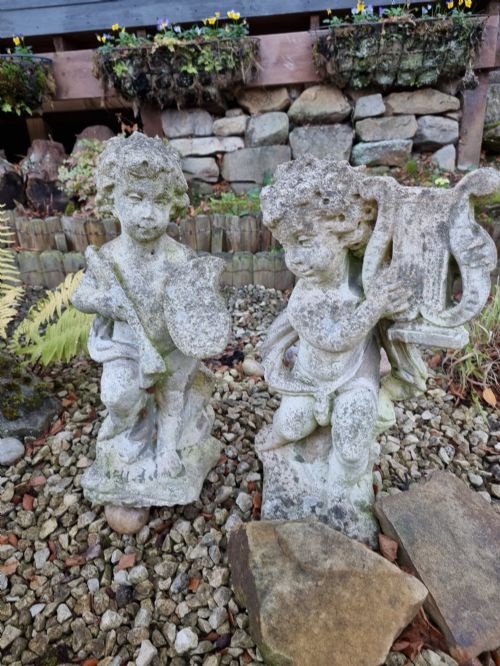


Pair of Cherub Sculptures
A pair of cherub sculptures brings classical winged figures and putti into interior or garden spaces, valued for their decorative presence and historical foundry work.
Pair of Cherub Sculptures
A pair of cherub sculptures comprises matching depictions of winged infants, putti, or classical cupids designed for balanced display as bookends, garden statuary, or mantel ornaments. Buyers examining this page encounter numerous bronze examples alongside carved wood, marble, and lead versions.
The objects span centuries of production, ranging from seventeenth-century limewood and oak altar figures to nineteenth-century French and Italian bronze groups and mid-century garden statues. Many draw inspiration from classical mythology, agricultural allegory, or music.
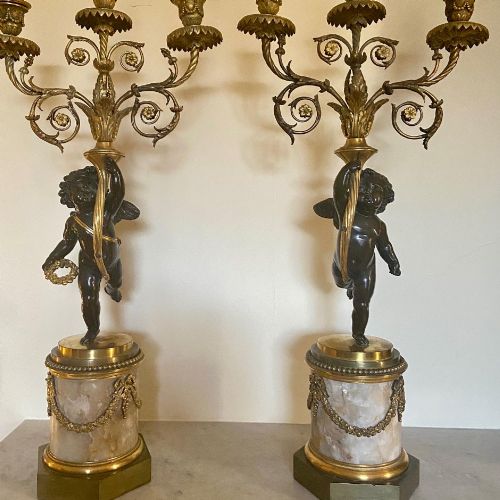
Forms vary widely from candelabra bases and doorstops to large freestanding garden statues and wall sculptures. The most frequently encountered pieces on this page date from the nineteenth century and utilise bronze or carved wood.
Materials and Manufacture
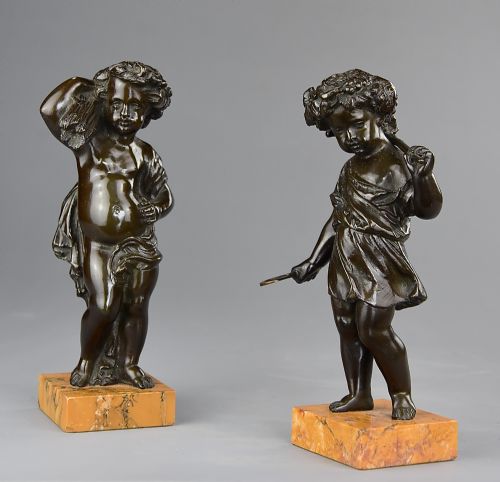
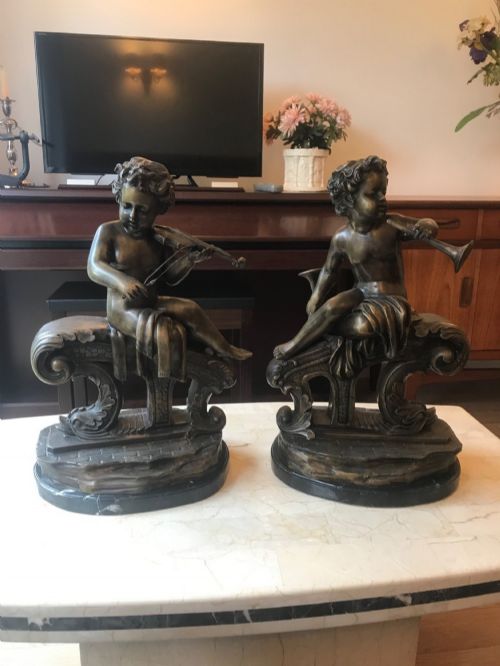
Foundries produced metal examples using traditional casting methods, often finishing the bronze with patination or mounting the figures on marble bases. Lead served for exterior garden pieces, while interior decorative items frequently utilised cast brass or bronze.
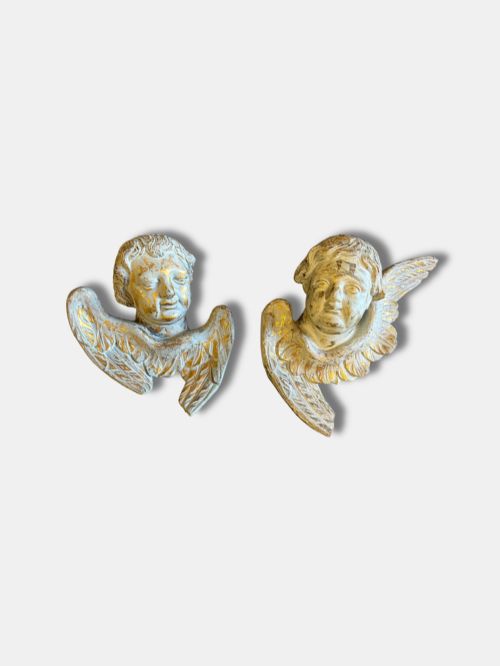
Carved wooden figures, notably from the seventeenth and eighteenth centuries, relied on timbers such as limewood, oak, and gesso. Artisans then applied polychrome paint, silvering, or gold leaf to enhance the surface detail of these carved cherubic forms.
Pair of Cherub Sculptures Retail Price Guide 2026
Typical asking prices for pair of cherub sculptures among the pieces listed under this phrase on Sellingantiques today, from the lower quarter to the upper quarter. They describe what is for sale here now, not the wider market.
One cheerful pair depicts children playing with cats and dogs.
Evaluating Quality
Quality rests upon the crispness of the casting or carving, where finer examples display articulate facial expressions, detailed hair texture, and naturalistic musculature rather than generalised smoothing. The depth and richness of the bronze patina or the preservation of original polychrome paint and gesso substantially influence the character of the piece.
The sophistication of the design, whether cast after celebrated modellers like Clodion or carved with distinct drapery and wings, separates standard decorative foundry work from superior artistic sculpture. Additionally, integral components such as matching marble bases or original candelabra fittings elevate the integrity of the pair.
Claude Michael Clodion·Francois Redmond·Royal Dux Bohemia·Charles Cumberworth
The Pair of Cherub Sculptures Glossary
- Putto
- A plump, naked male child depicted in classical art, often winged and frequently conflated with cherubs or cupids. These figures appear widely in Renaissance and later revival sculpture.
- Patinated bronze
- Bronze treated with chemicals or heat to produce a specific surface coloration, ranging from deep brown to greenish tones. This finish protects the metal and defines the contours of the sculpture.
- Polychrome paint
- Decoration applied using multiple colours, commonly found on older carved wood and gesso figures to simulate lifelike flesh tones and coloured garments.
- Gesso
- A plaster-like mixture applied to wood surfaces as a base for paint or gilding, allowing artisans to achieve smooth, detailed contours before finishing.
- Grand Tour
- Cultural travel undertaken by wealthy young Europeans in the eighteenth and nineteenth centuries, bringing home small-scale bronzes and classical antiquities as souvenirs.
- Neoclassical
- A style of art and architecture inspired by the classical art and culture of ancient Greece and Rome, prioritising proportion, clarity, and restrained elegance.
Pair of Cherub Sculptures: Frequently Asked Questions
What periods do these cherub sculptures date from?
The pieces span multiple eras, with seventeenth-century carved limewood and oak figures representing the earliest works alongside eighteenth-century lead garden statues and Georgian pieces. Nineteenth-century French and Italian bronze castings form the bulk of the selection, complemented by later twentieth-century garden statuary.
Stylistic revivals such as Rococo, Louis XVI, and Neoclassical designs frequently echo earlier centuries, requiring close inspection of the materials and casting techniques to determine the exact period of manufacture.
Were these figures intended for indoor or outdoor display?
Intended placement varies entirely by the material and original function of the sculptures. Lead and heavy stone or concrete examples were built specifically for garden lawns, fountains, and exterior architectural settings.
Conversely, bronze groups on marble bases, gilt candelabra, bookends, and carved wood wall sculptures served strictly as interior decorative objects for libraries, drawing rooms, and altars.
How can I distinguish between bronze and other materials?
Bronze objects display metallic weight, coldness to the touch, and characteristic patination ranging from dark brown to verdigris. Close examination often reveals cast seams or foundry marks beneath the surface finish.
Other materials lack these metallic properties, with carved wood exhibiting natural grain beneath polychrome paint or gesso, and marble bases showing stone veining and crystalline structure.
What subjects do cherub sculptures typically represent?
Depictions often draw from classical themes, featuring allegorical figures representing music, comedy, harvest, or the seasons. Many hold grapes, musical instruments, or animals like cats and dogs.
Others take the form of angels kneeling on clouds, classical cupids with bows, or architectural putti heads designed for decorative friezes and wall mounts.