

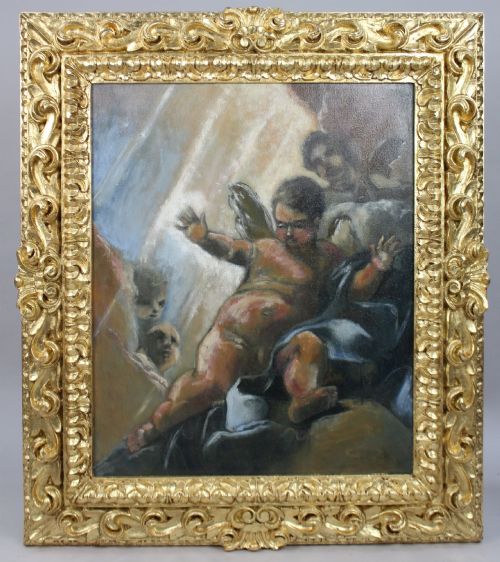


Italian Giltwood Cherub
These italian giltwood cherub pieces bring carved warmth and gilded presence to a room, offering the sculptural weight of continental workshops.
Italian Giltwood Cherub
An italian giltwood cherub brings together carved timber and reflective leaf in forms ranging from wall lights and mirrors to console tables and sculptures. When you search for italian giltwood cherub, you meet figures derived from Baroque, Renaissance and Rococo traditions, shaped as wall brackets, candelsticks, and architectural panels.
The objects span centuries from the eighteenth through to the twentieth, reflecting revivals of earlier styles such as Louis XIV and Florentine Baroque. You find pairs of carved wood polychrome putti on clouds alongside twin arm wall lights and mirrors finished in gesso and gold leaf.
How they were made
Carvers shaped timber, often softwoods or hardwoods, building up form before applying layers of gesso to create a smooth surface for gilding. Artisans laid fine gold leaf over the prepared ground, sometimes burnishing sections to catch the light while leaving other areas matte.
Polychrome paint and metal elements appear alongside carved wood and glass, particularly in wall lights and mirrors. Workshops combined traditional joinery with intricate hand carving to produce cherub heads, full figures, and supporting scrollwork.
Italian Giltwood Cherub Retail Price Guide 2026
Typical asking prices for italian giltwood cherub among the pieces listed under this phrase on Sellingantiques today, from the lower quarter to the upper quarter. They describe what is for sale here now, not the wider market.
Materials recorded across the archive and current listings include gesso, gold leaf, polychrome paint, and Murano glass alongside carved wood.
What varies in quality
The application and survival of the gold leaf and gesso ground dictate the visual richness of the surface. Intact layers of original leaf, showing natural wear without heavy modern intervention, retain the intended warmth of the piece.
The Italian Giltwood Cherub Glossary
- Giltwood
- Timber that has been coated with gold leaf over a prepared base. This finish provides a luminous surface that ages with a warm patina.
- Gesso
- A mixture of binder and chalk used to coat carved wood before gilding. It creates a smooth, absorbent ground for the gold leaf.
- Putto
- A plump, winged child figure found frequently in Renaissance and Baroque art. These figures often appear resting on clouds or supporting architectural elements.
- Pricket stick
- A type of candlestick featuring a central spike upon which a wax candle is mounted. They are common in ecclesiastical and formal domestic settings.
- Polychrome
- Decoration executed in multiple colours. In these pieces, paint is applied directly to wood or gesso to render flesh tones and garments.
Italian Giltwood Cherub: Frequently Asked Questions
Are these cherubs always from Italy?
While many pieces originate from Italian workshops, stylistic influences spread across Europe during the Baroque and Revival periods. French and Italian makers shared design vocabularies, particularly in Louis XIV and Rococo styles.
Examine the construction methods and wood types to help determine the likely workshop origin.
How should I clean giltwood and gesso?
Dust surfaces gently with a very soft dry brush or feather duster. Avoid using water, chemical cleaners, or polishes which can damage the delicate gold leaf and gesso ground.
Keep pieces away from direct sunlight and excessive humidity to preserve the wood and finish.
What is the difference between a putto and a cherub?
In art history terms, a putto represents a secular winged infant derived from classical mythology. A cherub carries more theological connotations, though the terms are often used interchangeably in the trade.
Both appear frequently as decorative motifs in continental wood carvings.