


Pair of Ceiling Lights
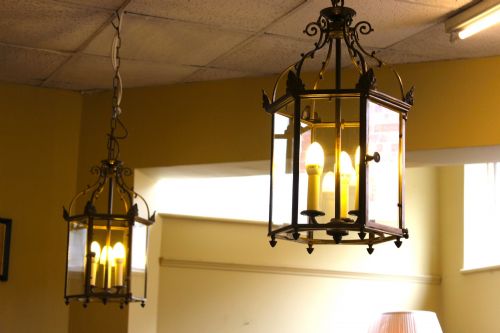
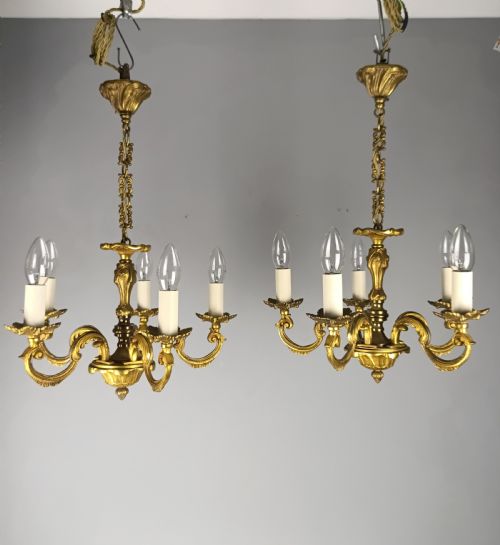
A pair of ceiling lights brings symmetrical illumination and period character to a room, spanning grand crystal chandeliers and industrial glass pendants.
Pair of Ceiling Lights
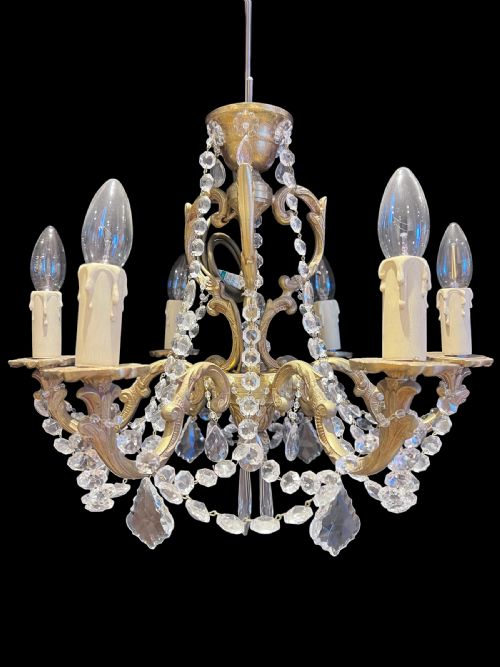
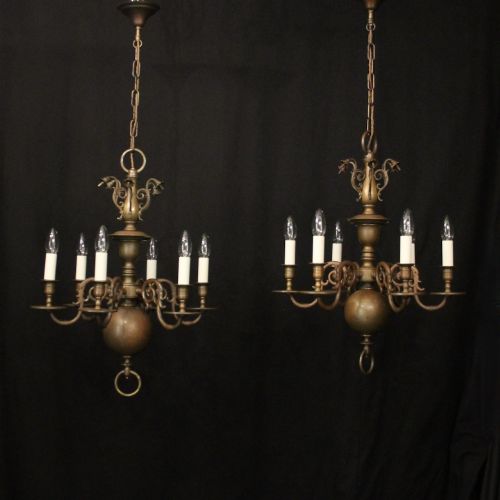
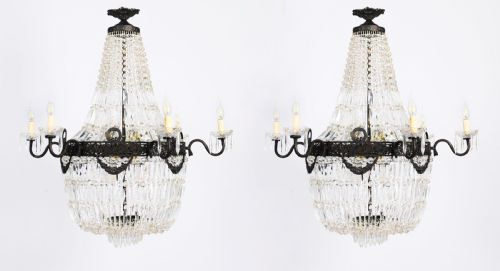
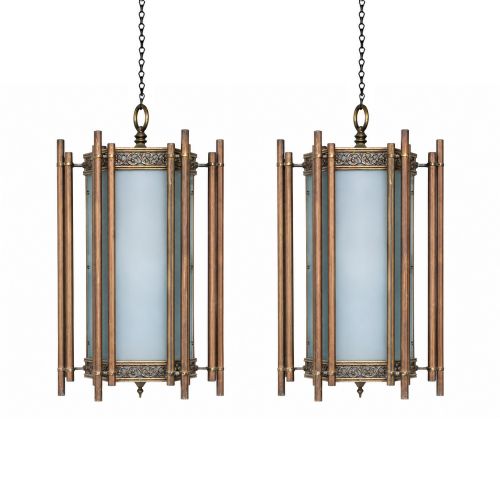
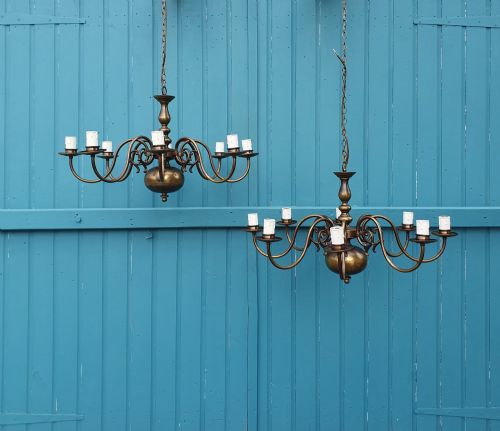
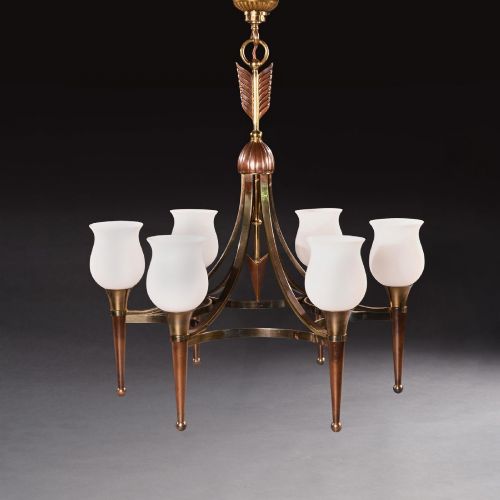
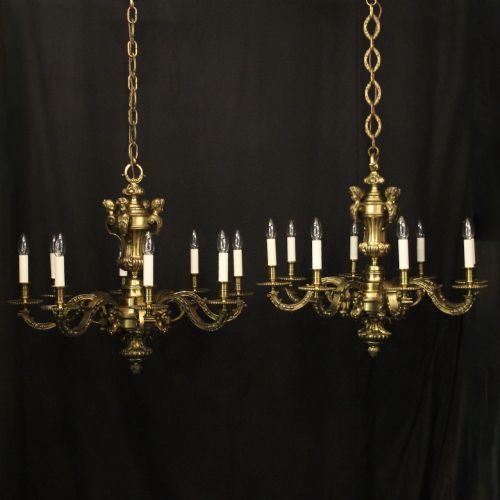
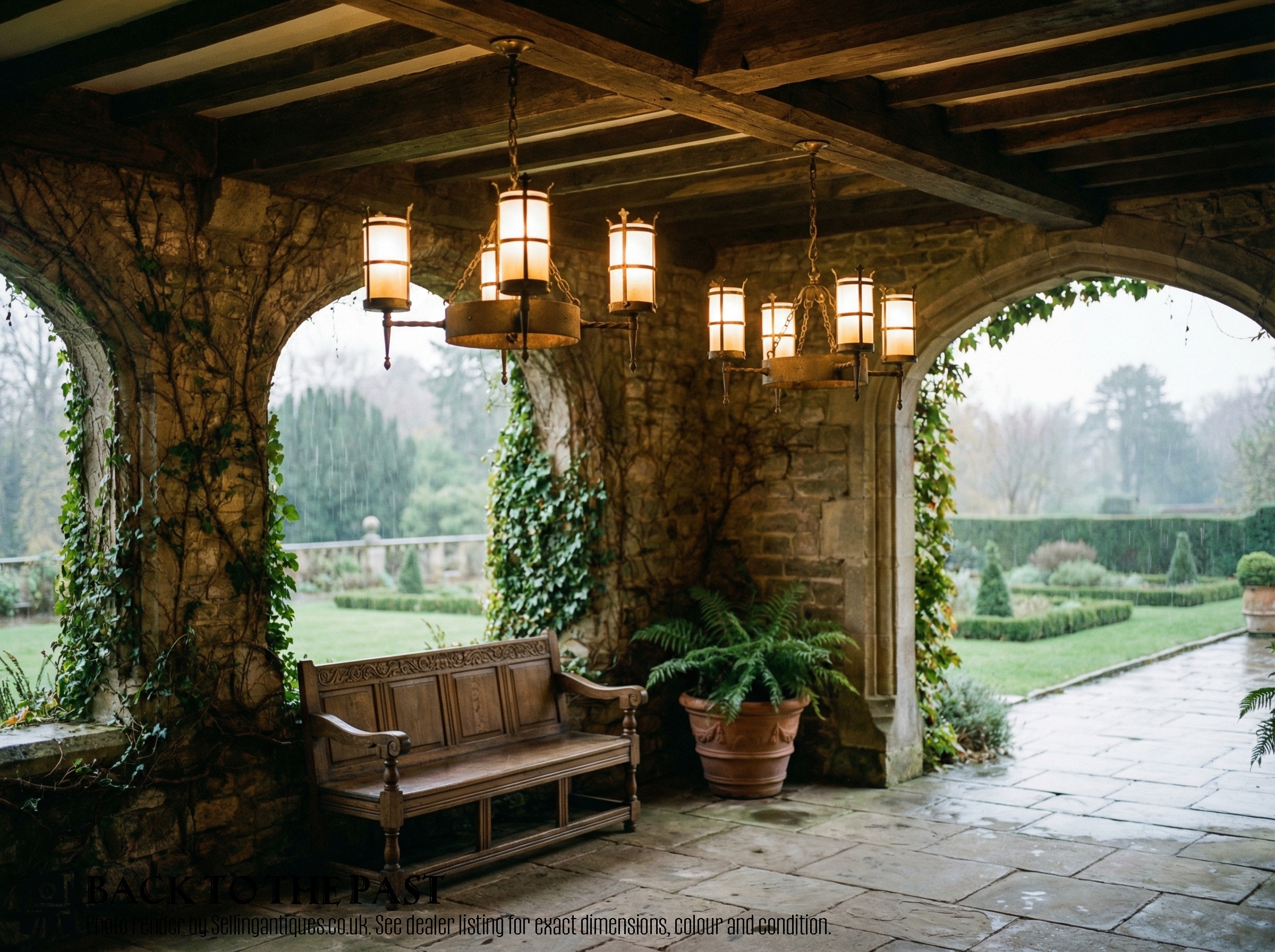
A search for a pair of ceiling lights leads to matching hanging illumination fixtures designed for symmetrical placement in a room, predominantly originating from the early twentieth century. The selection spans French chateau chandeliers, Arts and Crafts fittings, and American Art Deco hanging lanterns.
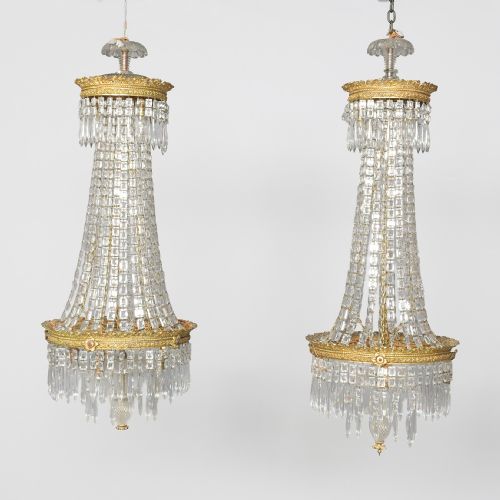
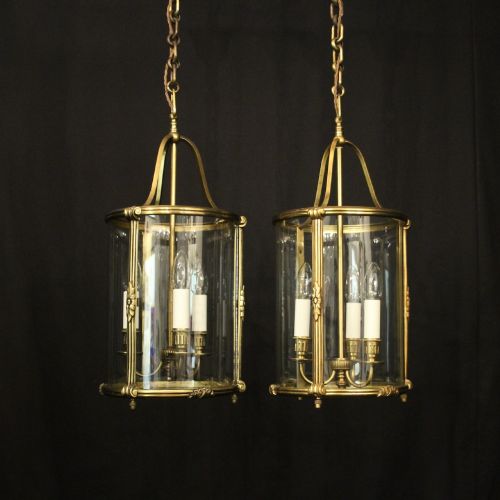
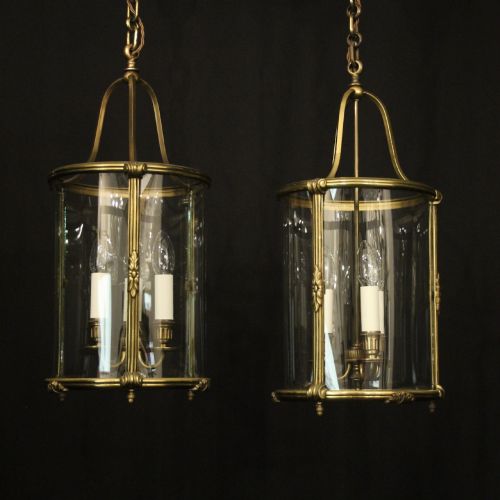
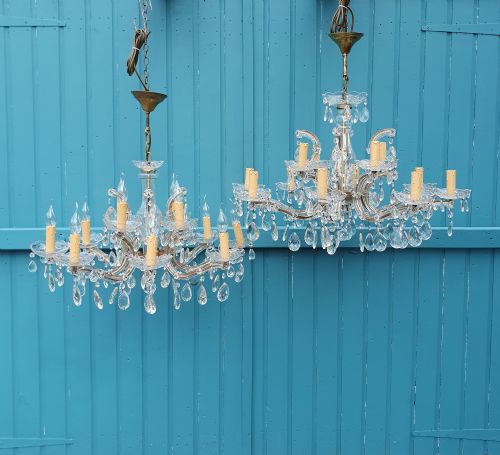
Buyers most frequently encounter multi-arm brass and crystal chandeliers alongside single glass pendant lights and hall lanterns from the Edwardian era and the 1920s or 1930s. These dual fixtures served to balance lighting across high-ceilinged drawing rooms, ballrooms, and hallways.
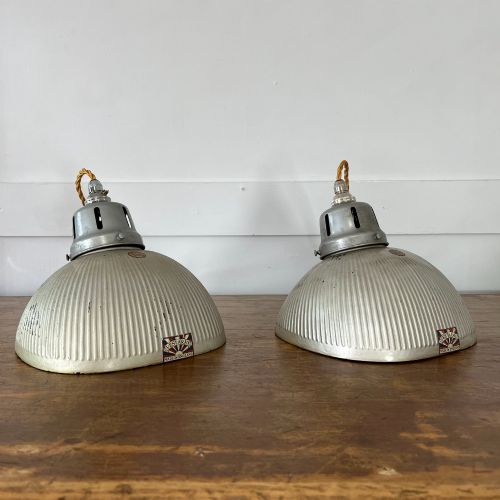
The evidence shows various object types including flush fittings, bowl lights, and prismatic shades mounted on metal galleries, reflecting both residential and institutional past uses.
Materials and Construction
Metalwork forms the structural backbone of these fixtures, utilising cast brass, gilded bronze, steel, and copper to create frames, arms, and galleries. These metals are often paired with hand-formed components or cast details characteristic of French Rococo, Empire, and Neoclassical styles.
Glass and crystal elements define the optical qualities of the pieces, ranging from cut crystal pendeloques and moulded tent sections to opaline, milk, and mercury mirrored glass shades. Industrial pieces utilise specific prismatic glass, such as Holophane shades designed to direct and diffuse light efficiently.
Cupids occasionally hold the lights aloft.
Craftsmanship and Proportion
Quality reveals itself in the crispness of the metal casting and the depth of the hand-chasing on brass and gilded bronze frames. Finer examples display integrated design harmony between the structural metalwork and the specific cut of the crystal or glass elements.
The degree of completeness regarding original components, such as matching glass shades, prismatic galleries, and finials, separates standard production items from exceptional workshop pieces.
Maison Jansen·Andre Arbus·F and C Osler·Schneider·Jefferson·S Fauer
The Pair of Ceiling Lights Glossary
- Chandelier
- A branched hanging light fixture designed to hold multiple lamps or candles. They often feature suspended crystal or glass prisms to multiply the spread of light.
- Holophane
- A brand of scientific glass lighting known for its prismatic ribs. These patterns were engineered to control glare and distribute illumination evenly across a space.
- Gilded Bronze
- Bronze metal coated with a thin layer of gold or gold leaf, also known as ormolu. This finish provides a warm, durable metallic lustre on French antique frames.
- Gallery
- A metal ring or fitting that grips and secures a glass shade or globe to the suspension rod. Galleries often bear maker marks or registration numbers from the period.
- Pendeloque
- A hanging glass or crystal drop, typically cut with multiple facets. These are wired to chandelier frames to catch and refract light.
Pair of Ceiling Lights: Frequently Asked Questions
How do I hang matching ceiling fixtures?
Matching fixtures require balanced placement within a room to maintain the symmetry intended by the original pairing. They suit spaces like long hallways, grand reception rooms, or over large dining tables.
Ceiling height dictates the drop length, ensuring the lower edges clear head height while maintaining proper illumination levels across the floor.
What periods do these lights come from?
The recorded pieces belong primarily to the late nineteenth and early twentieth centuries, spanning Edwardian designs and the Art Deco period. Earlier nineteenth-century examples also appear alongside mid-century interpretations.
Stylistic cues like heavy cast bronze, neoclassical motifs, or streamlined geometric glass shades help anchor each piece to its specific era.
Are these lights wired for modern use?
Many surviving antique fixtures arrive with historical wiring that requires updating to meet current electrical standards. Buyers often arrange for rewiring and safety testing before installation.
Original brass galleries and sockets are frequently retained during this process to preserve the historical integrity of the metalwork.
What is the difference between a lantern and a chandelier?
Chandeliers feature an open structure of multiple branching arms designed to hold exposed bulbs or candles. Lanterns are enclosed or semi-enclosed hanging fixtures where glass panels protect the internal light source.
Both forms utilise metal frames of brass, bronze, or steel, but serve different architectural functions within a hall or room.