

Pair of Bookends
When you select a pair of bookends, you secure functional sculptural objects that anchor libraries while introducing period character into a room.
Pair of Bookends
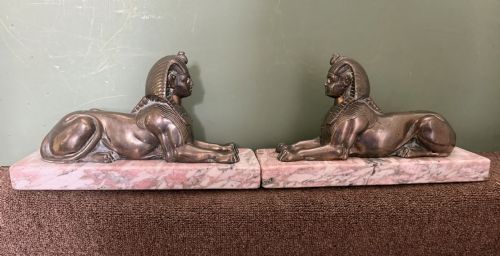
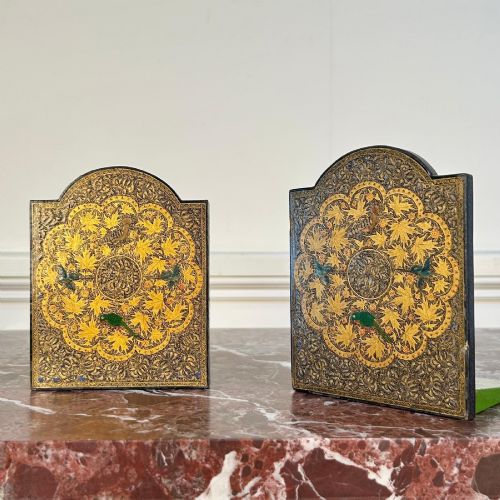
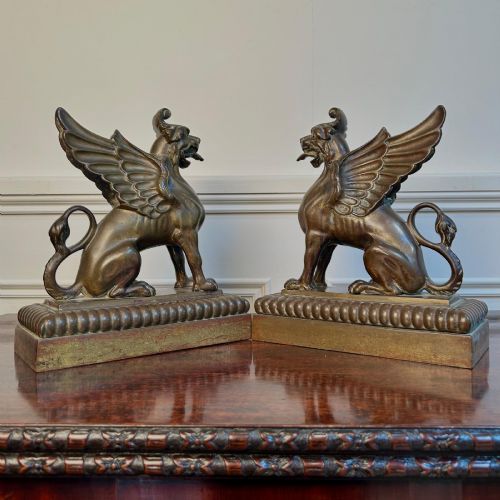
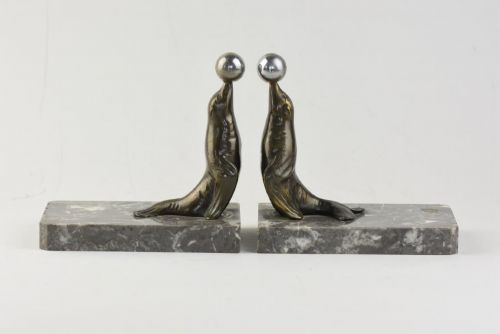
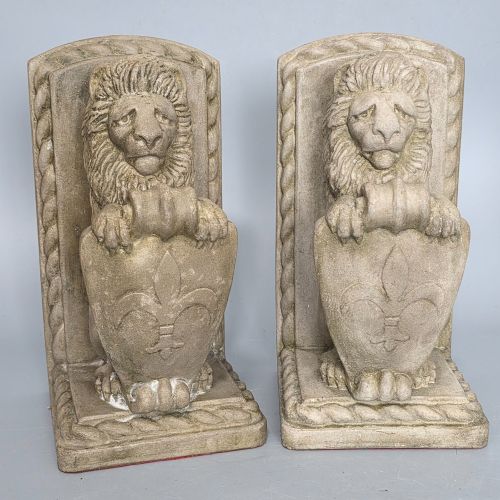
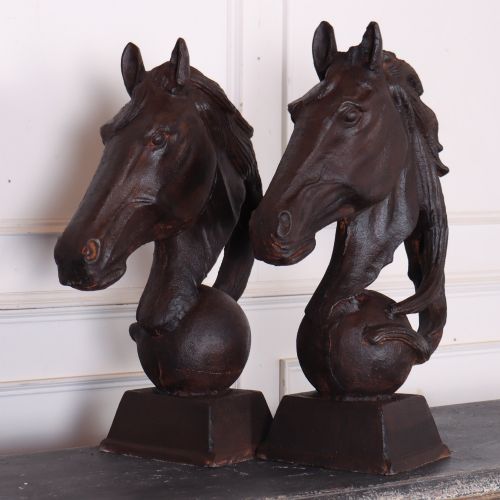
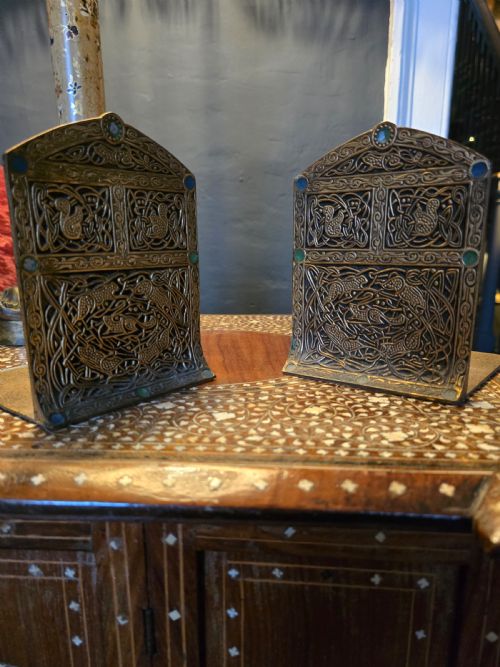
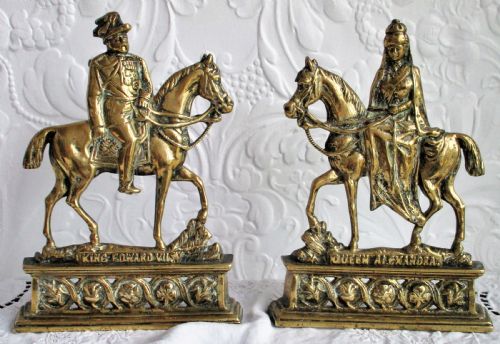
A pair of bookends serves the practical purpose of supporting volumes upright on a shelf while doubling as miniature sculpture. These utilitarian objects span periods from the nineteenth century through the Art Deco era, encompassing Victorian gothic designs and twentieth-century modernist forms.
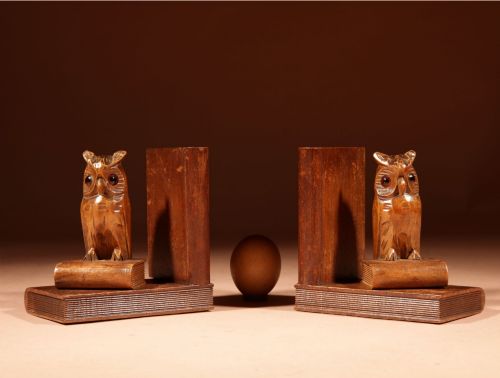
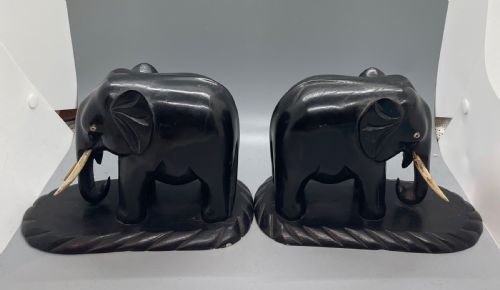
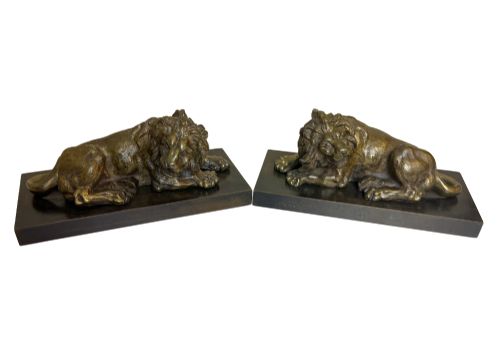
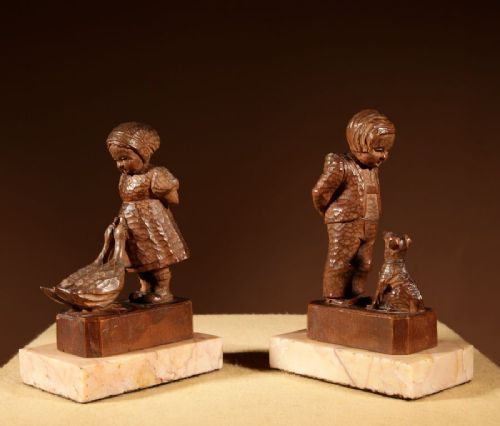
The selections available here frequently take the shape of animals, including lions, owls, elephants, and dogs, alongside architectural motifs and figural subjects. Animalier subjects dominate the early twentieth-century pieces, particularly within the Black Forest carvings and bronze casts.
Makers and foundries from England, France, and beyond utilised materials ranging from dense hardwoods to cast metals and marble bases. These supports transition easily from working libraries to display mantels as standalone decorative items.
How They Were Made
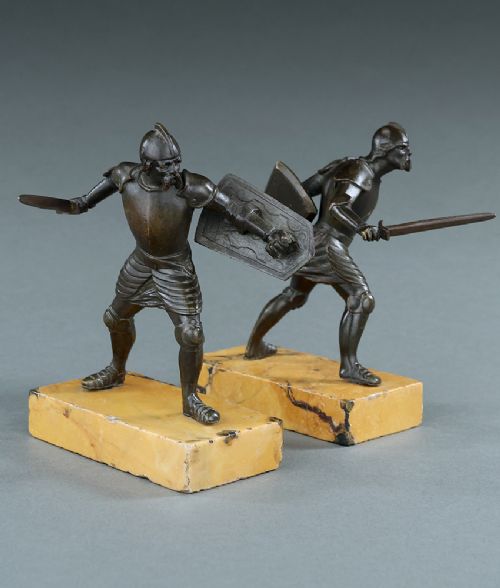
Foundries produced metal examples using traditional casting methods, working in bronze, brass, cast iron, and gilt ormolu. Artisans often mounted these heavier metal figures onto marble or wooden plinths to provide the necessary weight for supporting books.
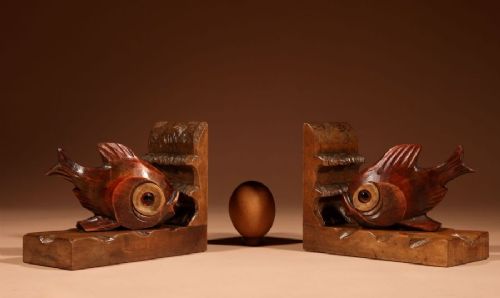
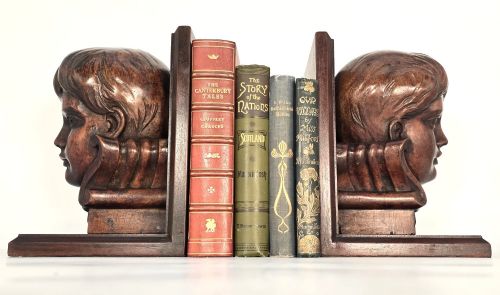
Carvers shaped wooden pieces from linden, oak, mahogany, walnut, and exotic hardwoods, frequently employing hand tools to detail subjects like owls and elephants. Ceramic and glass variants utilised moulding and glazing techniques typical of the Victorian and Art Deco periods.
Owls turn up constantly.
What Varies in Quality
Materials dictate weight and stability, with solid bronze, dense hardwoods, and heavy marble offering superior heft compared to hollow spelter or lighter woods. Original patination and untouched surfaces distinguish well-preserved examples from those subjected to later interventions.
Tiffany Studios New York·Max Le Verrier
The Pair of Bookends Glossary
- Animalier
- Art depicting the realistic form of animals, highly popular in nineteenth-century bronzes. This genre captures creatures in natural or dramatic poses.
- Grand Tour
- Cultural travel undertaken by nineteenth-century Europeans collecting classical art and architectural models. These souvenirs often inspired miniature bronze sculptures used as heavy shelf supports.
- Spelter
- An alloy of zinc and lead used as a cheaper alternative to bronze for decorative figures. It takes patination well but lacks the density and tensile strength of true bronze.
- Ormolu
- Finely ground high-carat gold applied to bronze objects using a mercury amalgamation technique. This rich gilding creates a durable, luminous surface finish on nineteenth-century mounts.
- Black Forest
- Wood-carving style originating in Switzerland, known for realistic representations of wildlife such as owls and bears. Artisans typically utilised walnut, lime, and Linden wood.
Pair of Bookends: Frequently Asked Questions
Are these heavy enough for large books?
Most metal and marble examples possess the substantial weight required to hold heavy folios and rows of hardcover volumes securely in place.
Lighter wooden or ceramic pairs perform best with smaller collections or seated at the end of modest shelf runs.
How do I identify Art Deco examples?
Art Deco pieces display streamlined geometric forms, stylised animal silhouettes, and modern materials such as polished metals paired with contrasting marble bases.
These designs emerged around the nineteen-twenties and nineteen-thirties, favouring sleek profiles over ornate Victorian detailing.
What wood types appear most frequently?
Oak and mahogany dominate the nineteenth-century library pieces, offering traditional dark tones suited to formal shelving.
Black Forest carvers favoured softer woods like linden and walnut to achieve intricate textures on animal figures.
Can these be used without books?
Their sculptural nature allows them to function as standalone decorative objects on mantelpieces, desks, and window sills.
Many figures possess sufficient artistic merit to display purely as miniature sculptures.