


Vintage Lion Bookends
Vintage lion bookends bring heavy presence to a shelf, cast in brass, bronze, marble, and iron across Victorian, Regency, and Art Deco designs.
Vintage Lion Bookends
Vintage lion bookends encompass heavy desk and shelf supports modelled as lions, recumbent beasts, and mythical guardians from various historical periods.
You are most likely to meet brass, bronze, and cast iron pairs, alongside ceramic, cast stone, and pine examples spanning the nineteenth and twentieth centuries.
How they were made
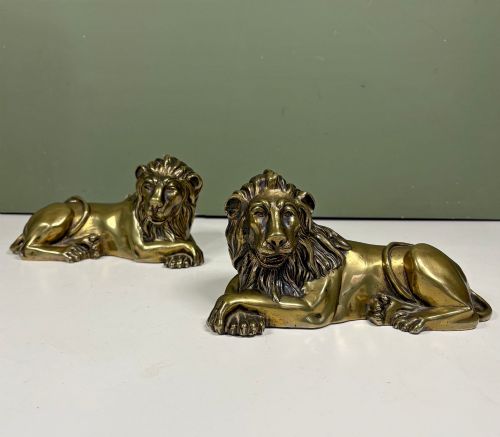
Foundries produced metal pairs using traditional brass and bronze casting methods, alongside durable cast iron and chrome finishes.
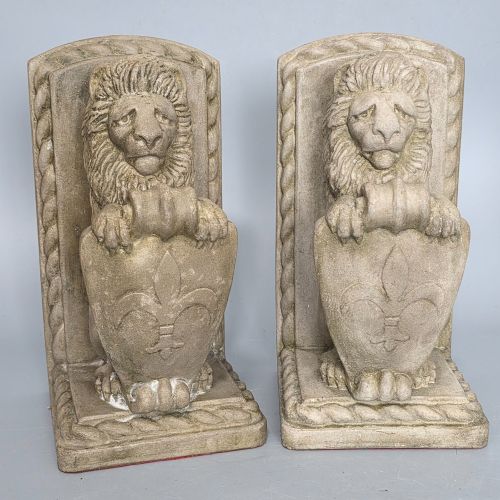
Makers utilised carved English pine, cast stone, and glazed ceramic or pottery techniques to shape sculptural figures and weighted bases.
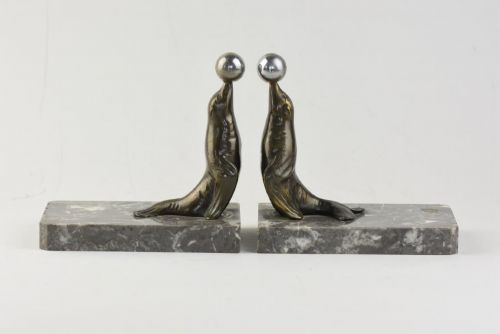
Sea lions and Chinese foo dogs occasionally muscle in on the pride, proving that bronze beasts refuse to stay in standard categories.
What varies in quality
Quality rests in the crispness of the modelling and the weight of the materials, separating sharp sculptural detail from soft, routine casting.
Surface finish distinguishes pieces, from deep patinated bronze and polished brass to carefully applied glazes and hand-carved grain.
C Omin·Lancaster and Sons
The Vintage Lion Bookends Glossary
- Recumbent
- Lying down or resting. Recumbent lions are modelled in a relaxed pose rather than standing.
- Foo dog
- A traditional guardian lion of Chinese architectural and decorative tradition. They frequently appear in pairs on desk accessories and bookends.
- Neoclassical revival
- A stylistic movement drawing inspiration from classical antiquity. It influences the formal, balanced posture seen in many lion figures.
- Cast stone
- A durable building material made from aggregate and cement. It allows for crisp moulding on heavy architectural bookends.
Vintage Lion Bookends: Frequently Asked Questions
What are vintage lion bookends made from?
These pieces appear in a wide range of materials, most notably brass, bronze, cast iron, and chrome. Other examples utilise carved pine, ceramic, glazed pottery, and cast stone.
Heavier materials were chosen specifically to hold dense rows of books securely in place on desks and shelves.
How do I date a pair?
Dating relies on stylistic clues and material technology, spanning Victorian, Regency, Edwardian, and Art Deco periods. Brass and bronze pieces often show period-specific casting techniques and patination.
Twentieth-century examples introduce modernist lines or cast stone compositions typical of the nineteen-twenties and nineteen-forties.
Were they always used for books?
While primarily designed to support volumes, similar heavy animal castings served multiple domestic functions. Some matched larger doorstops or functioned purely as desk sculptures and decorative objects.
Pairs often transition easily between library shelves, mantelpieces, and office desks.
What styles do these bookends come in?
The selection includes formal Regency designs, Victorian decorative pieces, and Neoclassical revival figures. Chinoiserie and Georgian Revival styles also appear frequently.
Art Deco interpretations offer sleeker, stylised depictions such as sea lions.