
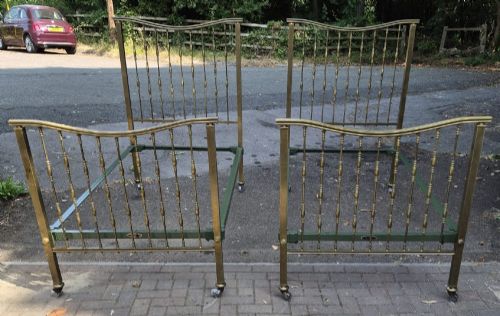
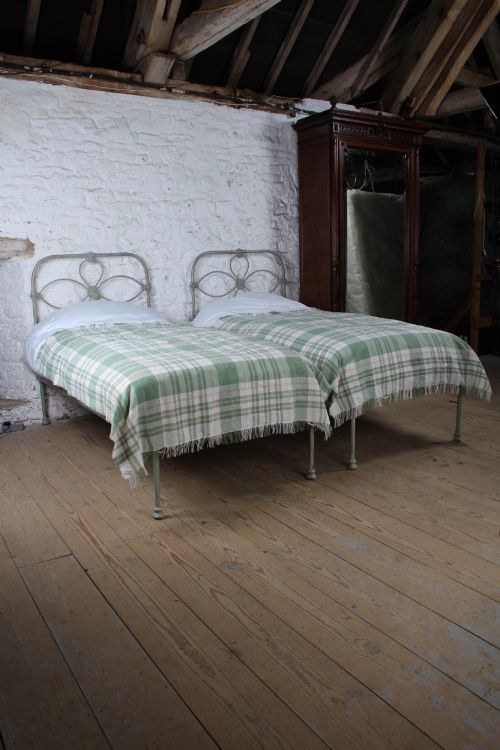


Pair Metal Twin Beds
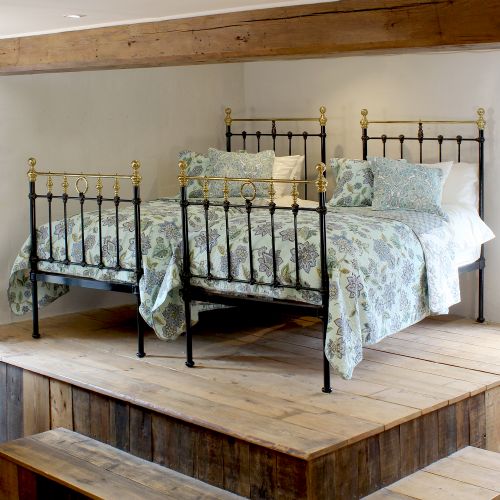
Pair metal twin beds bring matched proportions and robust period construction to a guest room.
Pair Metal Twin Beds
Pair metal twin beds combine two single sleeping frames designed to match, often featuring structural joining mechanisms that allow them to function as a larger unit or stand separately. The selection available on this page spans the Victorian and Edwardian eras, reaching back into the late nineteenth century.
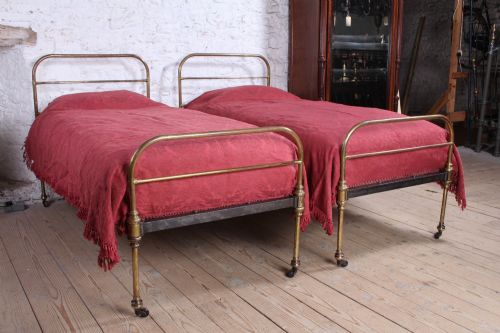
The dominant forms are single beds, bedsteads, and platform beds configured without high footboards, known as no end beds. These pieces originate from British, French, and Portuguese workshops, capturing diverse regional domestic tastes from the period.
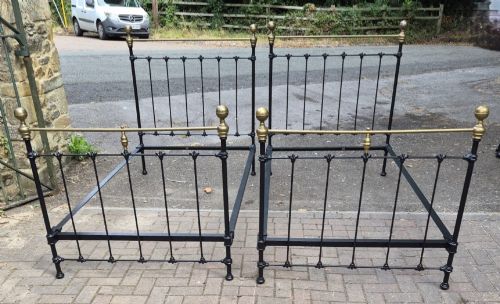
Buyers encounter sturdy iron frameworks alongside combinations of brass and iron, often finished in black, white, cream, or charcoal paint. Many of these historical frames retain their original capacity to be linked side by side.
Materials and construction
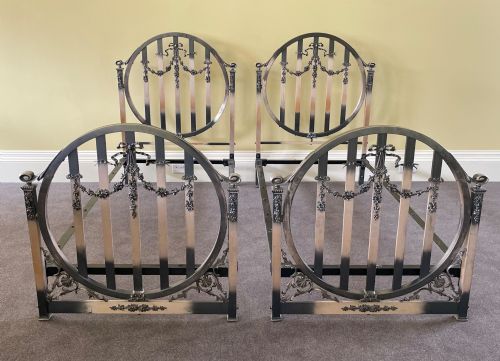
Construction relies heavily on cast iron and wrought iron for structural integrity, frequently paired with polished brass elements such as decorative top rails and finials. Nickel plating appears on specific Edwardian examples, offering a bright metallic finish.
Surface treatments involve traditional paint applications in monochrome shades like black, white, and cream, alongside exposed metal surfaces polished or coated to prevent oxidation. Component parts utilise heavy metal casting techniques typical of nineteenth-century foundries.
Some nineteenth-century makers cleverly engineered their twin beds with secret joining lugs so guests could whisper across the aisle.
Evaluating quality and design
Quality in these beds rests on the crispness of the iron castings, the structural stability of the joining mechanisms, and the integrity of any brass ornamentation. Simpler utilitarian frames contrast with elaborate Art Nouveau interpretations or pieces incorporating heavy brass decoration.
The refinement of the proportions and the survival of the original painted or plated finishes distinguish finer examples from standard workshop production. The presence of matching components across both frames ensures a coherent visual balance.
Hoskins & Sewell
The Pair Metal Twin Beds Glossary
- Bedstead
- A framework of a bed, excluding the mattress and bedding. In antique pieces, this usually refers to the complete metal headboard, footboard, and side rails.
- No end bed
- A bed design featuring a headboard but lacking a raised footboard. This configuration creates a more open visual presence in smaller rooms.
- Cast iron
- Iron poured into a mould to shape it. It provides the heavy, rigid structural foundation for many nineteenth-century bed frames.
- Nickel plating
- A thin layer of nickel applied to another metal surface for corrosion resistance and a bright finish. It is characteristic of Edwardian manufacturing.
- Platform bed
- A bed frame designed to support a mattress directly on a raised base without traditional transverse springs. These offer a low profile.
Pair Metal Twin Beds: Frequently Asked Questions
Can these twin beds be joined together?
Many historical twin frames include original or adaptable mechanisms allowing two single beds to lock alongside one another. This provides flexibility to use them as separate singles or unified sleep surfaces.
Buyers should examine the specific side rails and joining hardware noted in each listing to confirm compatibility.
What mattress sizes fit antique twin frames?
Nineteenth-century single and twin dimensions often differ slightly from modern standard mattress sizes. Custom or specially ordered mattresses may be required for precise fitting.
Reviewing the exact internal measurements provided in the listing ensures the correct mattress choice for the frame.
How do I care for painted iron beds?
Painted iron surfaces require gentle dusting with a dry cloth and protection from excess moisture to prevent chipping or rust formation. Avoid abrasive cleaning agents that could damage historic finishes.
Maintained properly, the original paint or applied coatings will endure for decades in a domestic setting.
What is the difference between Victorian and Edwardian frames?
Victorian metal beds tend to feature heavier cast iron components, ornate brass finials, and robust structural mass. Edwardian examples often introduce lighter proportions and nickel-plated finishes.
Art Nouveau influences also emerge in the later Edwardian period, bringing more organic, flowing lines to the metalwork.