

Pair Marquetry Side Tables
Pair marquetry side tables offer matched decorative woodwork, bringing French and Georgian elegance to bedside and salon spaces.
Pair Marquetry Side Tables
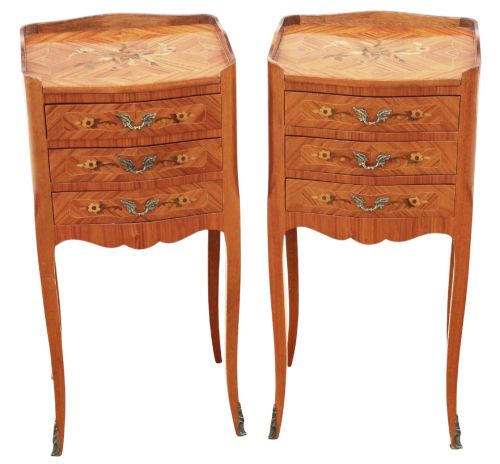
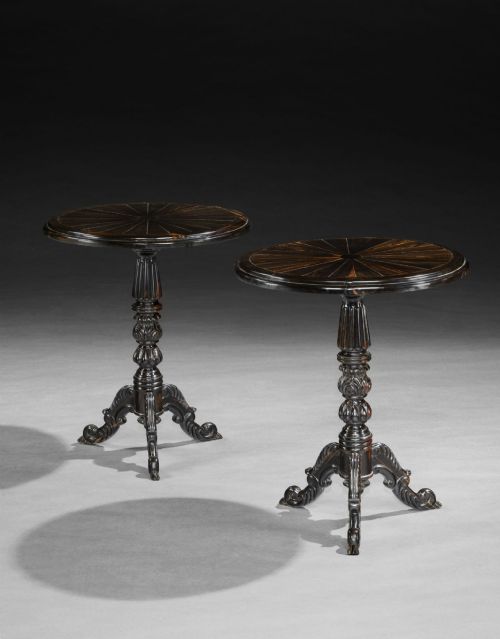
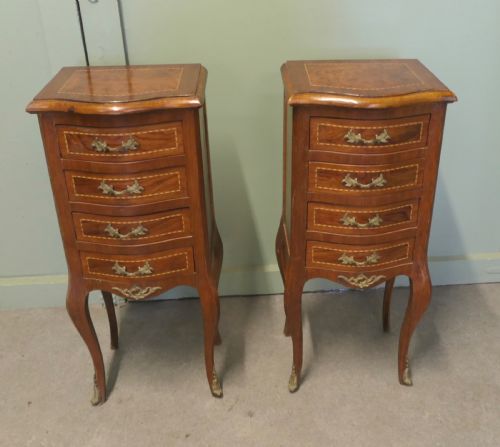
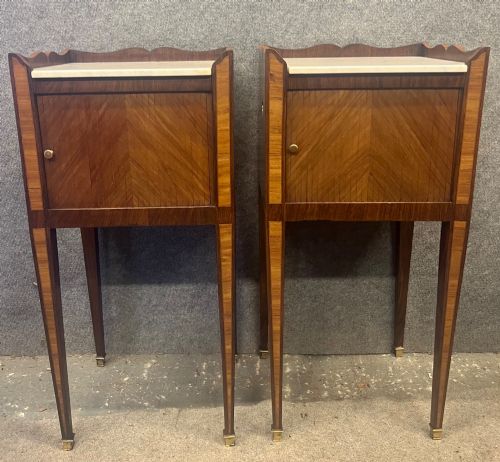
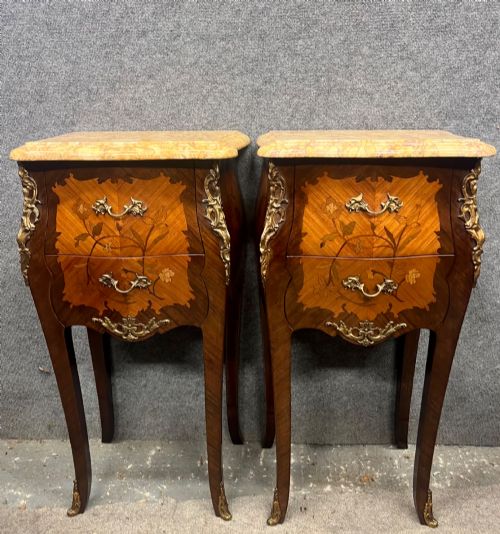
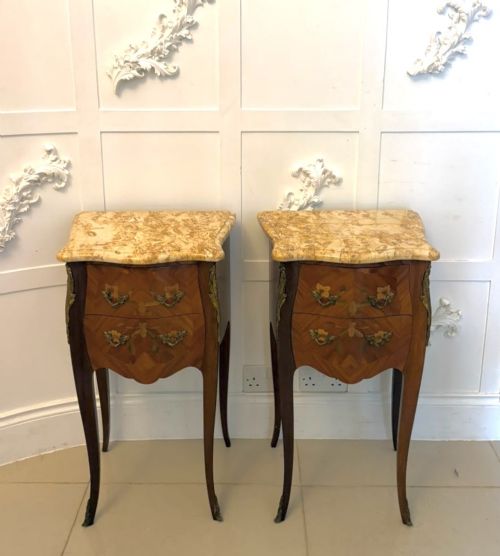
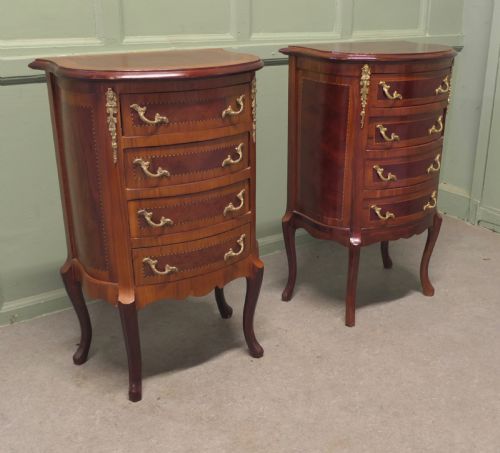
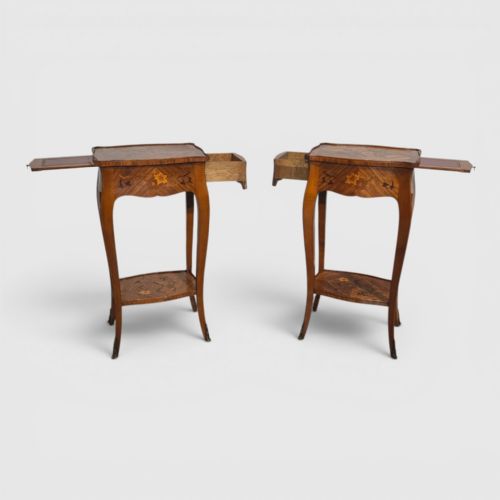
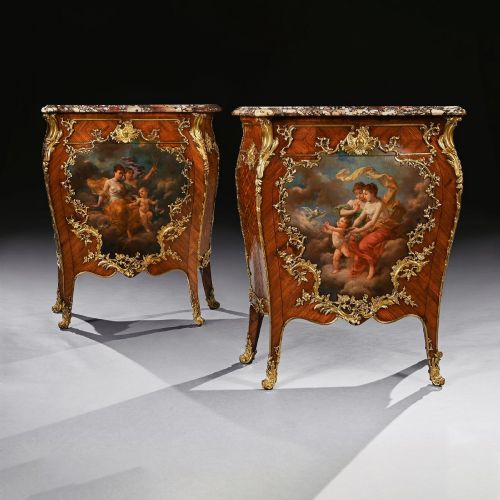
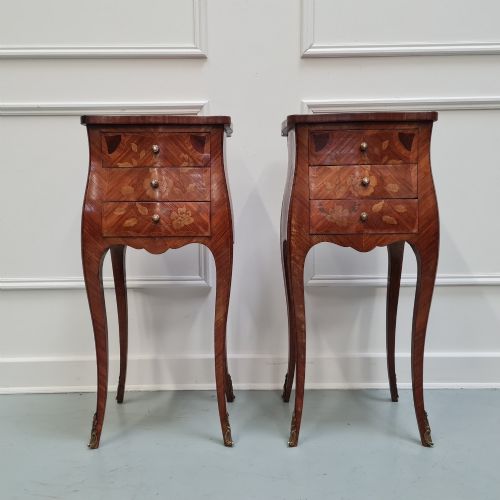
Pair marquetry side tables comprise matching small furniture pieces designed for use as bedside cabinets, lamp tables, or occasional surfaces. The selection leans heavily toward twentieth-century French examples, alongside eighteenth and nineteenth-century English and continental forms.
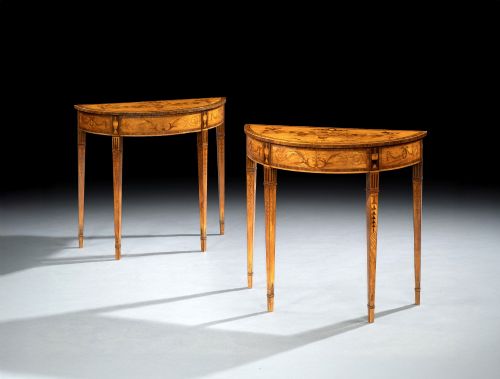
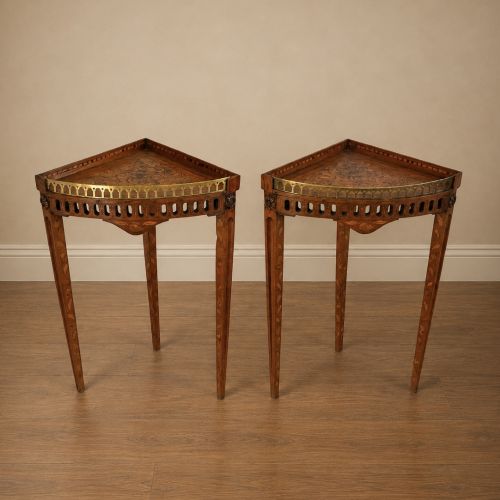
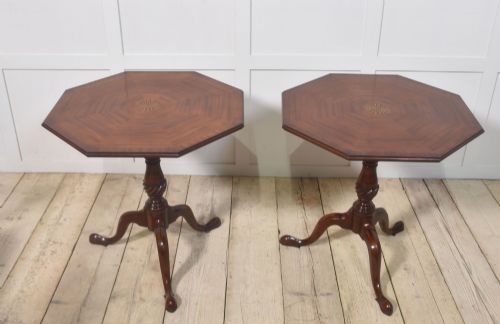
Forms span compact bedside chests, serpentine and bow-front commodes, tripod tables, and demi-lune console tables. These pieces function practically for storage or display while introducing intricate surface patterns to a room.
Materials and construction
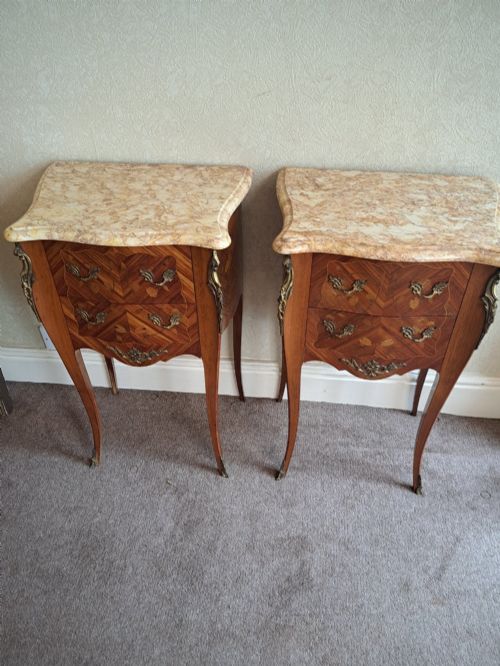
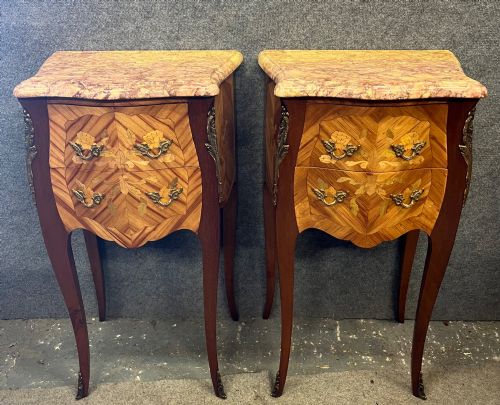
Carcasses incorporate walnut, mahogany, rosewood, kingwood, and satinwood, frequently paired with contrasting veneers for pictorial wood inlay. Many versions integrate marble tops, brass galleries, or ormolu mounts to edge the timber work.
Makers cut varied wood species to form floral, geometric, or architectural motifs embedded flush into the surface. Joinery relies on traditional cabinet-making methods suited to small-scale occasional furniture.
Periods represented range from eighteenth-century George III pieces to twentieth-century French items.
Factors determining quality
The symmetry and balance between the two individual tables define a successful matched pair. Stronger examples display coherent grain selection and sophisticated proportions across both items.
Liberty and Co
The Pair Marquetry Side Tables Glossary
- Marquetry
- Decorative wood inlay using various tinted or textured veneers to create pictures or geometric patterns. Artisans arrange thin pieces of wood into detailed pictorial designs on the surface of the furniture.
- Ormolu
- Gilt-bronze ornaments mounted onto furniture edges and corners. This decorative metalwork is typical of French cabinet-making.
- Demi-lune
- Half-moon shape characteristic of certain eighteenth-century console and side tables. This profile allows the furniture to sit flat against a wall.
- Parquetry
- Geometric wood inlay forming regular patterns such as cubes or stripes. It differs from marquetry by using repeating abstract shapes rather than pictorial designs.
- Chevets
- French term for small bedside tables or nightstands. These compact units frequently feature small drawers and cupboards.
Pair Marquetry Side Tables: Frequently Asked Questions
How do French and English styles differ?
French pieces often incorporate curved serpentine fronts, heavy ormolu mounts, and kingwood or walnut veneers influenced by Louis styles. English examples from the eighteenth century tend to use satinwood or mahogany with more restrained geometric inlay.
Both traditions rely on detailed wood veneers, but the silhouette and mountings signal the distinct regional origins.
What is the difference between marquetry and parquetry?
Marquetry involves cutting diverse wood veneers into pictorial or floral scenes applied to the surface. Parquetry uses regular geometric shapes like cubes or diagonals to form repeating patterns.
Both techniques decorate the surfaces of these tables, sometimes appearing together on the same piece.
Are marble tops original to these tables?
Many French bedside cabinets and commodes feature fitted marble tops designed to protect the wood surface from lamps and liquids. These stone slabs come in varied colours, including white and Sienna marble.
Sourcing replacement marble requires matching the specific thickness and bevel profile of the original carcass.