
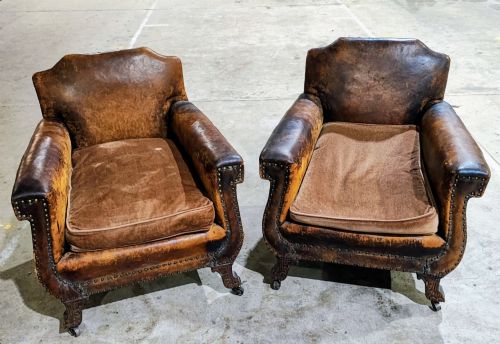
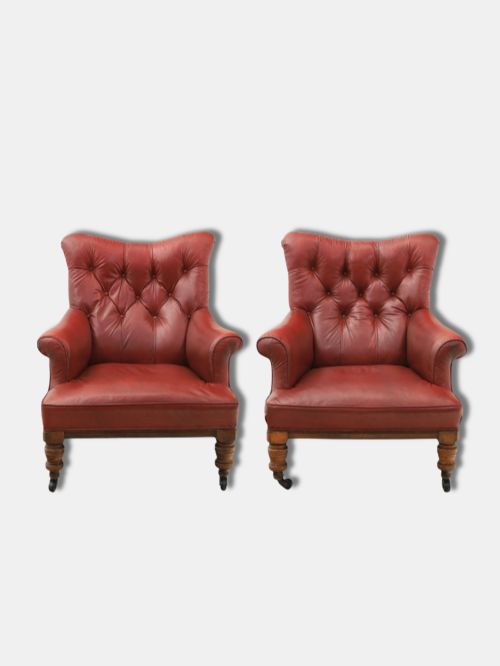
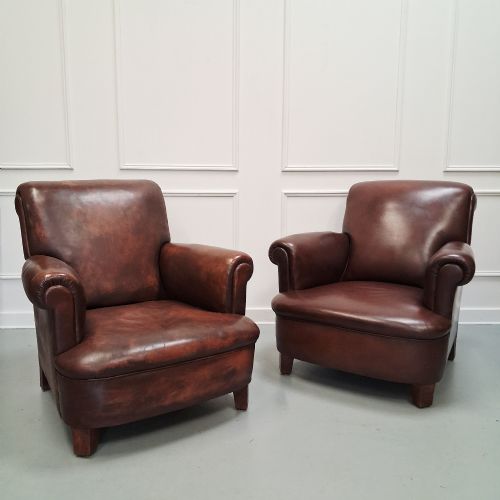
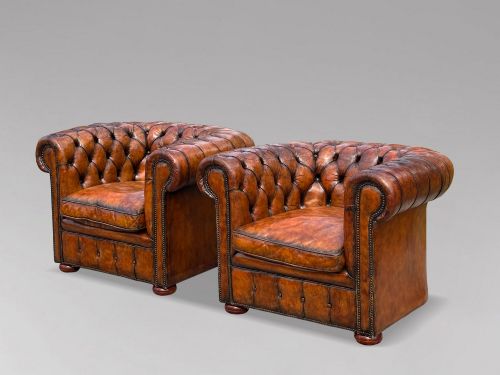

Pair Leather Club Chairs
Pair leather club chairs bring substantial seating and deep comfort to a room, offering matching forms designed for long hours of relaxation.
Pair Leather Club Chairs
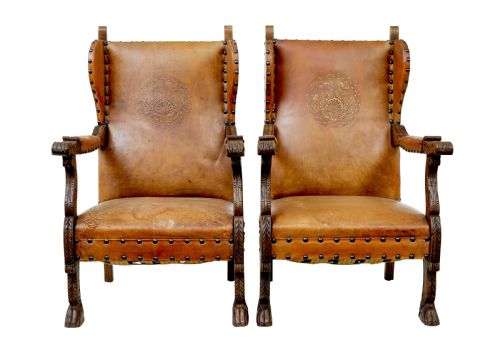
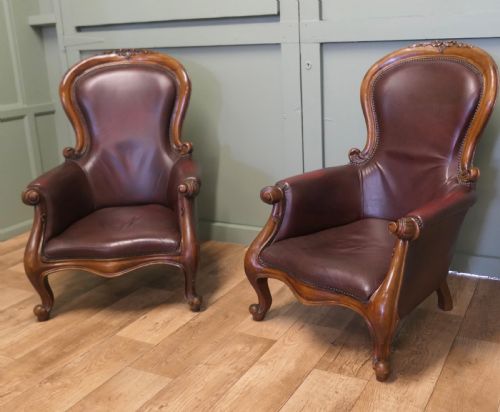
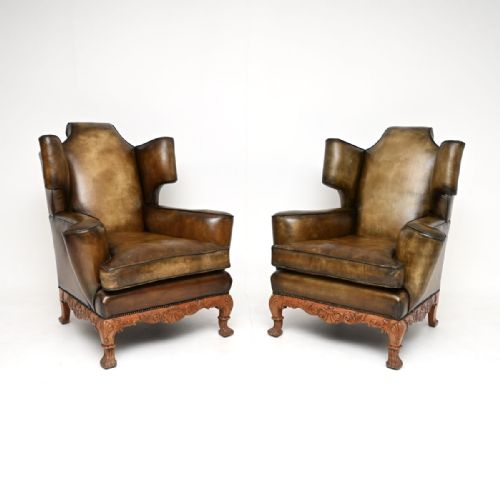
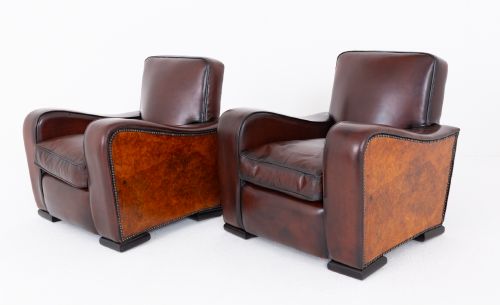
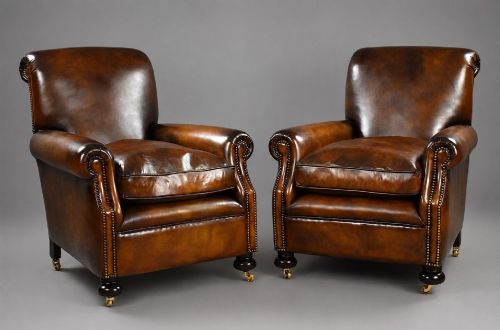
A search for pair leather club chairs reveals robust upholstered seating spanning the nineteenth century through the Art Deco period. Buyers encounter traditional Victorian library chairs alongside French and Swedish designs from the nineteen-twenties and nineteen-thirties.
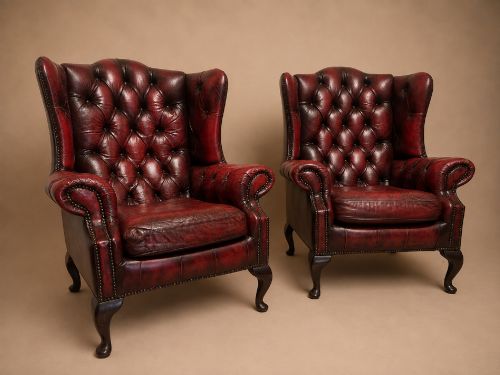
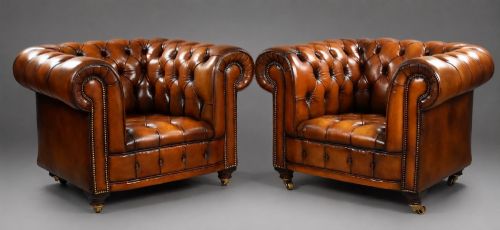
The selection ranges from buttoned English Chesterfield styles to streamlined continental armchairs. These seats often appear in domestic studies, country houses, and formal sitting rooms where matching proportions matter.
Materials and Construction
Frames rely on sturdy timbers such as walnut, mahogany, oak, and birch to support heavy use. Upholstery utilises durable cattle leather or rexine stretched over sprung interiors.
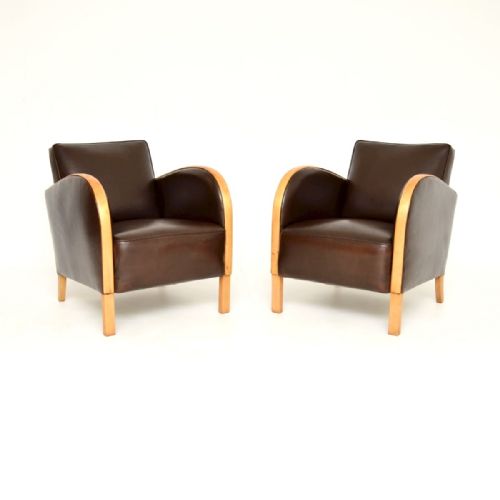
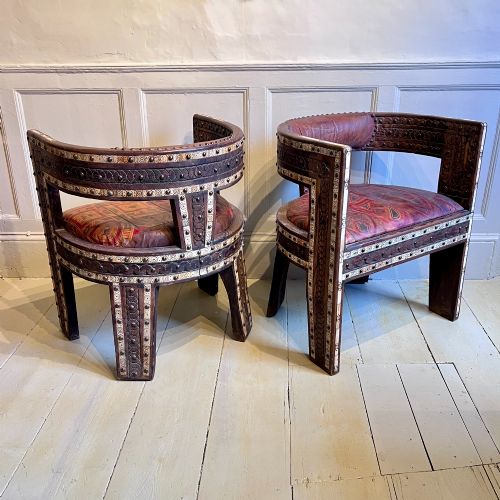
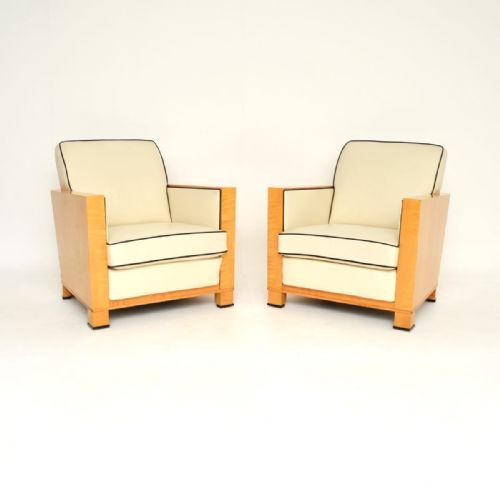
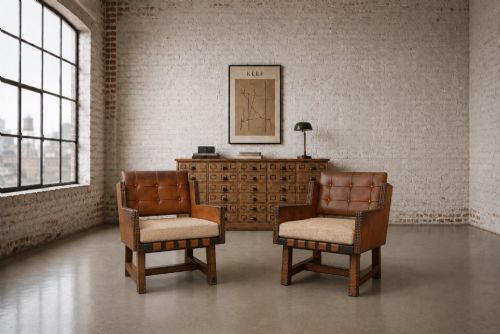
Detailing involves brass tacks, hand-dyed finishes, and occasional carved wood elements. Art Deco examples integrate contrasting satin birch veneers with smooth leather hides.
Some nineteenth-century pairs were explicitly designated as his and hers matching seats for simultaneous fireside reading.
Distinctions in Standard
The caliber of a pair depends upon the integrity of the wooden framework and the depth of the leather seasoning. Finer examples display harmonious grain patterns in woods like walnut and mahogany.
Execution of the upholstery work dictates the longevity and visual balance of the matching pair. Superior sets maintain even tension across the springs and uniform patination on the leather.
Hille·Harry and Lou Epstein
The Pair Leather Club Chairs Glossary
- Chesterfield
- A deep-buttoned upholstered seating style traditionally featuring arms and back of the same height. This form appears frequently in nineteenth and early twentieth century library chairs.
- Patina
- The surface sheen and colour variation developed by leather over decades of use and handling. Collectors value this natural ageing process for its depth.
- Satin Birch
- A pale hardwood with a distinctive shimmering grain utilised heavily in Art Deco frames. It provides a striking visual contrast against dark leather upholstery.
- Rexine
- A branded fabric made from cloth coated with nitrocellulose paint, functioning as an artificial leather alternative. It emerges on utilitarian pieces from the early twentieth century.
- Spoon Back
- An oval-shaped upholstered chair back curving inward to resemble the bowl of a spoon. This silhouette is common in Victorian easy chairs.
Pair Leather Club Chairs: Frequently Asked Questions
How do I care for antique leather chairs?
Maintain the leather by applying specialist feeding balms periodically to prevent cracking and preserve the natural suppleness of the hide. Keep the seating away from direct heat sources and strong sunlight to maintain the original dye.
Dust the crevices regularly using a soft brush, paying particular attention to button tufting and wooden frames where debris settles over time.
What defines an Art Deco club chair?
Art Deco club chairs emerge primarily from the nineteen-twenties and thirties, characterised by geometric lines, smooth curves, and rounded forms. Makers often combined supple leather with exotic wood veneers like satin birch.
These pieces prioritise streamlined comfort over ornate Victorian carving, resulting in a heavier, more enclosed silhouette suitable for modern lounges.
Are Victorian library chairs comfortable?
Victorian library chairs offer generous proportions and supportive sprung interiors designed for prolonged reading and writing sessions. Their substantial padding and ergonomic curves provide a sturdy, upright sit.
Many examples feature buttoned upholstery that secures the internal padding firmly while adding a formal aesthetic to studies and offices.
How can I date my leather armchairs?
Dating relies on examining the framing timber, upholstery construction methods, and stylistic cues present in the woodwork. Victorian pieces typically display darker hardwoods and buttoned backs, whereas nineteen-thirties pieces lean towards smooth Art Deco minimalism.
Archival comparisons and material combinations help narrow the manufacturing era down to specific decades like the nineteen-twenties or eighteen-eighties.