



Pair Green Earthenware Vases
These pair green earthenware vases span the Victorian and Art Nouveau periods, offering distinctive ceramic forms for domestic display.
Pair Green Earthenware Vases
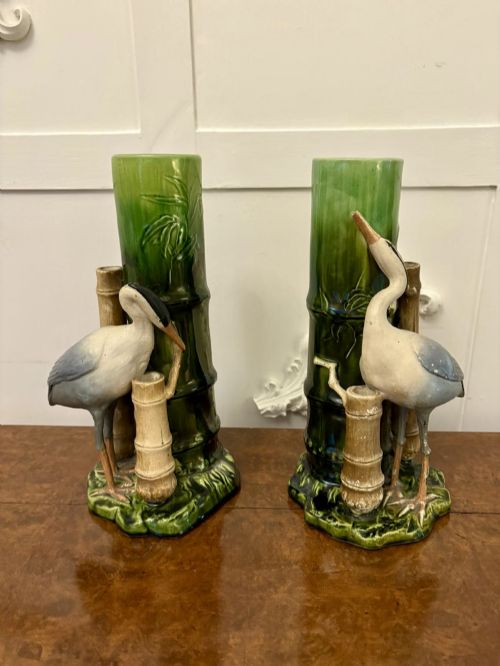
When you search for pair green earthenware vases, you find dual matching vessels shaped as spill vases, bottle vases, and candlesticks. These items originate from English, French, and Spanish workshops across the nineteenth century.
The nineteenth century yields the vast majority of these objects, running from eighteen seventy through to nineteen twenty. Staffordshire pottery, faience, and majolica dominate the forms you meet on this page.
Makers from Doulton Lambeth, Bretby, and Burmantofts produced notable examples during the eighteen eighties. Collectors encounter both utilitarian spill vases depicting animals and decorative botanical pieces.
How they were made
Potters shaped these vessels from earthenware and ceramic bodies before applying lead glazes and enamel. Faience and majolica techniques allowed makers to achieve rich green surface finishes.
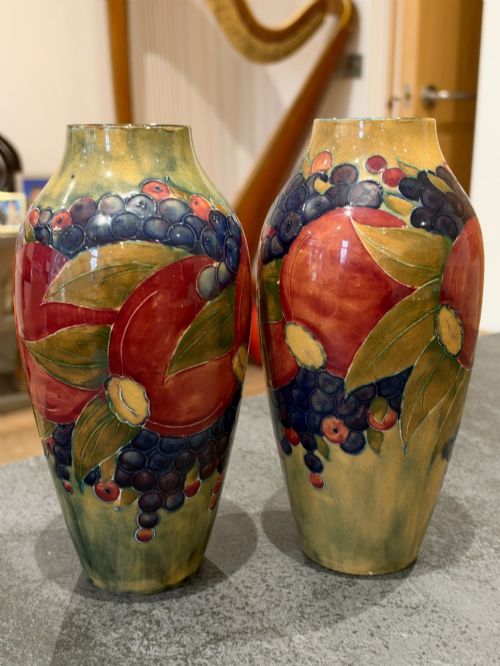
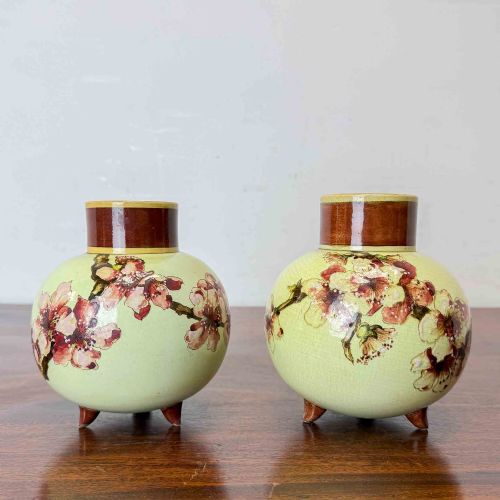
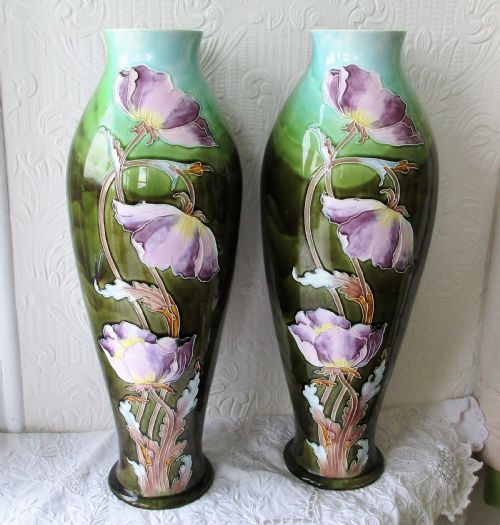
Makers utilised fired clay foundations, coating them with specialised glazes to create gloss and texture. Artisans painted botanical motifs and floral details directly onto the ceramic before final firing.
Pair Green Earthenware Vases Retail Price Guide 2026
Typical asking prices for pair green earthenware vases among the pieces listed under this phrase on Sellingantiques today, from the lower quarter to the upper quarter. They describe what is for sale here now, not the wider market.
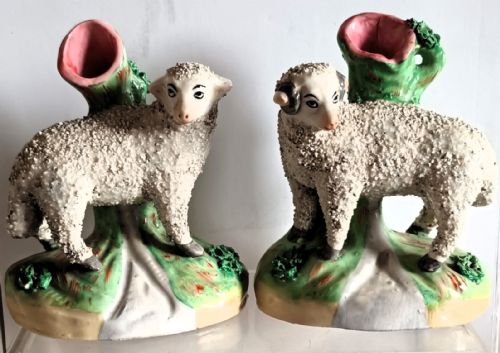
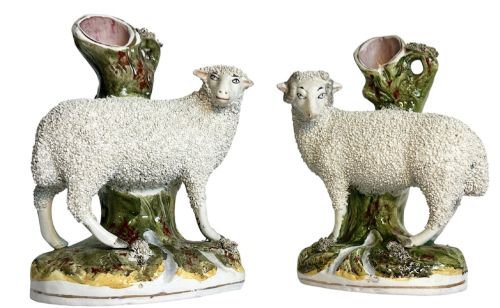
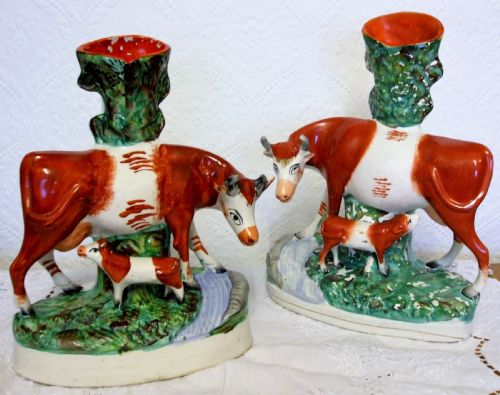
Staffordshire potters evidently believed sheep and cows made the most reliable companions for holding wooden spills on Victorian mantelpieces.
What varies in quality
Quality rests upon the crispness of the moulded animal figures, such as sheep and cows, and the evenness of the green glaze. Finer examples show precise detailing in the transfer of naturalistic forms.
The sophistication of the surface decoration separates standard production from exceptional studio output. Art Nouveau and Aesthetic Movement pieces display deliberate artistic intent in their form and glaze application.
Doulton Lambeth·Bretby·Burmantofts Faience·Staffordshire Pottery
The Pair Green Earthenware Vases Glossary
- Earthenware
- Porous pottery fired at lower temperatures than stoneware, requiring a glaze to achieve water resistance. It serves as the primary body for the green vases listed here.
- Faience
- Tin-glazed earthenware originating from European traditions, often decorated with colourful enamel paints. French and English potteries adopted this method for decorative vases.
- Majolica
- A heavy earthenware type covered in an opaque lead glaze containing tin oxide. This technique provides the vibrant green coloration seen on nineteenth-century pieces.
- Spill vase
- A small upright vessel designed to hold thin wooden spills used for lighting fires or candles. Staffordshire potters frequently shaped these as figures of animals.
- Lead glaze
- A glossy coating applied to ceramic surfaces to seal the porous clay body. It gives these nineteenth-century vases their characteristic reflective sheen.
Pair Green Earthenware Vases: Frequently Asked Questions
What were spill vases used for?
Spill vases held wooden spills near fireplaces so people could transfer flames to candles or pipes. These small vessels sat on mantelpieces for daily domestic convenience.
Potters shaped them into decorative animal figures, combining practical household items with ornamental ceramic art.
How do I date these green vases?
Dating relies on identifying the pottery mark, the ceramic style, and the glaze type. Pieces from eighteen seventy often show heavy majolica glazing, while eighteen eighties items frequently feature faience.
Art Nouveau and Aesthetic Movement designs point towards the later nineteenth and early twentieth centuries.
Are these vases waterproof?
Most nineteenth-century earthenware relies on a lead glaze to seal the porous clay body. While adequate for holding water briefly, older glazes can develop fine micro-cracks over time.
Collectors generally use these decorative vessels for dried botanicals rather than fresh cut flowers.
What is Hispano-Moresque pottery?
Hispano-Moresque ceramics reflect the cross-cultural artistic traditions of medieval and later Spain. These pieces utilise traditional glazing methods on earthenware bodies.
Examples incorporate distinct regional styles that separate them from standard English and French production.